
 E-Paper



When walking on our uneven roads is a balancing act
“There is a time in life when you can walk and you can talk and you can look around and take it for granted that you’re going to keep your balance,” I heard physio tell a senior citizen who had come in after a fall in which thankfully her ego had been bruised more than her body.

 Prefer HTon Google


MUMBAI: Three of my good friends are in their eighties. Each one has a different level of mobility. I was about to go into details when I thought better of it. Some old atavistic fear makes me reluctant to tell you that one of them never leaves his eighteenth-floor eyrie; the second goes for a morning walk every day but fears to cross the road on her own at night and the third, Rudolf Heredia, Jesuit priest, sociologist and author most recently of a highly regarded memoir, ‘A Clown for God, A Clown for Others’ (Speaking Tiger), only goes out with a stick and a companion.
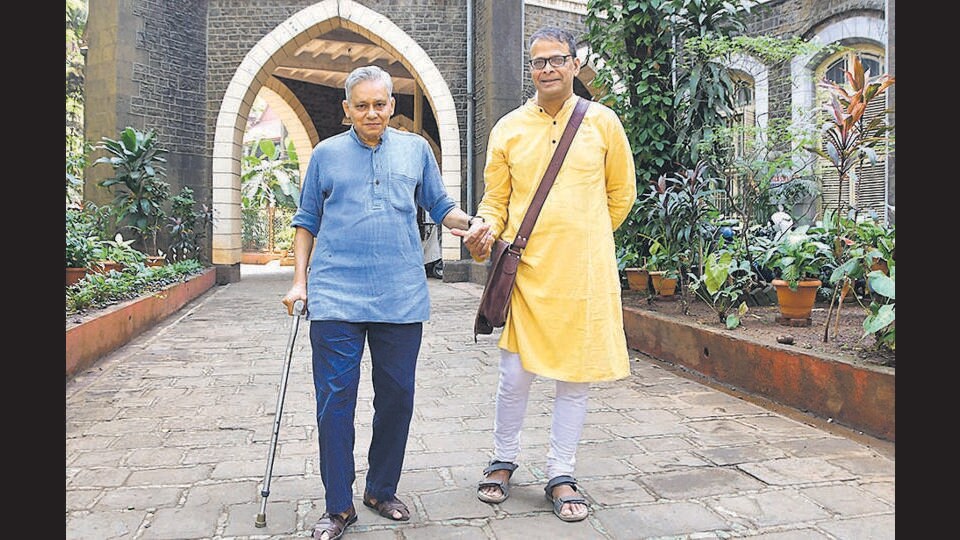
“I enjoyed walking for most of my life,” he says as we leave Arrupe Niwas at St Anne’s Church, Mazagaon, a facility created recently by the Jesuit order to house old priests who might need assisted living. “But I can’t manage on my own now, not even with a stick. The paver blocks are uneven and there is always the chance that one has not been placed properly and is wobbly. That’s a recipe for disaster at my age.”
I remember the time I had to visit a physiotherapist regularly after a couple of operations to rebuild a wrist I broke on New Year’s Day. I was lucky to get an intelligent and thoughtful physio in Valerian D’Souza who took pains to explain what we were doing together, I even learned some new words; supination and pronation, for instance. And I enjoyed eavesdropping at his clinic.
“There is a time in life when you can walk and you can talk and you can look around and take it for granted that you’re going to keep your balance,” I heard him tell a senior citizen who had come in after a fall in which thankfully her ego had been bruised more than her body. “But later, you have to give up multitasking. When you are walking, you have to focus on walking because there are so many factors that come into play—balance, proprioception—and you can’t take those for granted.”
Fr Rudi, as generations of students at St Xavier’s College where he taught sociology, knows all this. But that doesn’t stop him from talking as we walk together and suddenly he stumbles. I steady him, his palm on mine, his elbow parallel to my elbow—Leela Naidu taught me this trick: “Give me your thumb and your elbow,” she would say imperiously as we walked down the corridor at Sargent House when I was working with her on her memoir.
He turns to look at the offending paver block, which is at an angle to the others. “That’s what I mean,” he says. “The old flagstones offered much more traction. I look at the floors of our railway stations and they’re all paved with smooth stone. That makes it easier to wash but when it’s wet, it’s a nightmare. And as for crossing the road, one can only wish one had been born on the other side of the road.”
I thought back to a moment I had witnessed. A young man racing down a street ran past an old lady. He did not collide with her, he did not even make contact but that moment was enough to make her gasp, stop and take a few deep breaths before continuing. And then there were clicks of the tongue and snorts as other Mumbai pedestrians hurried past. So the footpath isn’t a safe refuge either. Fr Rudi agrees. “The cyclists use it, the motorcyclists use it and then there are the heedless young, rushing somewhere; any of these could knock you down. That’s why I think highly of the book ‘Why Loiter’ by Shilpa Phadke, Sameera Khan and Shilpa Ranade. We need to reclaim these streets. Because a society will be judged by how it treats its weakest members. If we do not do that, we end up in a Darwinian struggle, a survival of the fittest and that is disastrous. Our species achieved some forms of dominance because of its ability to cooperate. If that breaks down, society breaks down.”
Indeed the anthropologist Margaret Mead was once asked what she thought was the first sign of civilisation. She said that to her it was a 15,000-year-old fractured femur found in an excavation. That meant the members of the tribe had looked after someone for the six weeks that it takes for a long bone in the leg to heal, fed the person and tended her. Through this time, the injured person had not been able to contribute to hunting or gathering.
“Helping someone else through difficulty is where civilization starts,” Margaret Mead said. The site I looked up added these lines too, lines that still ring in my head, lines that console me in dark times: “Never doubt that a small group of thoughtful, committed citizens can change the world; for, indeed, that’s all who ever have.”
(Thank you for your letters and notes to jerrywalksmumbai@gmail.com. Keep them coming and when you’re walking, ask yourself: Wahaan kaun hai tera, musafir, jaayega kahaan?)
Eom


