
 E-Paper



Why the Maharashtra govt, Oppn are slugging it out over Hindi
Maharashtra's three-language policy faces backlash, with Uddhav and Raj Thackeray planning a protest against Hindi imposition on July 5 amid political tensions.

 Prefer HTon Google


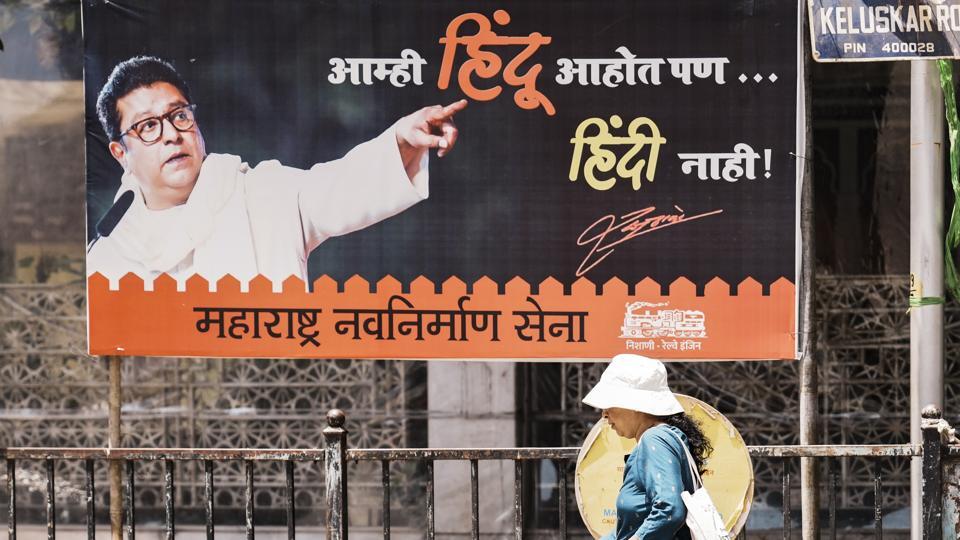
MUMBAI: The Maharashtra government’s push for a three-language policy in primary school education has witnessed intense resistance from the Opposition, which has now escalated with Shiv Sena (UBT) chief Uddhav Thackeray and Maharashtra Navnirman Sena (MNS) chief Raj Thackeray preparing to hold a joint protest rally against the “imposition of Hindi” in the state on July 5. Here is a look at the genesis of language politics, and its fall-out.
Politics and flip-flops over the Hindi mandate
On April 16, the Devendra Fadnavis-led Mahayuti government declared that Hindi would be made the mandatory third language from Classes 1 to 5 in government and private schools. The move was part of phased implementation of the union government’s National Education Policy (NEP) 2020 at the primary school level, from the 2025-26 academic year.
Soon after it was announced, it triggered strong opposition from political, social and cultural groups; and such was the pressure that the decision was amended.
On April 20, CM Fadnavis announced that Hindi would not after all be compulsory and students could opt for any other regional language. On June 17, a fresh order was issued which stated, “Hindi will generally be the third language in Marathi- and English-medium schools from Classes 1 to 5.” However, it came with a rider: students would be allowed to opt for any other language apart from Marathi provided there are at least 20 students taking that language in the school and a separate teacher is appointed to teach the language.
Why is it being opposed?
Those opposing the move called it an indirect imposition of Hindi. They also argued that it may be a tall order for a school to get 20 students choosing to study a different language; and additionally, schools may not be able to provide separate teachers to teach different languages. The government’s conditions are such that students would perforce be led to study Hindi, they felt.
Uddhav Thackeray equated the decision with the Emergency, while Raj Thackeray urged schools against following the government order as he felt “an imposition of Hindi was an anti-Maharashtra activity”. State Congress chief Harshwardhan Sapkal accused Fadnavis of “stabbing in the heart of Maharashtra and Marathi language”.
Fadnavis responded to the collective opposition saying, if English is being accepted, then why are other Indian languages being opposed.
A case of Marathi pride
Marathi language has always been a sensitive issue politically, as Maharashta was formed on linguistic lines.
Both Shiv Sena (UBT) and MNS derive their political legacy from the Shiv Sena founded by the late Bal Thackeray which was rooted in Marathi identity – since then, the emotive issue of Marathi pride has been the focus of both parties.
Since he formed MNS in 2006, Raj made an anti-north India stance his unique selling point. Uddhav, on the other hand, has continued to use the “Marathi manoos” plank to further his political agenda. Both parties performed poorly in the assembly election held last year. And now, ahead of the local body polls – especially that of the Brihanmumbai Municipal Corporation (BMC), and other local bodies in the Mumbai Metropolitan Region (MMR) – the idea of Marathi identity through a fight against the imposition of Hindi has given both a renewed energy to fire up Marathi pride in among people.
The reason behind BJP’s push despite opposition
The BJP has been firm on its mandate. On Thursday, the party decided to take the Thackeray brothers head-on, arguing that it was Prime Minister Narendra Modi who had ensured that Marathi be elevated as a classical language.
Pushing Hindi in schools also will help the party garner north Indian votes en masse in MMR, said BJP insiders. North Indians are the second largest linguistic group in the region after Marathis.
The way forward
Following pushback from Opposition parties, on June 23, Fadnavis announced that the government would seek the views of language experts, litterateurs and political parties before arriving at a final decision, and asked school education minister Dada Bhuse to consult with concerned individuals and organisations. BJP ally Shiv Sena has so far been supporting the decision, while the Ajit Pawar-led NCP has said it would prefer mandatory Hindi from Class 5.
Meanwhile, NCP (SP) has decided to team up with Shiv Sena (UBT) and MNS in their rally against “Hindi imposition” on July 5, while Congress said it will take a decision soon.
The language issue is likely to dominate the monsoon session of the state legislature, which begins in Mumbai on Monday.

Stay updated with all the Breaking News and Latest News from Mumbai. Click here for comprehensive coverage of top Cities including Bengaluru, Delhi, Hyderabad, and more across India along with Stay informed on the latest happenings in World News.


