
 E-Paper



CAQM allows diesel gensets in industries for two hours during Grap
To be sure, the commission on November 16, 2021, banned the use of DG sets except for emergency purposes, during the period when Grap is in force. On February 8, 2022, it said DG sets should be equipped with retrofitted emission controlled devices (RECD) and be converted to run on duel fuel mode (gas and diesel) with piped natural gas (PNG) as the main fuel. The commission had also ordered that no industry that has not switched to clean fuels such as PNG will be allowed to operate

 Prefer HTon Google


Following a meeting with industrialists from National Capital Region (NCR), including Noida and Ghaziabad, the Commission for Air Quality Management (CAQM), the agency tasked with enforcing the revamped Graded Response Action Plan (Grap) to combat air pollution in Delhi-NCR, has issued a revised directions allowing the use of diesel generators (DG sets) for two hours daily only for industrial and commercial purposes.
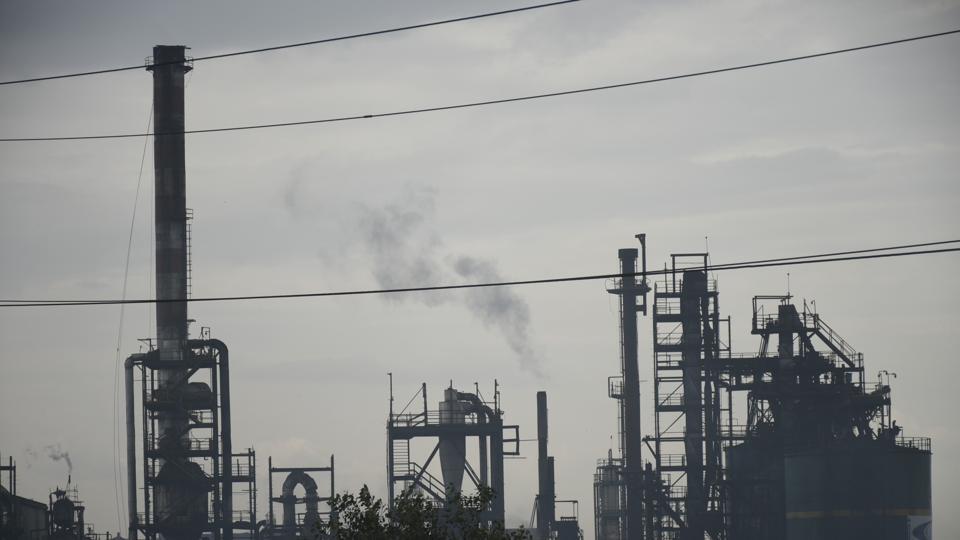
CAQM has also recommended the monitoring of stack emissions (essentially, gases released into the air from boiler stacks, chimneys or DG sets after the incineration process) during the period of Grap, which comes into effect from October 1, as the pollution levels are expected to start increasing from autumn.
To be sure, the commission on November 16, 2021, banned the use of DG sets except for emergency purposes, during the period when Grap is in force. On February 8, 2022, it said DG sets should be equipped with retrofitted emission controlled devices (RECD) and be converted to run on duel fuel mode (gas and diesel) with piped natural gas (PNG) as the main fuel. The commission had also ordered that no industry that has not switched to clean fuels such as PNG will be allowed to operate.
However, in a revised order issued on Wednesday, the CAQM said DG sets which run on duel fuel mode shall be permitted to run for a maximum two hours a day to take care of production/technical exigencies owning to irregular power supply.
“In areas where gas infrastructure and supply is not available, the 800KW and above capacity DG sets may be permitted to run only for two hours on a daily basis in GRAP period,” said the revised order.
The commission said a number of industries, associations, federations and entities have approached it asking for clarity on the use of DG sets during the Grap period as there is no specified procedure for emission compliance/testing of DG sets of 800KW or above capacity.
According to the Central Pollution Control Board (CPCB), DG sets with a capacity of 800KW and above are basically “power houses” and it is not possible to test the efficacy of such retrofitted emission control devices in isokinetic condition.
Instead, CPCB suggested setting stack emission standards for DG sets. Acting on this suggestion, the CAQM has now issued directions regarding the stack emission of DG sets being operated in industries.
“The stack height should be minimum six metres above the building where the DG set is installed – minimum 30 metres from the ground. For example, if the building height where the DG sets are installed is 20 metres, the minimum stack height for the DG sets should be 30 metres from the ground,” CAQM said.
Praveen Kumar, regional officer, Noida, Uttar Pradesh Pollution Control Board (UPPCB), said the department is working to ensure compliance and will issue fines in case of any violation.
Industrialists have welcomed the move, even as they expressed reservations on the cost involved in switching over to clean fuel.
Rakesh Aneja, chairman, Indian Industries Association, Ghaziabad, said, “This relaxation to use DG sets is only if the air quality index (AQI) is are less than 300 during the Grap period. Also, industries were told to shift to PNG fuel by September 30. We met the CAQM members as there were several clauses that we were unsure of and needed clarity on them. The commission has set some standards now, but the industries may need more time to making the shift (to clean fuel). But no time extension has been given yet.”
He said the cost of conversion to PNG from a 100 kVA DG set is around ₹10 lakh, and most industries have DG sets of higher capacity and will entail a higher expense to make the shift.
“Such a major infrastructure change requires funds as well as time. After changing the fuel, one also needs to convert the entire machinery to suit the new fuel. This can be done by bigger industries easily, but it is extremely challenging for smaller industries. There are 28,000 MSMEs (Micro, Small and Medium Enterprises) in Ghaziabad alone,” said Aneja.
Vikrant Tongad, a Noida-based environmentalist, said, “Most discussions around air pollution remain on paper and hardly any real step is taken as people and governments still don’t think of pollution as a real problem. Stringent and regulated steps like curbs on industries are important and the good thing about Grap is that it is “graded” or phased and not a clampdown. Discussions on switching to PNG have been going on for years and industries should have taken steps accordingly.”


