
 E-Paper



RRTS project set to generate 10 million units of power annually, says NCRTC
The National Capital Region Transport Corporation (NCRTC), the agency helming the Regional Rapid Transit System (RRTS) project, has planned a host of measures to save energy and generate about 10 million units of power annually by 2025, when the 82-kilometre-long project gets fully commissioned


The National Capital Region Transport Corporation (NCRTC), the agency helming the Regional Rapid Transit System (RRTS) project, has planned a host of measures to save energy and generate about 10 million units of power annually by 2025, when the 82-kilometre-long project gets fully commissioned.
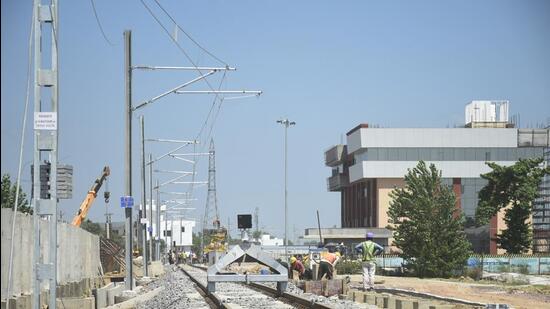
The RRTS project is presently being constructed to link the three cities of Delhi, Ghaziabad and Meerut over a dedicated corridor which will ferry passengers on state-of-the-art trains with a design speed of 180kmph. The overall project has 25 stations and three depots at Jangpura in Delhi, Duhai in Ghaziabad and Modipuram in Meerut.
“For our energy requirements, we will use the concept of blended energy. This will involve use of rooftop solar energy and power saving through regenerative braking, which is a feature of the rolling stock. The third option will be the use of direct power. Through these measures, we will be able to generate about 11 megawatt of power which is about 10 million units annually,” said Puneet Vats, NCRTC chief public relations officer (PRO).
Officials said that the amount of energy generated annually will be 40% of the requirement for the operation of RRTS trains, stations and other facilities.
For the purpose, officials said that all the 25 stations and three depots in the RRTS network will have rooftop solar panels. Under the concept of regenerative braking, there is about 30% saving of power when trains apply brakes and the energy saved is directed back to the grid.
The entire rolling stock for Delhi-Ghaziabad-Meerut RRTS corridor is getting manufactured at the Savli plant in Gujarat under the ‘Make in India’ initiative. The NCRTC has proposed 30 trains of six coaches each, besides 10 trains with three coaches each, which will serve as a local Metro rail transit module in Meerut.
“With this, we are also striving and directing our works to achieve highest IGBC (Indian Green Building Council) ratings for all stations, depots and even our administrative buildings. Further, there will be a provision of rainwater harvesting units and sewage treatment plants wherever possible. These features are presently incorporated at the Duhai depot, which will become operational before March 2023,” Vats added.
Once fully operational, officials estimate that the RRTS project will considerably reduce carbon emissions by taking around 150,000 private vehicles off the road. They added that the entire corridor is estimated to reduce about 250,000 carbon emissions per year, which will help reduce the impact of air pollution.
The country’s first RRTS train has been readied at the stabling yard in Duhai and the trial of the train is expected to commence in the last quarter of the year.
The six coaches comprising a full train-set arrived in Duhai from the manufacturing facility at Savli on June 12.

Stay updated with all the Breaking News and Latest News from Mumbai. Click here for comprehensive coverage of top Cities including Bengaluru, Delhi, Hyderabad, and more across India along with Stay informed on the latest happenings in World News.


