
 E-Paper



C’garh: Healthcare outreach reaches remote Bastar villages, 20 lakh screened in a yr
Among the districts, Narayanpur recorded the highest screening coverage at 68.49 per cent, followed by Bastar at 59.88 per cent

 Prefer HTon Google


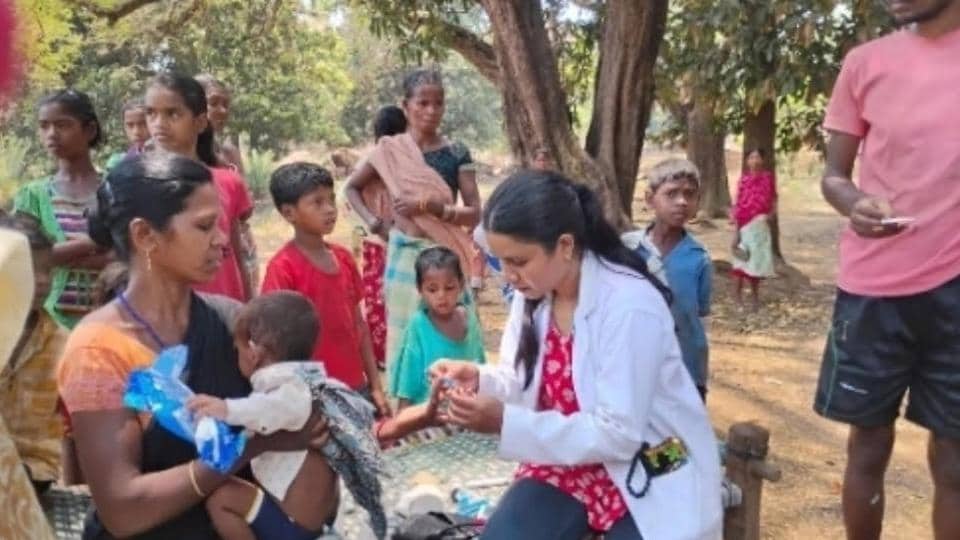
In a major healthcare outreach across the remote interiors of Chhattisgarh’s Bastar division, the state government’s large-scale health campaign has screened nearly 20 lakh people, including residents of several villages that remained inaccessible for years due to poor connectivity and Left Wing Extremism (LWE).
Official data from the health department shows that 19,92,238 people — 57.12 per cent of the targeted population of 34.88 lakh — have been screened so far across the seven districts of Bastar division.
Among the districts, Narayanpur recorded the highest screening coverage at 68.49 per cent, followed by Bastar at 59.88 per cent. Screening coverage stood at 56.24 per cent in Dantewada, 56.02 per cent in Sukma, 55.38 per cent in Kanker, 55.25 per cent in Kondagaon and 53.12 per cent in Bijapur.
Health workers, including Mitanins, Rural Health Officers and Community Health Officers, are travelling through forests, hilly terrain and riverine areas to reach remote tribal habitations. Officials said more than 4,000 village visits and over 20,000 health sessions have been planned under the programme.
Several villages once considered inaccessible due to LWE, including Puvarti, Potali, Errabor, Chintalnar, Orchha and Abujhmad, are now being covered under the campaign.
Also Read: Naxalism has been almost eradicated from Bastar: Amit Shah in Lok Sabha
Officials said healthcare teams are crossing the Indravati River and trekking several kilometres daily to conduct screenings and provide medicines in remote settlements.
“The objective of the campaign is to ensure that healthcare services reach every individual living in the remotest parts of Bastar, including villages that remained disconnected from regular healthcare services for decades,” said Sanjeev Kumar Jha, commissioner health, Chhattisgarh government.
Jha said the initiative is focused on early identification of diseases and timely referral of serious patients to higher healthcare institutions.
“Our teams are not waiting for patients to come to hospitals. The healthcare system itself is reaching remote habitations through door-to-door screening, treatment and follow-up care,” he said.
He added that apart from screening for communicable and non-communicable diseases, healthcare teams are also helping families access welfare schemes such as Ayushman cards and social security benefits to reduce financial hardship related to healthcare.
The screening drive has identified 66,735 suspected patients across Bastar division. Of them, 27,992 people have been referred for further medical care.
According to district-wise referral data, Bastar recorded the highest number of referred cases at 8,029, followed by Kanker with 5,511 and Dantewada with 5,203 referred patients.
So far, treatment has been completed for 7,249 patients, while 3,423 patients have been placed under follow-up care for long-term illnesses and chronic conditions. Another 1,284 patients have been referred to higher medical centres, including district hospitals and medical colleges, for advanced treatment.
-kW0H-U20214218012MgB-250x250%40HT-Web.jpg)


