
 E-Paper



Civic Sanskriti: Vehicle-free utopian dream must become reality for Pune city
“Private-vehicle-free” should no longer be considered only a nostalgia-evoking hill-station idea or one for elite living or as tourist precincts, but an imperative mainstream need for large cities like Pune

 Prefer HTon Google


What is your reaction to the idea of private vehicle-free neighbourhoods and cities?
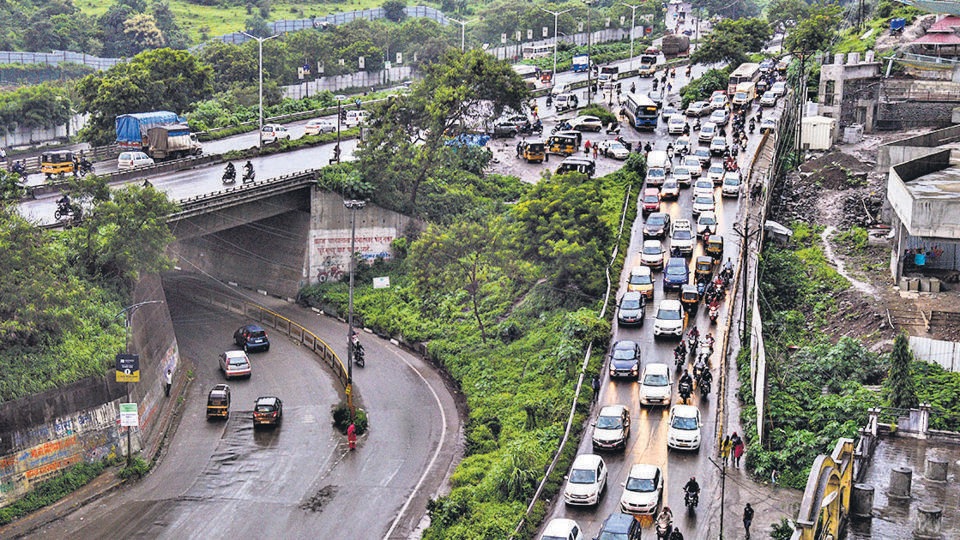
Utopian. Impossible. It’s too hot! There’s no last-mile connectivity; you can’t keep waiting at the bus stop. I won’t reach in time. What about emergency vehicles? People value their time, you know!
These were the most common responses from friends and colleagues to whom I posed the question. Precisely one person said, “Wow, what a city that would be!”
But, busy in our work and lives, sometimes we are so trapped in the present that we might not even dream about a possible future. So, we argue about why an area and city without private bikes and cars cannot be.
The idea of car-free is not new. The Mall Road in Shimla, and Matheran, are famous car-free areas. In more recent times, I’ve seen advertisements for townships providing an added attraction of a vehicle-free zone where children can play and cycle freely and safely. Just about a week ago, the Delhi government launched Chandni Chowk market as a beautiful pedestrian zone.
However, “private-vehicle-free” should no longer be considered only a nostalgia-evoking hill-station idea or one for elite living or as tourist precincts, but an imperative mainstream need for large cities.
We don’t need air pollution. We don’t need road crash deaths. We don’t need road rage. We deserve cities in which moving around is not a struggle. The solution isn’t spending our hard-earned money buying vehicles.
Typically, car-free city designs envisage people walking or cycling for short distances and using public transport for longer distances. For weekend trips to grocery stores locally circulating on-call shuttles could be provided. One can buy or rent a fancy car or bike for a family outing or special occasion, but not use it for the daily commute.
Harshad Abhyankar, Director, Save Pune Traffic Movement, says “What if pollution gets so out of hand that we have to make it illegal to use cars in cities? Every once in a while we decide, for example, that asbestos or saccharine or some medicine is bad for us, and decide to live without it. What if cars are next? Then we will be forced to design a city that relies solely on walk-bus-cycle. The “bus” could be in many forms: Swanky metros, long, big articulated buses, or even 8-seater shared vehicles. We would somehow design our ways around the situation, right? There may be some inconveniences, but in the bargain we will get a clean and safe city for us and our children.”
The specifics of what is needed may vary in different areas. Youth groups and citizens forums could quickly determine current modes of travel, difficulties faced in walking, cycling, and public transport. The findings would lend weight to demands for improvements presented to elected representatives, the municipal and public transport administration officials.
For example, a small survey conducted by the Bavdhan Citizens’ Forum with housing societies’ residents in the Bavdhan area shows the need to improve bus services as well as information about bus services. Of course, the survey numbers are small and more extensive surveys may yield richer data, but the results seem reasonable.
Of 94 people travelling daily or regularly for work, only one used a cycle, three used public transport, eight used company buses, while 82 used bikes or cars. Bikes and cars are the primary modes, even for distances less than 5 km. The reasons for not using public transport include inadequate frequency and connectivity, overcrowding and lack of information about services. About 28% were not aware of PMPML bus services from Bavdhan, and among those who were aware, about 40% did not have information about the bus routes and services.
The need for a change in Pune’s transport systems is so acute that more and more citizens will need to join the efforts to create it bottom-up and advocate for systemic improvements in public transport and sustainable mobility. The fun fact is that our city’s policies and plans are already in place, stating that by 2032, at least 80 per cent of the journeys will be by foot, cycle and public transport. So we must not only hold on to that dream of a largely private-vehicle-free city, but work to make it happen – individually, as a community, and with our government.


