
 E-Paper



Flyover Construction: Boon or Bane? As construction contaminates the air, UPPCB imposes ₹1.85 cr fine on firms ‘violating norms’
These findings are part of the “Assessment of Ambient Air Quality of Lucknow City Post Monsoon Report 2023,” presented by Lucknow’s CSIR-Indian Institute of Toxicology Report (IITR).


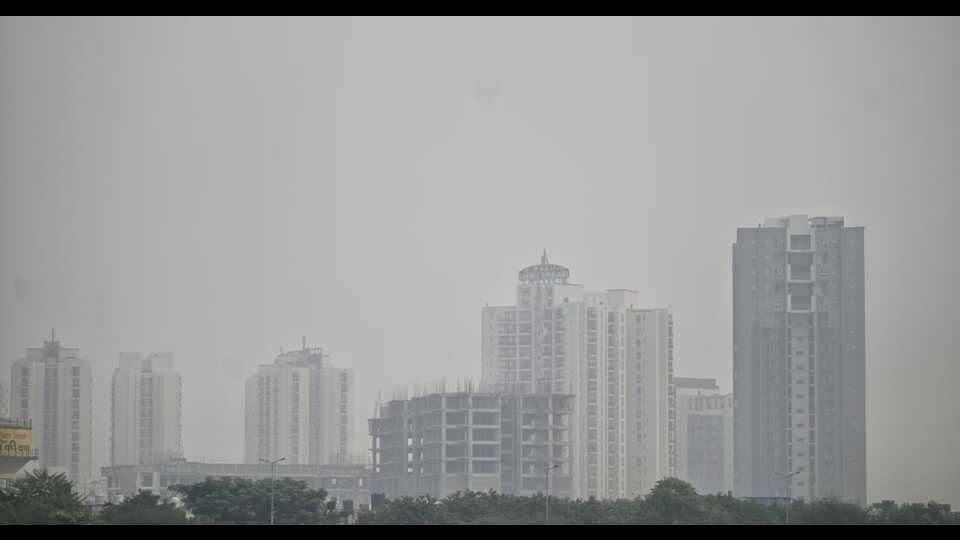
LUCKNOW The ongoing construction of flyovers in Lucknow has raised concerns about air quality, particularly in densely populated residential areas like Indira Nagar. Presently, two flyovers are under construction, one connecting Munshipulia to Khurram Nagar and the other on Amausi Road. Both residential (Indira Nagar) and industrial (Amausi) areas have witnessed a decline in their air quality due to the construction work.
These findings are part of the “Assessment of Ambient Air Quality of Lucknow City Post Monsoon Report 2023,” presented by Lucknow’s CSIR-Indian Institute of Toxicology Report (IITR). The report was released during the institute’s 59th Foundation Day.
The report highlighted that the concentration of particulate matter was highest in Indira Nagar, primarily due to the ongoing flyover construction work. This activity led to increased traffic congestion, higher on-road vehicle density due to traffic diversions on nearby roads, and dust emissions from construction-related activities.
The second-highest concentration of particulate matter was recorded in Amausi, attributed to ongoing road and flyover construction near the sampling site, causing traffic congestion and diversions.
Explaining why flyover construction contributed to increased dust levels, the report noted that both locations experienced high dust entrainment because the roads near them were not fully paved, and construction dust added to the overall particle load in the ambient air.
UPPCB imposes ₹2 cr penalty on firms; others under scrutiny
The Uttar Pradesh Pollution Control Board (UPPCB) expressed concerns over two construction firms working on the flyovers between Munshipulia and Khurram Nagar at Ring Road for not adhering to the standard operating procedures (SOPs) for bridge construction. Umesh Chnadra Shukla, regional officer of UPPCB in Lucknow, pointed out that multiple notices were issued to these firms due to their failure to follow the prescribed SOPs. Consequently, a fine of ₹1 crore was imposed on one firm, while another was fined ₹83 lakh.
Furthermore, UPPCB inspected the other flyover construction site near Amausi based on a Saturday report, and appropriate actions will be taken as necessary.
Pollution nightmare
The IITR’s report monitored the levels of PM10, PM2.5, heavy metals, and noise pollution in September and October at nine locations in Lucknow. These locations included residential areas like Aliganj, Vikas Nagar, Indira Nagar, and Gomti Nagar, commercial areas like Charbagh, Alambagh, Aminabad, and Chowk, and the industrial area of Amausi. In addition to air pollution, the report also examined noise pollution levels during the day and night at these locations.
The report indicated that overall air pollution decreased in 2023 compared to the previous year, likely due to intermittent and scattered rainfall during the survey. In the post-monsoon report, PM10 levels decreased by 20% in residential areas, 51% in commercial areas, but increased by 29% in industrial areas. PM2.5 levels decreased by 44% in residential areas, 58% in commercial areas, and 32% in industrial areas, although they remained above the National Ambient Air Quality Standard (NAAQS) standards.
Notably, air pollution standards in India are calculated based on the National Ambient Air Quality Standard (NAAQS). According to NAAQS, the PM10 standard is 100 micrograms per cubic metre, and the PM2.5 standard is 60 micrograms per cubic meter. In contrast, the World Health Organization (WHO) standards set PM10 at 45 micrograms per cubic meter and PM2.5 at 15 micrograms per cubic metre.
Excessive noise pollution plaguing all areas
Noise pollution levels exceeded established standards in all areas. Amausi had the highest noise pollution in Lucknow, with an average of 79.8 during the day and 72.8 at night. In residential areas, Indira Nagar had the highest noise pollution, with an average of 73.5 during the day and 61.5 at night. The noise pollution standards for residential areas are 55 decibels during the day and 45 decibels at night, while commercial areas have a standard of 65 decibels during the day and 55 decibels at night. In industrial areas, noise pollution should not exceed 75 decibels during the day and 70 decibels at night.
Fuel consumption has risen by 22.2% from 2022
Petrol -- 237%
Diesel -- 24.9%
CNG -- 22.2%


