E-Paper



Jal Board prepared to withstand even 209m water level, says Delhi water minister
The Central Water Commisson’s Upper Yamuna Division on Sunday morning stated that the levels are likely to reach 206.7m after which it will remain steady.

 Prefer HTon Google


With Yamuna river once again flowing above the ‘danger level’ (206m) and a rise of over 1.2m in water level witnessed on Sunday, the Delhi Jal Board (DJB) has started raising embankments and walls around critical equipment in its three vulnerable water treatment plants which were inundated on July 13 impacting a quarter of Delhi’s water supply.
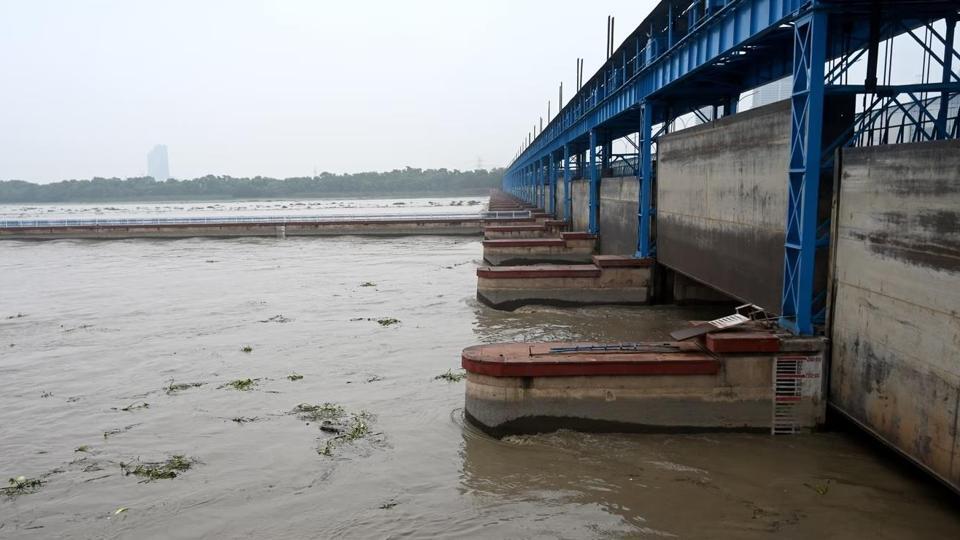
On Sunday, Delhi water minister Saurabh Bharadwaj, who inspected the preparations, said enough arrangements have been made by the capital’s water utility to ensure that the plants continue to operate even if Yamuna swells to even an “impractical and improbable water level” of 209m.
“Even if the river water level reaches 209m– which is very improbable and impractical– the pumps will not be flooded and all three water treatment plants will continue to function,” he said.
Also Read: Yamuna flood threat looms over national capital again
“The Delhi Jal Board teams have carried out the survey of all the vulnerable points from where water can enter these facilities and reinforcement has been carried out through embankments and raising the walls. Last time, the flood water had entered the pump rooms when the Yamuna levels crosses 208m level and three water treatment plants were shut down, but this time we have started preparations in advance,” said Bharadwaj.
Located along Yamuna floodplains, DJB’s three plants at Okhla, Wazirabad and Chandrawal, along with its array of tubewells and ranney wells, were shut down at 9:50am on July 13 due to flooding when the Yamuna water level had breached the danger mark reaching 208.5m.
This crippled around a quarter of the daily water supply to Delhi (998MGD) impacting 20 assembly constituencies in North, Central and West Delhi.
The Okhla plant was restored after two days, the Chandrawal plant after four days and the largest damage due to machinery at Wazirabad water treatment plant led to its phased opening which was completed on July 18.
Bharadwaj further stated that most of the people from low-lying areas of Yamuna are still staying in the relief camps. “The government has made arrangements for water, food, and medicine in these relief centres. We have once again started munadi (public announcements) in the flood-prone vulnerable areas. If people have returned to such areas, they should come back to the relief camps,” he added.
In Noida, houses have already been submerged in low-lying areas due to the rising water level.
DJB operates nine water treatment plants, including Chandrawal, Wazirabad, Haiderpur, Nangloi, Okhla, Dwarka, Bawana, Bhagirathi and Sonia Vihar which cumulatively supply around 998 MGD (million gallons per day) water to Delhi’s 20 million people. During the last crisis period, the DJB water supply had reached as low as 704.3 MGD on July 14 which was gradually restored to normalcy over a five-day period.
Also Read: Green Tribunal cracks whip on HSPCB over illegal sand mining in Yamuna
After receding for a few days, the river has shown marginal fluctuations, raising concerns about potential flooding. On Sunday, the city recorded water levels of 206.2m in Yamuna at 3:00pm following a surge in the discharge from the Hathnikund barrage into the river after heavy rain in parts of Uttarakhand and Himachal Pradesh.
The Central Water Commission’s Upper Yamuna Division forecast on Sunday morning stated that the levels are likely to reach 206.7m between 3:00pm-5:00pm after which it will remain steady.
Delhi considers a water level of 205.33m in Yamuna at Old Railway Bridge to be the ‘danger level’ while the highest ever recorded level of 207.49m on September 6, 1978, was breached on 13 July 2023 reaching a new all-time high of 208.66m.