
 E-Paper



Niti Aayog rankings not a true reflection of Bihar’s transformation: JD-U
Bihar is ranked 28th in the country in violence against women, and reached the national average in gender parity, which is better than 14 states and Union territories.


Bihar may be lagging behind in the overall ranking of states by Niti Aayog, finalised on the basis of yearly progress in achieving sustainable development goals (SDGs), but it has shown marked improvement in gender equality and abating violence against women, which state ministers credit to 15-years of “good governance” by chief minister Nitish Kumar.
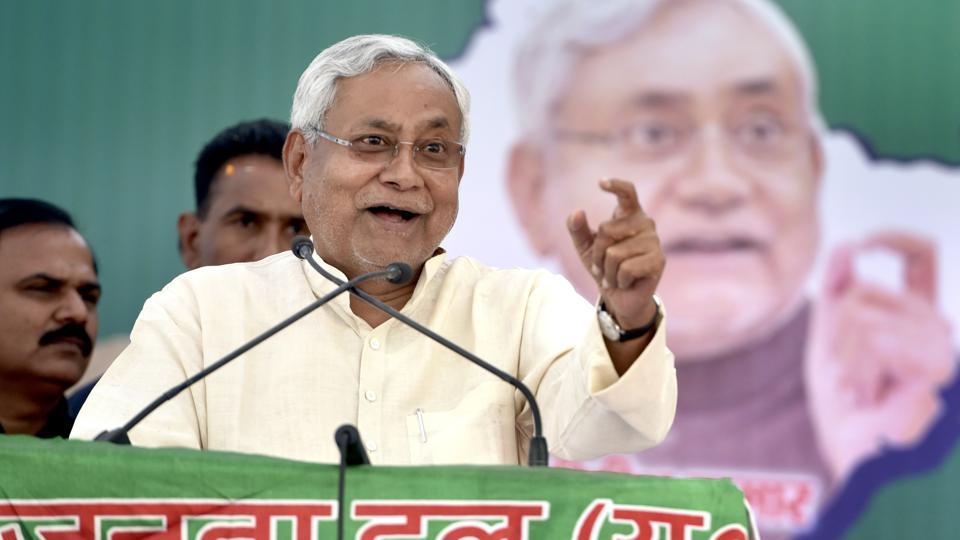
“Bihar has left many states far behind when it comes to two important social indices, gender equality and violence against women, which could prove to be a game changer in the years to come. Bihar has fumbled in some areas due to historical injustices. What needs to be noticed is the state’s phenomenal performance in areas defining societal well being,” water resource minister Sanjay Jha, who is also the national general secretary of the ruling Janata Dal-United (JD-U) party, said.
Bihar is ranked 28th in the country in violence against women, and reached the national average in gender parity, which is better than 14 states and Union territories. The report has handed the ruling party an opportunity to burnish Nitish Kumar’s developmental credentials at a time when he is perceived to be ‘weak’ after JD-U’s less than impressive performance in the state polls. The chief minister has also been criticised for his handling of the law and order and coronavirus situation, with some voices from within the coalition also questioning his decisions.
Bihar’s education minister Vijay Kumar Choudhary cited that Bihar scored 91 for sanitation and clean drinking water, eight points more than the national average and said the ranking methodology doesn’t reflect the true picture of “turnaround” despite Bihar’s limited resources.
“The comparison should be [done] in terms of pace of development in varied fields within a time period, rather than on the basis of overall development indices, which are dependent on historical and geographical factors,” Choudhary said.
He also pointed to yearly improvements in Bihar’s composite score in Niti Aayog’s report since 2018, and said the state has now moved into “performers’ category”, while it is in the “front runners’ category” in five areas.
His colleague and water resources minister Sanjay Jha says while Bihar will need to maintain the tempo for decades to catch up with the developed states--which have enjoyed early advantage--but it has achieved all that was possible in a short span. “Bihar’s growth story under chief minister Nitish Kumar’s leadership is before everyone. Women are today in the forefront in Bihar. They are in police, administration, education, panchayats and everywhere else... and their empowerment is reflected in statistics.”
“Girls, who were in class 1 when Kumar took over as the Bihar CM in November, 2005, have now, theoretically graduated or moved into jobs. They are the real change-makers,” he added.
“For the first time in Bihar, more girls were enrolled than boys in class 9 last year, almost a five-fold increase since 2007-08. It has brought gender parity in school education, thanks to the state government’s bicycle scheme for students opting for higher secondary education,” Jha said.
He lists 11-lakh Jeevika groups in the state as the major tool to make women self-reliant and also counts 50% quota for women in panchayats and teaching jobs, 35% quota in government jobs among measures that are now bearing fruit. “Social indices don’t improve overnight, but once they do, other indices also start improving,” he claims.
According to Pratham study, the highest jump in girls’ school enrolment was 13%, registered in the 2006-10 period. Jha says Nitish Kumar underlined the need for girls’ education to control [the] state’s burgeoning population at the very onset. Bihar has 14.5% share in the total projected population increase in the country during 2011-36, second only to Uttar Pradesh at 19.2%, as per the population projection for India and states 2011-2036 report of the national commission on population.
Nitish Kumar had earlier underlined the link between girl’s education and population control, while speaking in the assembly. “In Bihar, the fertility rate is very high at 3.7%, but it drops significantly with [an] increase in [the] education level of girls. We have found if a mother is matriculate, it drops to two; if a mother is plus two, it goes down to 1.6, less than the national average of 1.7. So, education of girls is the key to solving [the] state’s main issues” Kumar said last year.
Social analyst and the former head of department of economics, NK Choudhary said that Bihar will have to work on areas of improvement. “It is a fact that historical and geographical injustices have been there for decades and no Central government addressed it, but that cannot be an excuse anymore,” he said.

Stay updated Bihar Lok Sabha Result and with all the Breaking News and Latest News from Bengaluru. Click here for comprehensive coverage of top cities including Delhi, Mumbai, Hyderabad, and more across India . Stay informed on the latest happenings in World News.


