
 E-Paper



23 villages in Pune district, 225 across Maharashtra vulnerable to landslides
Across Maharashtra, the Geological Survey of India (GSI) in 2020 identified 225 villages as vulnerable to landslide.

 Prefer HTon Google


As many as 23 villages in Pune district have been identified as vulnerable (dangerous) by the district administration, officials said on Thursday.
Also Read | Cattle, goats killed in landslide, vets to rescue of injured
Of these 23 villages, three are highly vulnerable to landslides and a proposal for permanent rehabilitation of these villages has been sent to the state government by the state water commissioner’s office three years ago. However, this proposal is lying with the ministry and no decision has been taken yet.
These three villages are Dhanvali and Kondhari in Bhor tehsil, and Ghutke in Mulshi tehsil.
Across Maharashtra, the Geological Survey of India (GSI) in 2020 identified 225 villages as vulnerable to landslide, although the local administration from various districts has not been able to shift locals.
Also Read | Irshalwadi tragedy: 499mm rainfall in 3 days loosened soil, caused landslide
“There are 23 landslide-prone villages in Pune district, out of which three villages need to be permanently rehabilitated,” said Pune district collector Rajesh Deshmukh.
“According to the GSI report, a proposal for permanent rehabilitation of the citizens of three villages in the district has been sent to the state government. The proposal has been rectified and resubmitted. Further action will be taken after taking a decision on it from the ministry level,” he added.
According to the geographical situation of both the villages in Bhor tehsil, they are located on a hill slope and the land surface here is not rocky but with red soil, which is vulnerable to landslides.
Also, when there is heavy rain during monsoon. The situation of Ghutke village in Mulshi is also similar.
“The GSI has reported the concerned minor villages as high risk. Accordingly, the villagers of these villages have to be shifted to other places. A proposal for approval in this regard has been sent to the state government. However, it has not been approved yet. After getting the approval of the state government, a new place for relocation will have to be checked by the GSI to find out whether the place is habitable, safe or not, and after that, the process of relocation can be done,” said Deshmukh.
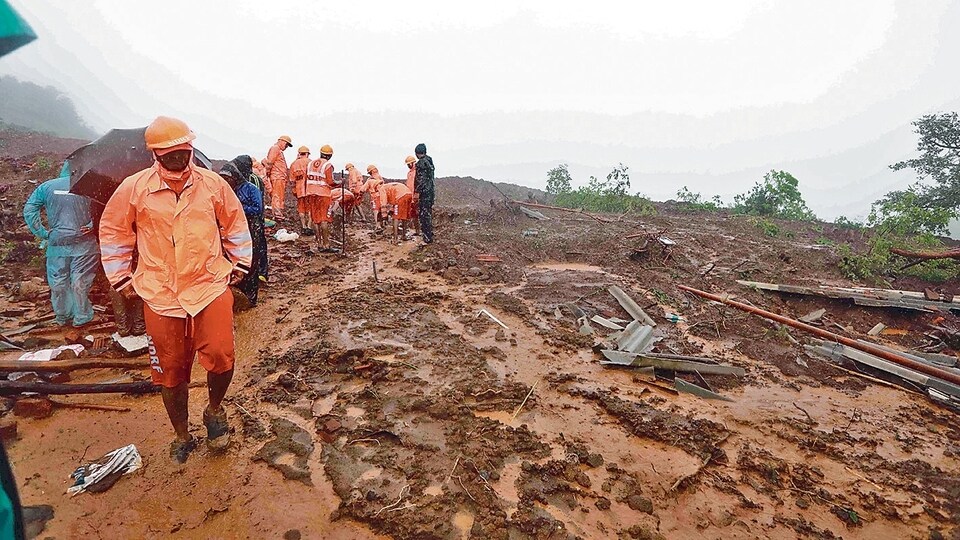
After Irshalwadi landslide incident in which 16 people were killed, deputy chief minister Devendra Fadnavis said, there has been resistance from villagers whose livelihoods are dependent in these areas.
“At the same time, the spots identified as prone to landslide and subsidence frequently keep changing, which makes it difficult for the administration to identify these spots,” he said.
While a major landslide was reported at Irshalwadi in Raigad district, the village does not have a prior history of major landslides.
Earlier in 2014, as many as 151 people lost their lives due to a landslide at Malin village of Ambegaon tehsil. After that, a survey was conducted by the administration.
Accordingly, a fund of ₹3.65 crore was received from the state government. From this fund, the construction of boundary walls, removal of ditches, construction of gabion walls etc. was done in some villages.


