
 E-Paper



Civic Sanskriti: A mobility forum for women, by women
Long waiting times, lack of proper shelters at bus stops, poor road conditions, aggressive traffic, lack of street lights, and harassment are some very common and yet unaddressed issues that a majority of women face


Anita used to walk to school. After Class 10, when she got admission to a junior college about 12km away, her family’s first thought was how will she travel every day? Fortunately, they found at least one direct bus route from a bus stop just 300 metres away, and several possibilities involving one change. Anita and her mother checked out the bus and were happy to find it a workable option.
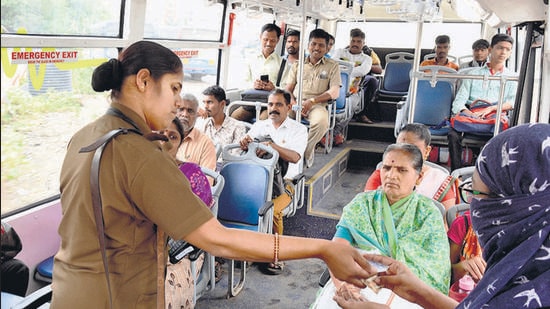
Sadly, this is not the case for a large number of children, women, and the elderly in Pune. Travel modes and patterns of men and women are different. Many more women walk to work as compared to men. The top reasons that women and elderly people use cycles are convenience and affordability. Women are much more likely to use sustainable modes – walk, cycle, public bus, shared rickshaws – but often face an unsafe, unfriendly road environment and inconvenient services.
This is the case in many other cities too. For example, Shriya Khelurkar, studying urban planning at CEPT University, in her research at Ahmedabad found that some girls could not continue their studies, while women found it difficult to travel for work, as it was not easy to even reach the bus stop. No first- or last-mile connectivity, lack of street lights, lack of footpaths, and presence of gambling dens due to a lack of jobs made the journey a daily battle.
Long waiting times, lack of proper shelters at bus stops, poor road conditions, aggressive traffic, lack of street lights, and harassment are some very common and yet unaddressed issues that a majority of women face. The only concession made for women, of reserving the left side in buses for them, has often met with hostility and non-cooperative attitudes among staff and male commuters, but is a step in the right direction.
Unsafe and inadequate transport means that women and girls have fewer opportunities for education and livelihoods!
In 2013, the Pune Municipal Corporation (PMC) prepared a framework for a women-friendly city with the help of the All India Institute of Local Self Government. It details out a number of improvements towards safety, education, health, culture, transportation, water, sanitation, informal sector and housing which all influence women’s everyday lives.
Years have passed since then.
An online discussion last week with women leaders, activists and professionals emphasised taking women’s safety and mobility up a few notches in Pune.
Kiran Moghe, president of Pune Zilha Gharkamgar Sanghatana, who was part of this exercise for gender-sensitive planning in Pune said, “The report was an important step, but we need to see implementation.”
“The transport sector and services are typically planned in a gender-neutral way, with little consideration for the specific needs of women,” said Pranjali Deshpande, a transport planner.
Lakshmi Narayan from Kagad Kach Patra Kashtakari Panchayat, felt that, “Pune should be a city that is conducive for women as commuters, of course. But, we would also like women as drivers, operators, managers, designers and decision-makers in the movement of people, services and goods in the city.”
It is clear, Pune needs a “mobility forum for women, by women”.
Such thinking resonates with a new report by the Kerala Government with support from GIZ which recognizes that reforms in public transport must integrate a gender orientation. The formation of metropolitan transport authorities, using technology for data collection and analysis, and moving to electric buses, should help focus attention on and respond to women’s specific travel and safety needs, the report suggests. Women’s participation in the transport sector in different ways is key to develop a conducive environment for women working in the sector and for women as users.
The leadership of women corporators would be necessary to ensure each ward has a participatory assessment and action for women’s safety and mobility. Women corporators would need to assert themselves and ensure that municipal budgets and programmes, the public bus service and other transport facilities, and the police, become responsive to gender and mobility concerns.
Will Pune’s political parties step up? We would like to see election manifestos present the vision for how Pune can be a city where women and girls have safe, comfortable, convenient and affordable mobility.


