
 E-Paper



Drought hits Solapur, Jalgaon orchards; exports & farm incomes at risk
Pomegranate production in Solapur could decline by around 50% while banana output in Jalgaon is projected to fall by over 40% next year


Drought in Solapur and Jalgaon, Maharashtra’s leading pomegranate- and banana- producing districts, respectively, has put thousands of farmers under severe financial strain, with exports and farm incomes likely to take a hit.
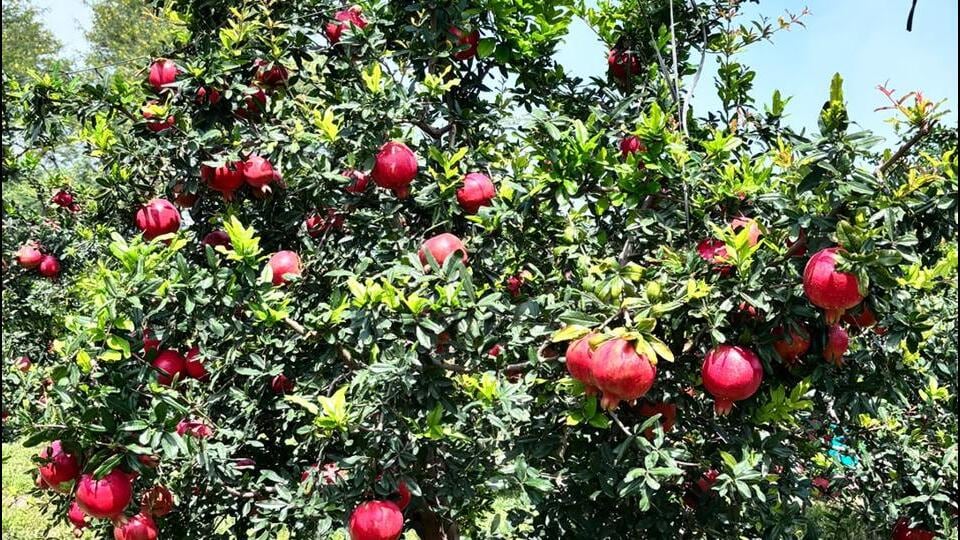
According to the state horticulture department’s preliminary estimates, pomegranate production in Solapur could decline by around 50% while banana output in Jalgaon is projected to fall by over 40% next year. State horticulture minister Bharat Gogawale has said that the government is working on measures to protect orchards affected by water scarcity and that a government resolution (GR) outlining the measures is expected soon.
An advisory issued by the horticulture department states, “Fruit-bearing plants should be watered to ensure their survival. If the plants die, farmers will face substantial costs and lose time while waiting for new saplings to mature. Unwanted branches and leaves should also be pruned to reduce water requirements.”
Solapur
Solapur district agriculture officer S Bhosale said that pomegranate production could decline by around 50% as a large number of farmers are unable to sustain fruit cultivation due to water shortage. “Orchards in the vicinity of the Ujani dam have been relatively less affected because of water availability. However, farmers in other parts of the district are in dire straits. Fruit growth has been stunted, affecting its market value. Exports will also be severely affected,” he said.
Another official on condition of anonymity said, “The December harvest is likely to see lower output because there has been hardly any rainfall since July. The April harvest could be hit even harder as water has already become scarce.”
Exporter Shanker Raut said that shipments to the European Union (EU) countries could become difficult as importers will not accept produce that fails to meet stringent quality standards. “We will try to divert the produce to markets in the Middle East,” he said.
Mansinh Babar, a pomegranate farmer from Manegaon village in Sangola taluka, said that he has managed to harvest produce from only two acres out of his 15-acre orchard in April this year. “On the remaining 13 acres, the fruit could not develop fully due to lack of water. I am now more concerned about saving the plants from drying up than harvesting the fruit. Many farmers are hiring tankers to keep their orchards alive,” he said.
Solapur, in western Maharashtra, is the state’s largest pomegranate producer, with an annual output of over 2.25 lakh metric tonnes from over 32,000 hectares. More than 5% of the produce is exported, while the fruit also commands strong demand in the domestic market. Pomegranates are cultivated throughout the year in Solapur, with harvesting taking place in April, September and December. The crop takes around seven months to mature.
Jalgaon
A similar crisis is unfolding in Jalgaon, popularly known as Maharashtra’s banana capital.
Bharat Ingle, deputy director of agriculture at the Jalgaon regional office, said that water scarcity is likely to reduce the area under banana cultivation. “The main banana-growing hub of Raver taluka has relatively better water availability because it is located along the Tapi river. We are in touch with farmers and are trying to address their concerns,” he said.
Referring to the West Asia crisis earlier this year, banana exporter Vishal Agarwal said, “Exports took a major hit as shipping charges soared, forcing several exporters to suspend operations.” He added, “Just as the export market was showing signs of recovery, production is now expected to decline next year because of water scarcity. It is a difficult time for both farmers and traders.”
Jalgaon cultivates bananas across more than 71,000 hectares, producing over 49 lakh metric tonnes annually. Around 5% of the output is exported, primarily to West Asian countries.
Plantation in Jamner, Chalisgaon and Bhadgaon talukas is generally undertaken between September and December, while farmers in Raver, Yaval and Muktainagar take up cultivation between March and July. Harvesting begins around 10 months after plantation. However, uncertainty over water availability has prompted many farmers in Jamner, Chalisgaon and Bhadgaon to scale back or abandon fresh plantation. Sunil Pawar, a farmer from Jamner who owns 11 acres of land, said that he has planted bananas on only five acres this season, spending more than ₹2.25 lakh. “Even on the five acres, I am using the bare minimum water. I am unsure whether the plants will develop properly as bananas require substantial water. The fruits may remain undersized and become unsuitable for export. Recovering my production costs will itself be a big achievement,” he said.


