
 E-Paper



PMC issues notices to Ruby Hall Clinic, Noble Hospital seeks explanations over dengue test records
The Pune Municipal Corporation (PMC) has sought explanations from Ruby Hall Clinic (RHC), Pune and Noble Hospital, Hadapsar over alleged lapses in dengue reporting and discrepancies in test records, following the suspected dengue death of a nine-year-old girl and a review of diagnostic entries on the government surveillance portal

 Prefer HTon Google


The Pune Municipal Corporation (PMC) has sought explanations from Ruby Hall Clinic (RHC), Pune and Noble Hospital, Hadapsar over alleged lapses in dengue reporting and discrepancies in test records, following the suspected dengue death of a nine-year-old girl and a review of diagnostic entries on the government surveillance portal.
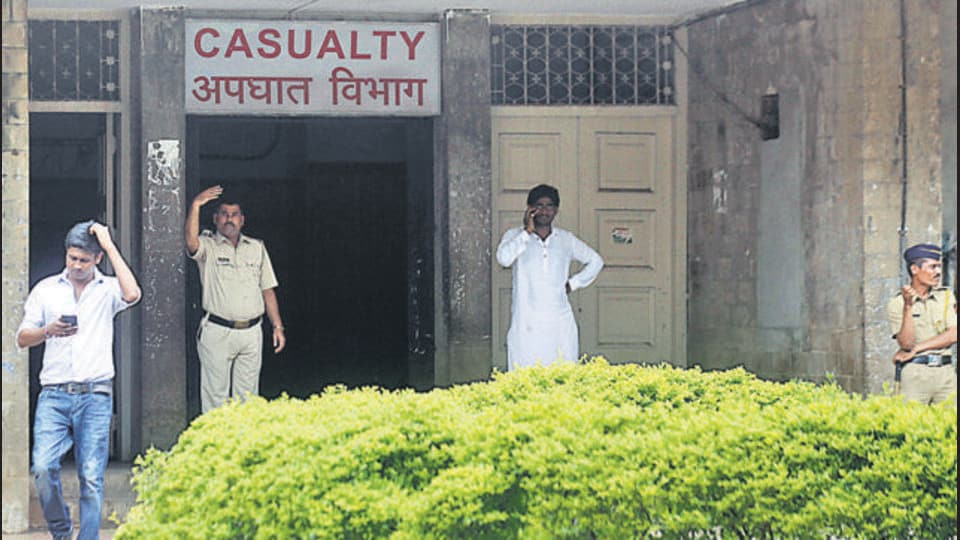
The civic health department issued the notice on October 21, asking Ruby Hall Clinic to explain why information about a minor girl suspected to have dengue infection, who died (October 18) while undergoing treatment at the hospital, was not reported to the PMC’s vector-borne disease control department within the prescribed time. The hospital was also asked to submit her detailed laboratory report and hand over her blood sample in a cold chain for re-examination by the National Institute of Virology (NIV).
The notice states that dengue cases must be reported to the civic body promptly.
Dr Nina Borade, health chief of PMC, said, “The Union health ministry made dengue a notifiable disease in the country in 2016. So, private practitioners and hospitals must report every case of the mosquito-borne infection to the local bodies so that prevention and containment measures can be initiated immediately to check its spread and prevent an outbreak situation,” she said.
In an official statement, Dr Vivek Lal, medical director of Ruby Hall Clinic, Pune, said, “We have received the notice on Saturday and are currently evaluating its contents along with the relevant medical reports. We will review the matter in detail and get back on the same.”
The PMC has also sought an explanation from Noble Hospital, Hadapsar over discrepancies between dengue screening tests conducted on patients and the test method recorded on the Integrated Health Information Platform (IHIP).
The notice, also dated October 21, named three patients—a 35-year-old male, a three-year-old boy and a 63-year-old female. “Their dengue screening had been conducted using a rapid test, while the IHIP portal recorded the method as ELISA, which is used for definitive diagnosis,” said Dr Rajesh Dighe, assistant health chief of PMC.
The civic body asked the hospital to explain the discrepancy within 48 hours. The notice cited a state government order dated September 28, 2016, which caps charges for NS1 ELISA and MAC-ELISA tests at ₹600 each and says rapid diagnostic test kits should not be used for definitive dengue diagnosis,’ it read, a copy of which Hindustan Times has seen.
In its response, Noble Hospital said following a query from the PMC’s health department, it reviewed the dengue test records of four patients. The review confirmed that they were screened using the rapid (card) NS1 test, which the hospital routinely uses for dengue screening, with ELISA reserved for definitive diagnosis. On the government IHIP surveillance portal, however, the test method had been recorded as ELISA instead of card test, a purely clerical error in data entry.
“The entry has been corrected and the updated records shared with PMC. Patients were not affected financially, as the hospital charges the same ₹600 for both the card and ELISA tests. The hospital has also strengthened verification of all portal data entries,” said Dr Sanjay Pathare, chief executive officer, Noble Hospital.


