
 E-Paper



Taste of life: Food for the Gods, steamed, sweet modaks and served with devotion
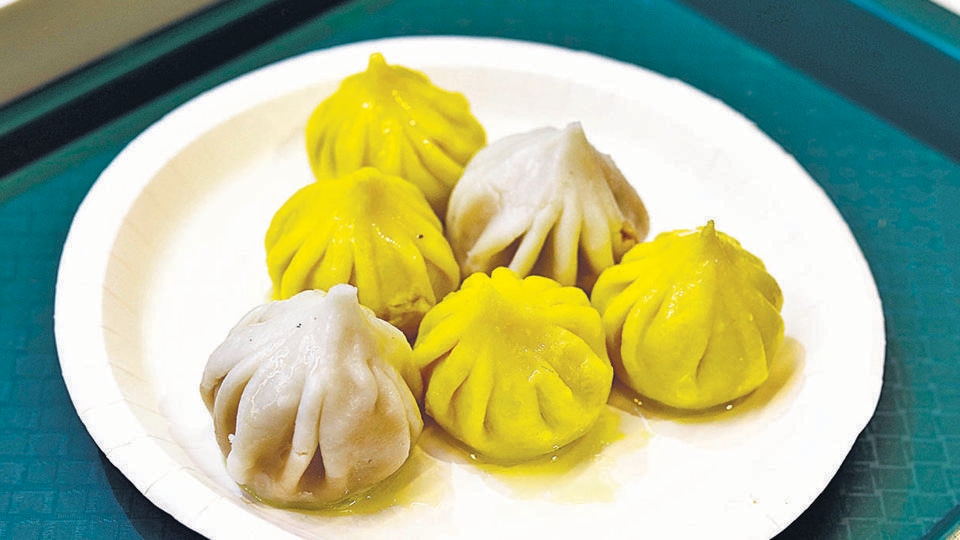
Modak (steamed or fried dumplings with a coconut-jaggery stuffing) started replacing laddoos as Ganpati’s favourite food. Steamed modaks were considered superior to the fried ones, because the former was assumed to be a mark of affluence, class, and taste


Neelkanthshastri Lele came to Pune from Kashi sometime in January 1873. He had spent more than 25 years studying various aspects of the Hindu Dharmashastra at Varanasi, and was in Pune upon an invitation by someone from the illustrious Khasagiwale family. His discourses on Hindu religion had been arranged at the Tulshibaug and Belbaug temples. It was his first visit to the city.
Though initially he was supposed to spend no more than a couple of months in the city, his discourses became immensely popular and he ended up staying for more than a year.
Lele wrote about his experiences in Pune in a series of brief articles which appeared in the newspaper “Jnanaprakash”. The first of the lot appeared in June 1874. As I have been able to find only three articles from the series, I do not know the exact number of articles Lele wrote for the newspaper.
In the write-ups, he gripes at the way people carried on with religious rituals in Pune. The priests and their patrons were lazy, he thought, and “did not pay enough attention to details”. One of his complaints was centred on a feast (Brahmanbhojan).
The aforementioned feast was a part of the then prevalent Ganesh Chaturthi ritual, where a Ganpati idol was made in the morning and immersed the same day, every day for a month, from Shravan Shukla Chaturthi to Bhadrapad Shukla Chaturthi, i.e. Ganesh Chaturthi. Priests chanted Brahmanaspatisukta daily and fasted during the entire course of the ritual. A feast would be organised at the end of the month on Panchami. Kheer, a dessert made from slow-cooked rice, milk, and sugar, and laddoos would be offered to God and then served to the priests and the common public. It was not unusual for entire towns and villages to participate in these feasts.
Lele was the guest of honour at one such feast which took place at Ranjangaon, near Pune. His article suggests that he was beyond pleased by the hospitality of the patron of the event. What irked him was the presence of Gulab-jamuns, a dessert not so common then, along with the customary kheer. “It was preposterous on the part of the patron to include Gulab-jamuns in the meal. Kheer is the favourite dish of the Mooshaka, the vehicle of Lord Ganpati, and it should not be accompanied with any other dessert than laddoos, which are a favourite of Ganpati. One should not deviate from customs, and let the greed to show off wealth overpower the sanctity of religious rituals”, he wrote.
The use of food as a ritual is not often too obvious, but food has always been linked with certain occasions and festivals. Specific foods and dishes are associated with specific deities and religious rituals. The Gods have their favourite dishes, which are supposed to be offered to them (naivedya) first. The devotees then consume the leftovers.
Special food serves to mark the special occasion and bring home to us its significance. Out of innate conservatism, or because this also provides one with a sense of being the guardian of traditions, or out of the need to differentiate oneself, one is supposed to safeguard these heirloom foods and carry the tradition forward.
19th century Pune was one place where food was an integral part of religious rituals, and this would be on display during the Ganeshotsav. Even before the festival went public in the early 1890s, it was celebrated in Pune with extraordinary aplomb. The Peshwas were great devotees of Ganpati, and the tradition of the festival continued during the days of the Raj.
While some families chose to perform the rituals for a month during the months of Shravan and Bhadrapad, many affluent families would install the Ganpati idol on Ganesh Chaturthi for one-and-a-half or 10 days. People thronged their wadas to look at the decorations and sometimes, fireworks. And, to feast.
A report published on September 12, 1861, in “Jnanaprakash” gives an elaborate account of the festivities held at the residence of Sardar Dajisaheb Kibe – “Ganpati Utsaah is being celebrated all over the city like every year. Today is the fourth day of the festival. Shrimant Dajisaheb Kibe is in Pune especially for the festivities, and thousands of men, women, and children are gathering at the Kibe wada to marvel at the decorations. A spectacular frame made up of colourful pieces of glass has been installed above the idol. The hall where the idol is kept is decorated with glass, flowers, and silk. Every morning there is a vocal recital, while a senior priest has especially been summoned from Kashi to perform kirtan every night. Laddoos, karanjis, and pedhas are being distributed as prasad to everyone every day”.
The report also mentions 3,000 Brahmin priests being fed by Kibe daily during the 10 days of the festival. Besan laddoos were served to the priests and other guests. The priests were given Rs5 each daily.
Similar feasts were organised every year by wealthy and influential families like Mehendale, Khasagiwale, Gadre, and Gajre. In 1861, Gajre organised feasts for 10 days from Ganesh Chaturthi to Anant Chaturdashi. Re1 was given to every priest and guest as a mark of obeisance and gratitude. According to “Jnanaprakash”, Gajre spent Rs7,000 every day on feeding his guests. Laddoos and Jalebis were on the menu, along with Masale Bhat (tempered rice with vegetables) and Aluche fadfade (colocasia curry).
Vatli kairichi daal (tempered, ground dal mixed with grated raw mango), dadpe pohe (tempered rice flakes), and karanji were usually offered to the deity and to the guests on the last day of the festival, i.e. Anant Chaturdashi.
Prof Kerunana Chhatre, the Mathematics teacher par excellence, whose students included VK Chiplunkar, BG Tilak, and GG Agarkar, would have an open house on Anant Chaturdashi where hundreds would come to relish dadpe pohe or dahi pohe (curd and rice flakes), and karanjis.
Modak (steamed or fried dumplings with a coconut-jaggery stuffing) started replacing laddoos as Ganpati’s favourite food around the same time. Steamed modaks were considered superior to the fried ones, because the former was assumed to be a mark of affluence, class, and taste. Koknastha Chitpavan Brahmin families who cooked ukadiche modak controlled most of the financial and educational institutions in Pune then.
Even though specifics of ritual eating keep changing slowly and inevitably, food continues to define how people interact with each other. It signifies belonging and is a symbol of a community rooted in long-standing traditions.
After all, society feeds on symbols, myths, and fantasies.


