
 E-Paper



This December was second coldest since 1901
India Meteorological Department (IMD) data showed that Delhi’s mean maximum temperature for December stood at 18.76 degrees Celsius, the second-lowest after 17.3 degrees Celsius recorded in December, 1997.


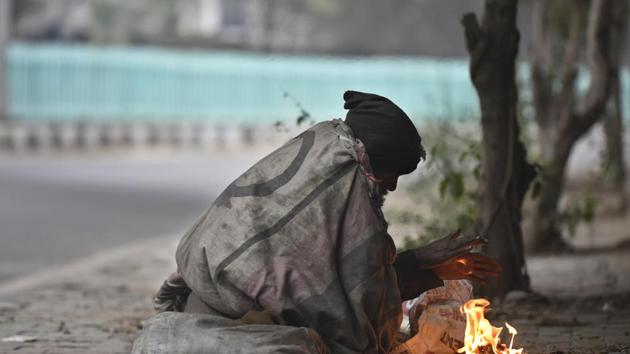
The national capital witnessed its 18th straight cold spell day on Tuesday, making it the second coldest December month on record in 118 years.
India Meteorological Department (IMD) data showed that Delhi’s mean maximum temperature for December stood at 18.76 degrees Celsius, the second-lowest after 17.3 degrees Celsius recorded in December, 1997.
A senior IMD scientist said that the mean maximum temperature for December has dropped to below 20 degree Celsius only four times — in 1919, 1929, 1961 and 1997 — since record keeping began in 1901.
“The mean maximum temperature for the month was 19.8 degrees Celsius in 1919 and 1929, while it was 20 degrees Celsius in 1961,” the official said.
On Tuesday, a day after the national capital experienced the coldest day ever since 1901, Delhiites, however, experienced slight relief from the freezing cold.
The maximum temperature at Safdarjung observatory, which is considered the marker for the city’s weather condition, was recorded 14.6 degrees Celsius. The minimum temperature settled at 4.8 degrees Celsius. This was a marked improvement from Monday’s maximum temperature of 9.4 degree Celsius and minimum temperature of 2.6 degree Celsius.
Kuldeep Srivastava, head of IMD’s regional weather forecasting centre, said that Tuesday’s recording pushed the city into the 18 consecutive “cold days” or an 18-day “cold spell”. Before this, 17 consecutive cold days was recorded in December, 1997.
IMD defines a “cold day” as when maximum temperature is at least 4.5 notches below normal.
“Due to strong easterly winds, with speeds of 14-15kmph that started around 6pm on Monday, the dense fog was dispersed. This allowed sunlight to reach the ground and increased the maximum temperature significantly,” said Srivastava.
The high wind speeds also helped improve Delhi’s air quality on Tuesday. The strong easterly winds helped disperse the pollution particles. According to Central Pollution Control Board (CPCB) recording, the overall air quality index (AQI) of Delhi on Tuesday was 387, which is considered in the ‘very poor’ category.
On Monday, the air quality was in the ‘severe’ zone. The AQI was 446. IMD scientists have forecasted that an upcoming western disturbance, which is expected to hit the city between January 1 and January 3, will improve the city’s air quality further.
“Rain is expected in parts of Delhi and NCR on January 2 (Thursday) and this will improve the air quality further,” a senior IMD scientist said.
System of Air Quality and Weather Forecasting and Research (SAFAR), ministry of earth science’s weather and air quality forecasting centre, predicted that the rain in the next two days will improve wind speed and ventilation.
“Under the influence of the approaching western disturbance, surface winds are likely to pick up speed and improved ventilation is likely to affect AQI positively. AQI is forecasted to improve to the middle-end of the ‘very poor’ category by the New Year day,” the forecast read.
It added that there will be further improvement to Delhi’s air on Thursday.

Stay updated with all top Cities including, Bengaluru, Delhi, Mumbai and more across India. Stay informed on the latest happenings in World News along with Delhi Election 2025 and Delhi Election Result 2025 Live, New Delhi Election Result Live, Kalkaji Election Result Live at Hindustan Times.


