
 E-Paper



By The Way: A cracker of a lesson on Diwali
What do firecrackers have to do with ‘manning up’ a kid? On Diwali, a lesson in how we associate loud and brash with merriment to celebrate the festival.

 Prefer HTon Google


The boy is scared of the noise and fire. Some of us make fun of him for it. And, this Diwali, one of the self-proclaimed saviours of the macho-ness of men even called him a girl. A girl!
(For the uninitiated, ‘girl’ here does not denote a gender alone but an insult, feeding on the idea that the female of the species are to be considered weak for they popularly do not condone violence).
The boy in question is my nephew, who turned three years old at midnight on Diwali. And he is the one who is scared of firecrackers. Look, it’s not like he’s a quiet child or anything even closely resembling that. He might, in fact, blow up our house just for fun someday. But, for the record, he is scared of bona fide crackers that make any boom sounds.
“What a shame! Let’s man him up! Let’s go get some loud crackers!” said Mr Macho, who shall remain unnamed for the safety of this writer. He, obviously, spoke in exclamations.
It was 8pm — hardly 90 minutes short of the deadline for cracker-bursting — and people were genially nibbling on the choicest of sweets, some pouring their drinks, others gorging on family gossip. The house was buzzing, and the nephew was driving around in his newly acquired pedal-driven car. In the latest, he was seen taking a left turn around the bed towards a storeroom that houses his toys. “I’ll just go fetch Chhota Bheem in the backseat, OK mamma!” he had told his mother.
But Mr Macho was not one of those who wait. “The little guy needs to learn how to handle loud sounds and have some fun, you know! Where can we get some crackers now? I hope the sellers haven’t packed up already because of that goddamn ban!”
We headed to Sector 43 where the sellers had set up stalls and were by now selling cheap. Macho got a bagful of bombs and some other, “milder stuff”, for a mere 500 bucks. “The pleasures of buying late on Diwali – living on the edge, as they say!” he winked, ever the cliché.
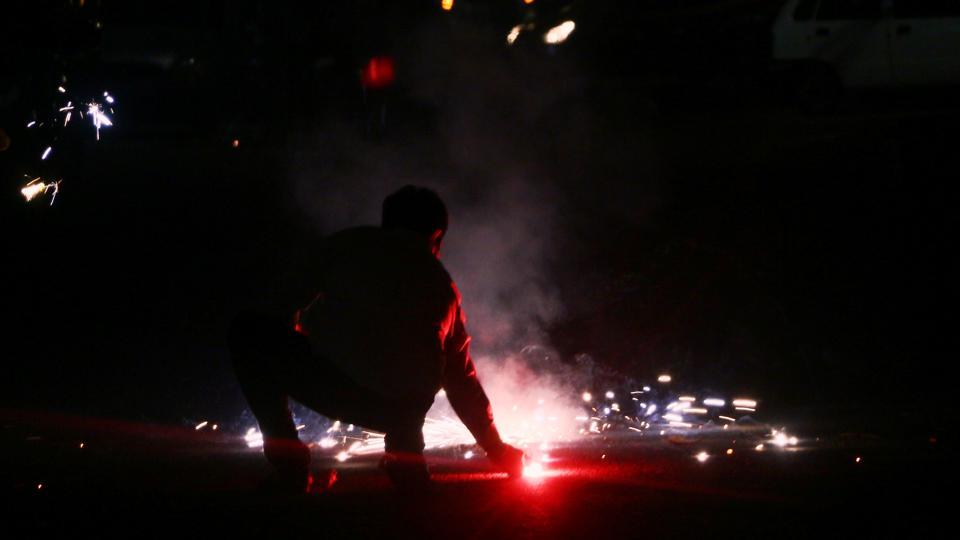
It was 9.15 as we reached back home. If the deed had to be done, it had to be done within the next 15 minutes. So, we rushed. Matchboxes were arranged. A car was moved aside to save it from scratches and a possible blast. Macho was already lighting a match. And the rest of us summoned our teenage spirit so we could make sense of what we were doing despite knowing that it was bad for us.
“Where is the little guy?” Macho asked. The little guy drove out in his red unbreakable-plastic car and waited for something magical to happen. A loud boom happened instead. He left his ride behind to scurry inside. Macho laughed. A dozen bursts and more followed.
The little guy had hidden himself in the toy room. And the other relatives were just waiting for the mayhem to conclude.
The deadline had now passed. Smoke from outside was making its way into the drawing room through a couple of windows left open for ventilation. The rest of the city was contributing, too, though the use of firecrackers had ebbed considerably since last year.
Loud thuds and some weird, spoofy sounds regularly interrupted discussions on whether or not crackers too were burst when Lord Ram arrived back in Ayodhya after winning the war in Lanka, or whether the actors in the Pushpak Viman drama enacted by the UP chief minister a day before Diwali too had found the whole show amusing. A couple of relatives were decrying the court orders against crackers as being anti-Hindu when the noise outside stopped, and they went, “Thank God!”
The little guy slowly walked out of his room, and then went outside to check. “Maamu, are the crackers finished?” he asked.
“Yes, all gone,” Macho replied.
“Good,” he said, and walked back inside.
aarish.chhabra@hindustantimes.com


