
 E-Paper



Ensuring safety and employment for women | Opinion
There are several benefits of having more women bus drivers. For a start, buses will become less threatening spaces for women

 Prefer HTon Google


The delay in the execution of the Delhi gang rape convicts is in the news. Apart from the appalling crime, it brings up the issue of the lack of safe public transport for women. This is one reason why many women either do not enter the workforce or opt out of it, and explains the 21.8% labour force participation for women in India, among the lowest in the world. This suggests the need for innovative thinking. Better street lighting and policing alone are not enough.
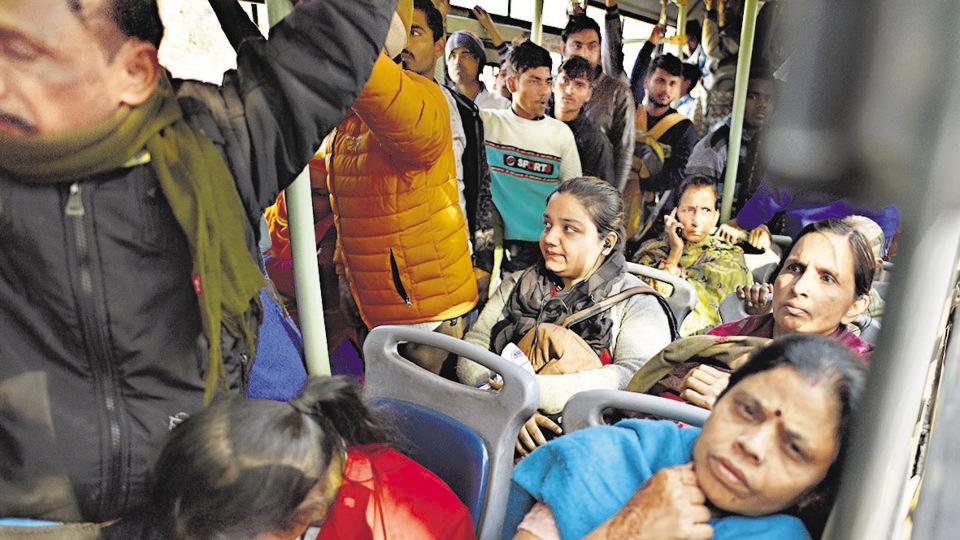
While women need access to safe transport, they hardly have a presence in the transport provision sector. It is almost exclusively a male preserve. While male public transport providers have to be sensitised on how to deal with threats to women in public transport, more women should be encouraged to enter the transport sector.
Women are generally safer in domains where there is an adequate number of other women. To that end, the Delhi government’s free of cost travel for women will encourage more women to come out into public spaces. But this does not mean that women will be safer in public transport. Many studies, notably by the NGO, Jagori, have shown that women face some form of sexual harassment while waiting for public transport or once they are in it.
An initiative which merits some attention is the Women with Wheels programme pioneered by Azad Foundation that aims to bring women into the transport sector as service providers. This challenges patriarchal barriers which keep women out of non-traditional occupations, affords them a livelihood with dignity, and enables them to access opportunities which do not require specialised education.
Under this scheme, which is well worth emulating in other places, over 2,000 women have been trained to become professional drivers. This has had a transformative effect on their lives. While the idea of women drivers found little traction when it was first mooted in 2008, today, several private sector organisations are becoming more open to offering women driving jobs, and there are several new initiatives to train women as chauffeurs.
There are several benefits of having more women bus drivers. For a start, buses will become less threatening spaces for women. Women bus drivers could serve as role models for young girls and break the stereotype of what a girl can or cannot do. But this needs support, in the form of GPS monitoring and prompt responses from the police, to ensure that women drivers themselves are safe first.
There are other problems, which need to be ironed out too. One is the problem of height. Delhi Transport Corporation (DTC), for example, stipulates a height of 5’3” for drivers, both for men and women. This means many women do not qualify. Last year, the Delhi government launched 104 buses with adjustable seats, making it safe for anyone under the stipulated height to drive. Along with this, there have to gender sensitisation efforts for the DTC staff to prevent harassment of women drivers. The next step should be to push for women conductors as well.
There is a similar scheme which has been initiated at Delhi airport to have women taxi drivers to cater to women. Men are required to be accompanied by a woman to use the taxi. These are small initiatives and limited in their reach. But this is something worth considering to address the dual challenge of women’s safety and employment.
Imagine how different it would have been if the bus that the Delhi gang rape victim had boarded had been driven by a woman. Of course, this was not a public transport bus, but a private bus masquerading as public transport. The idea should be to find innovative avenues for women to enter the workforce, starting from public transport.


