


 Live Score
 Cricket Teams
 Cricket Players
363 runs in 4 ODIs: Why Rohit Sharma’s place in India’s World Cup squad should no longer be in doubt
Rohit Sharma has silenced doubts over his ODI future, proving hsi value in every situation and making himself indispensable to India's 2027 World Cup plans.

 Prefer HTon Google


Let us turn the clock back a couple of months. After the Birmingham ODI in the England tour, rumours were rife that Rohit Sharma had been asked to step away from ODIs. Fans, critics, and experts were discussing whether Rohit’s journey in the Blue is nearing its end. The situation demanded an answer from the player, and Rohit Sharma replied in the best way possible.
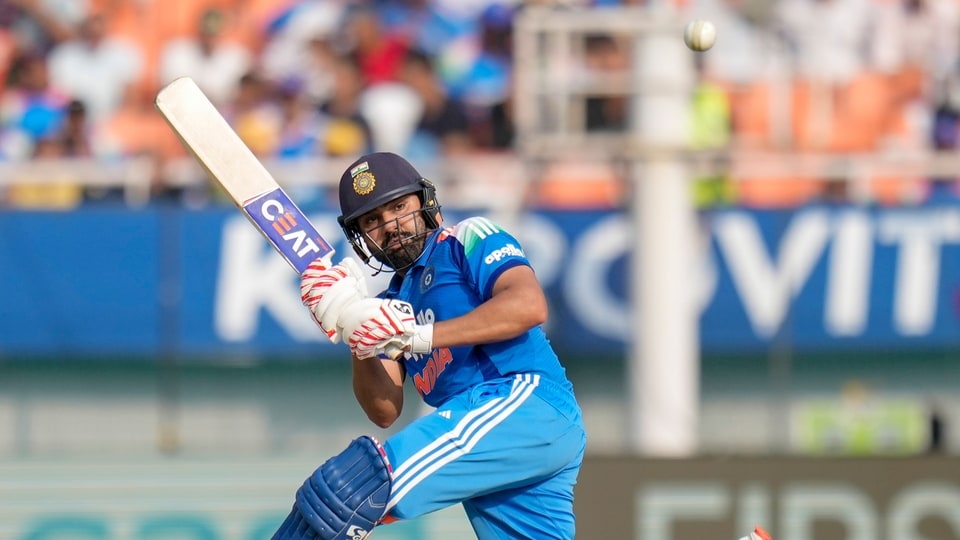
In the third ODI at Lord’s, India were tasked with a daunting chase of 388. Rohit Sharma walked out to open the innings and set up the stage perfectly for his team with a 147-run opening partnership with Shubman Gill. Then he added 113 for the second wicket with Virat Kohli. When he was dismissed, Rohit had 138 runs under his belt from 110 deliveries - an innings decorated with 17 fours and five sixes. More importantly, India were at 260/2 in 38.4 overs, with a very realistic chance of winning the game. Eventually, India lost the match, but Rohit did his job as an opener and put a permanent gag on his critics' lips.
An one-off innings like that can be put to good luck, or great batting conditions or simply the day belonging to him. Although Rohit has proved himself over the years, even Lord’s could not hush all his critics about his ticket to the South Africa flight in 2027. Now, he decided to step up a notch and show two more different versions of himself.
The ODI series vs the West Indies
Rohit made a decent start to the series. He scored 32 off 35 deliveries and was looking good in a 296-run chase. However, he could not convert it into his signature big knock.
Then came the second ODI. On a flat track, the West Indies scored 405 runs and asked India to chase down a target they had never achieved before. India needed a powerful start from their openers. Rohit Sharma stood tall with Shubman Gill. He took the early initiative and removed the pressure from his skipper. As Gill got into his stride, Rohit took the backseat and kept the partnership going. By the time Rohit was dismissed for 101 off just 75 deliveries, India had 255 runs on the board and were en route to a historic chase.
The third ODI put Rohit under yet another test. Shubman Gill and Virat Kohli have been in brilliant form in recent runs. But Jayden Seales decided to bring out the best in him and dismissed the two stalwarts on two back-to-back legal deliveries. India were left reeling at 4/2, and the batting line-up that had looked invincible in the previous two games suddenly looked very fragile.
What did Rohit do? He curbed his attacking instincts and started to play the situation. He bit his time and played out the lethal opening spell of Seales. The result was that India put only 28 runs on the board in the first 10 overs. But that did not faze Rohit Sharma, as the spinners came into attack, he started shifting gears. He waited for his opportunity, bailed India out of the grave and started to come to his own. Ultimately, he fell 8 short of his 36th ODI century, but by the time he was walking back, India had gained ground in the match and were on course for a total that could challenge the visitors.
Aced every test
The first thing we, as viewers, need to understand is that cricket is not a game where scoring a century or a fifty is a regular occurrence. The margin of error for the batters is especially low; it takes only one delivery to end your innings, leaving you with no other attempts to correct your mistake. Under such pressure, Rohit Sharma has aced most of the tests that he had to give.
Lord’s demanded that he be aggressive in a difficult chase away from home, and that while his own spot was the one line. He replied with 138 off 110 balls. The second ODI against West Indies at Barsapara demanded that he set up a stage for a record chase. He responded with 101 off 75 balls. The third ODI asked Rohit to recover the innings after the early departure of Virat and Gill. He responded with 92 off 85 balls.
As planning for the 2027 World Cup starts, Rohit Sharma should be one of the first names on the team list, along with Kohli, Gill, and Bumrah. He has shown that he can handle the bat in all the required gear and manoeuvre in all match situations in the last four ODIs. Add to it his massive experience, when India goes to South Africa, that experience will be highly valuable at the top. After his recent show, Rohit has made himself inevitable for the big World Cup.


