E-Paper



Justice KM Joseph’s parting message: Well-read bar will help judges dispose of cases fast
Emphasising that benches and the Bar are two sides of the same coin, Uttarakhand high court Chief Justice KM Joseph said on Friday that without a well-equipped and well-read bar, judges won’t be able to perform their duty effectively.

 Prefer HTon Google


Emphasising that benches and the Bar are two sides of the same coin, Uttarakhand high court Chief Justice KM Joseph said on Friday that without a well-equipped and well-read bar, judges won’t be able to perform their duty effectively.
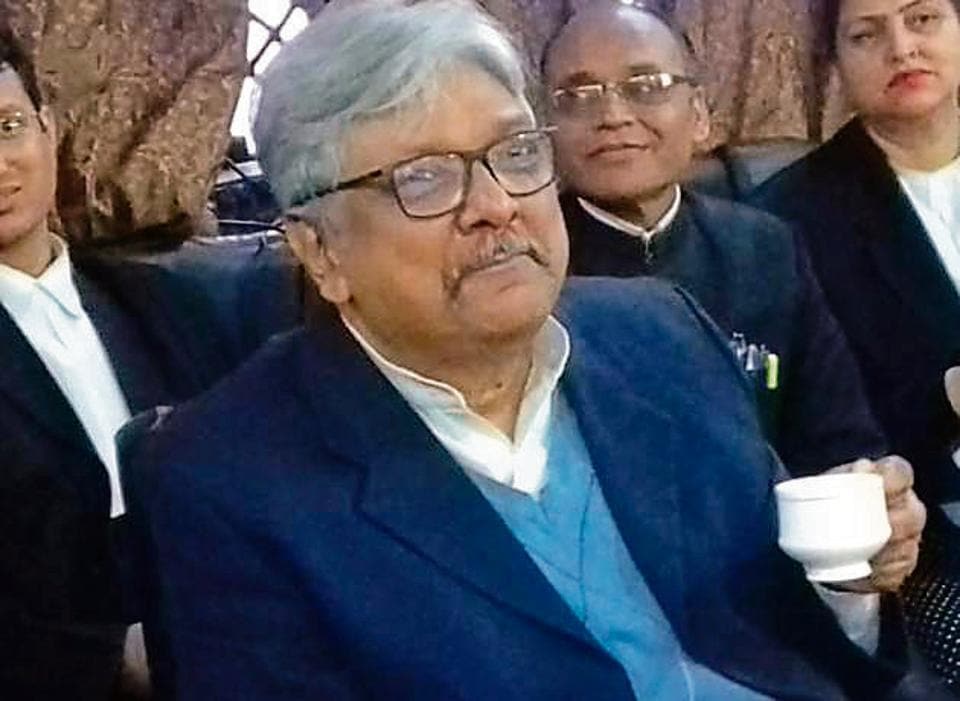
As a cradle for the judiciary, he said, the Bar should continuously equip itself with reading, with so many law reports getting published these days and so many branches of specialisation out there in the domain of law.
“Unless and until the lawyers equip themselves and come prepared, cases won’t be decided fast. If the lawyers come prepared, then there will be no reason for adjournments,” justice Joseph said while addressing the Uttarakhand High Court Bar Association, which invited him after the news broke that government had decided to clear his name for elevation to a Supreme Court judge.
He said he was recently at a conference in Delhi where the issue of pendency of cases was raised. “Everybody agreed that the issue of arrears cannot be solved without the active and effective involvement of the bar.”
Justice Joseph said the bar must assert itself before the courts. “I don’t think any judge has a problem with this. This bar is only 18 years old and it has a long way to go. After 30 to 40 years, later generations of lawyers will look towards you and as such you have greater responsibility to lay foundations of a strong and vibrant bar here. And it is from the bar that you get good judges,” he said.
He said Uttarakhand bar members were well behaved and they never gave him ground for any complaint. “You all say that I have succeeded in giving patient hearing to lawyers in cases. It is duty of every judge to give a proper hearing. It is the right of every lawyer to demand a patient and sufficiently long hearing so that the facts of the case can be kept before the court.”
About the problems he faced in discharge of his duties here, justice Joseph said it was mainly the problem of getting translations (most government documents and FIR copies are in Hindi here).
“I realised that to insist on translations of all documents will take time. In many cases, it hampered my decision-making process considerably,” he said. “Unless translations are made available to the chief justices coming from outside, the decisions will get held up unnecessarily. If translations are not there, the matters will get again and again adjourned.”
Justice Joseph said he had come here on July 31, 2014 and it has been an “unusually long stint” for him from God’s own country to ‘Dev Bhoomi’.
“And it is truly a ‘Dev Bhoomi’ in every sense of the word. The bounty of nature, the people here are simple in ways, everything comes from the heart, nothing is made up when they interact with me. They are blunt and fair. And that is how it should be,” he said. “Ultimately what is important is truth; truth is supreme. And we are trying to pursue truth and in the court of law we should not forget truth.”
Justice Joseph said he considers Uttarakhand as his second home. “The problems of Uttarakhand will also remain with me. In whatever way I can help in solving problems when I am in Delhi, I will certainly do.”