
 E-Paper



25% traffic violations causing congestion and pollution in Delhi’s bad air hot spots
The Delhi traffic police said the number of violations such as improper parking or encroachments on the roads was comparatively higher at these 13 places because of strict enforcement to detect rule-breakers, keeping in mind the high levels of air pollution at this time every year.

 Prefer HTon Google


In the last six months, nearly one-fourth of traffic violations that cause road congestion and add to air pollution were spotted at Delhi’s 13 bad air hot spots, according to data seen by Hindustan Times.
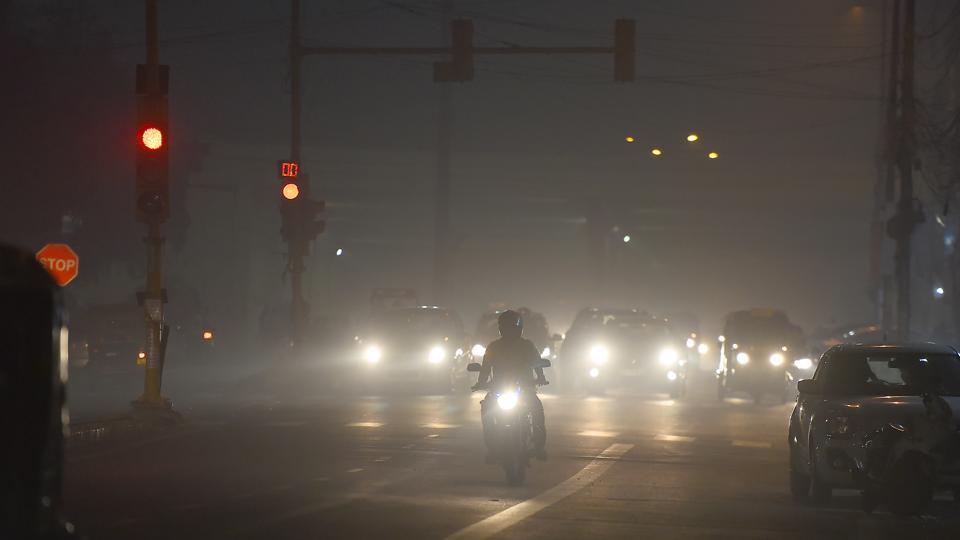
The Delhi traffic police said the number of violations such as improper parking or encroachments on the roads was comparatively higher at these 13 places because of strict enforcement to detect rule-breakers, keeping in mind the high levels of air pollution at this time every year.
Police said they were working with the Centre and the state pollution board to ensure free movement of traffic at the 13 hot spots to keep the PM 2.5 levels in check. A major source of PM 2.5 -- the most harmful aerosol in Delhi’s air -- is primarily vehicles.
According to data, since June 26 police fined 41,809 vehicles for improper parking, which slowed traffic movement and caused congestion, at these spots. Overall, 206,111 fines were issued across the city for haphazard parking.
At least 126 of the 547 vehicles caught carrying uncovered construction material across Delhi were at these spots. In the absence of a proper cover, the construction material mixed with the air, aggravating the air quality.
Hot spots are areas where air quality reaches hazardous levels and can cause severe health problems. The air quality index (AQI) in these 13 spots -- Anand Vihar, RK Puram, Jahangirpuri, Narela, Ashok Vihar, Dwarka, Rohini, Punjabi Bagh, Bawana, Okhla, Wazirpur, Mundka and Vivek Vihar -- is usually higher than the city average.
Also Read| Winter is here: Delhi records season’s lowest maximum temp
Between November 5 and November 10, when Delhi recorded the longest spell of ‘severe’ air days this year, the AQI in at least 10 hot spots touched 500, the maximum value that can be recorded on the AQI scale.
Trespassing on the roads in the form of makeshift huts, shops or hawkers, which add to traffic congestion, was high at the hot spots, where police cleared 3,409 such encroachments with the help of civic agencies. Overall, 24,829 encroachments were removed across the city.
“The CPCB had identified the hot spots based on the air pollution levels. Our traffic personnel are working round-the-clock to ensure smooth traffic movement at these places. Our officers remove wrongly parked vehicles,” said Taj Hasan, special commissioner of police(traffic).
Of the 51,495 people found without valid pollution under control certificates across Delhi, 12,325 were at these hot spots.
Police caught 44 persons for driving vehicles more than 15 years old at these hot spots. Overall, 229 such drivers were caught.
Pollution caused by the high number of vehicles (at least 11 million are registered in Delhi) on roads had prompted the government and courts to adopt schemes such as the odd-even road rationing plan.
The National Green Tribunal also banned diesel and petrol vehicles more than 10 and 15 years old, respectively, from plying. At present, the Delhi government and police are working on an initiative called the “Red Light On, Engine Off,”which been extended till November 30.
Also Read: As Delhi pollution spikes, AAP launches 2nd phase of ‘Red Light On, Gaadi Off’ campaign
Anumita Roychowdhury, executive director (research and advocacy), Centre for Science and Environment (CSE), these 13 areas were earmarked only because the pollution levels there were higher than the rest of the city. She said the only way to improve air quality is to strengthen enforcement in these areas.
“Under the (Supreme Court approved) Graded Response Action Plan (Grap), measures are listed on what needs to done when pollution levels reach a certain category. So the task of enforcing the action plan lies with the agencies. The focus has to be these hot spots,” Roychowdhury said.


