
 E-Paper



Change in wind direction reduces stubble burning share in Delhi pollution to 10 per cent: SAFAR
The share of stubble burning in Delhi’s PM 2.5 pollution has “decreased significantly” and is estimated at 10 per cent for Tuesday, as per the Ministry of Earth Sciences.


The share of stubble burning in Delhi’s pollution dropped to 10 per cent on Tuesday due to a change in the wind direction, according to a central government forecasting agency.
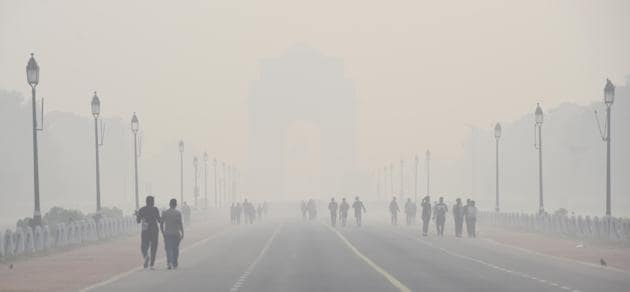
The Ministry of Earth Sciences’ air quality monitor, SAFAR, said 3,068 farm fires were spotted over Punjab, Haryana, Uttar Pradesh and Uttarakhand on Monday.
The boundary layer wind direction became southwesterly on Tuesday morning after a long spell, which is unfavourable for the transport of pollutants from farm fires in Punjab and Haryana, according to the agency. The share of stubble burning in Delhi’s PM 2.5 pollution has “decreased significantly” and is estimated at 10 per cent for Tuesday, it said.
SAFAR said it was a typical example of high fire count and its low impact on Delhi’s air quality due to unfavourable transport level winds, “demonstrating how meteorology can play a decisive role”.
Stubble burning accounted for 16 per cent of Delhi’s pollution on Monday and 40 per cent on Sunday, the maximum so far this season.
It was 32 per cent on Saturday, 19 per cent on Friday and 36 per cent on Thursday.
Last year, the stubble contribution to Delhi’s pollution had peaked to 44 per cent on November 1, according to SAFAR data.
SAFAR has predicted a marginal deterioration in the air quality on Wednesday and Thursday.
The national capital’s air quality slipped back into the “very poor” category again on Tuesday after recording a marginal improvement over the last 24 hours.
Officials at the India Meteorological Department said the air quality had improved on Monday with high wind speed aiding dispersion of pollutants. However, stagnant nighttime conditions led to accumulation of pollutants.
The city recorded an air quality index (AQI) of 311 at 3 pm. The 24-hour average (AQI) was 293, which falls in the “poor” category.
It was 364 on Sunday, with stubble burning contributing 40 per cent to Delhi’s pollution.
An AQI between 0 and 50 is considered ‘good’, 51 and 100 ‘satisfactory’, 101 and 200 ‘moderate’,201 and 300 ‘poor’, 301 and 400 ‘very poor’, and 401 and 500 ‘severe’.

Stay updated with all top Cities including, Bengaluru, Delhi, Mumbai and more across India. Stay informed on the latest happenings in World News along with Delhi Election 2025 and Delhi Election Result 2025 Live, New Delhi Election Result Live, Kalkaji Election Result Live at Hindustan Times.


