
 E-Paper



Cops better than Good Samaritans on Delhi streets, shows data
Despite 110 ambulances being added to the Delhi government’s Centralised Accident and Trauma Service (CATS) ambulance fleet in 2016, the number of patients the service ferries to AIIMS’ Jai Prakash Narayan Apex Trauma Centre remains less than 5%, the data shows.


Nearly 20% of patients in accident and trauma cases are rushed to the All India Institute of Medical Sciences (AIIMS) by the police, while less than 1% are brought in by “Good Samaritans” or people who help strangers in need, according to hospital admissions data over the last five years.
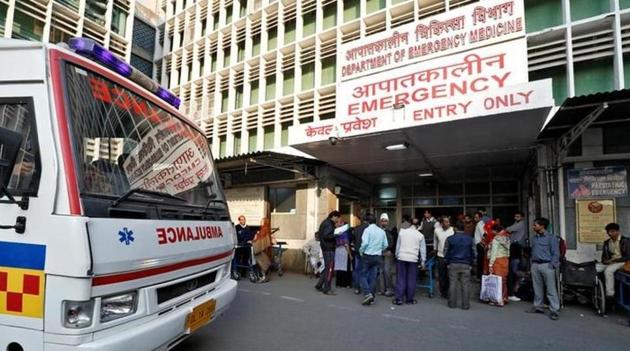
Close to 70% of patients arrive at the hospital emergency ward on their own or with their family, according to the data. Despite 110 ambulances being added to the Delhi government’s Centralised Accident and Trauma Service (CATS) ambulance fleet in 2016, the number of patients the service ferries to AIIMS’ Jai Prakash Narayan Apex Trauma Centre remains less than 5%, the data shows.
The AIIMS Trauma Centre is one of the two so-called Level-1 trauma centres in the National Capital Region (NCR) centred on Delhi, and treats the highest number of trauma cases in the region.
In 2018, of the 78,524 cases at the AIIMS Trauma Centre, 749 patients were brought in by bystanders. In 2015, a year before the Good Samaritan Law was introduced, 512 of the 60,015 patients were ferried by helpful residents. The law is meant to protect bystanders who help accident victims from legal proceedings.
“There hasn’t been a substantial increase in passersby helping road accident victims mainly because, one, they are not aware of the Good Samaritan Law and are still afraid of legal hassles; and two, the law has not percolated to all enforcing bodies, and policemen are still treating bystanders like suspects,” said Dr Sanjeev Bhoi, professor of emergency medicine, AIIMS.

A “National Ambulance Code” drafted by an AIIMS committee set up by the Union ministry of health in 2010 recommended that there be one CATS ambulance for every 50,000 residents in an area. Based on this calculation, with an estimated population of 18 million, Delhi requires 360 ambulances. The national capital only has 265.
“Despite Delhi getting new ambulances, the numbers haven’t changed much, which indicates that the services need to improve,” said Dr Bhoi.
The service remains underused as it is not advertised enough, say experts. “How many people know they can dial 102 for a free ambulance service? How many advertisements have you seen on TV channels or newspapers?” said Dr Shakti Gupta, a member of the AIIMS committee.


Stay updated with all top Cities including, Bengaluru, Delhi, Mumbai and more across India. Stay informed on the latest happenings in World News along with Delhi Election 2025 and Delhi Election Result 2025 Live, New Delhi Election Result Live, Kalkaji Election Result Live at Hindustan Times.


