
 E-Paper



DDA set to resurrect plan to make commercial hubs at Delhi Metro stations
After finalising the land pooling policy, the Delhi Development Authority (DDA) is set to try and again breathe life into its ambitious Transit Oriented Development (TOD) scheme, which has been hanging since July 2015


After finalising the land pooling policy, the Delhi Development Authority (DDA) is set to try and again breathe life into its ambitious Transit Oriented Development (TOD) scheme, which has been hanging since July 2015.
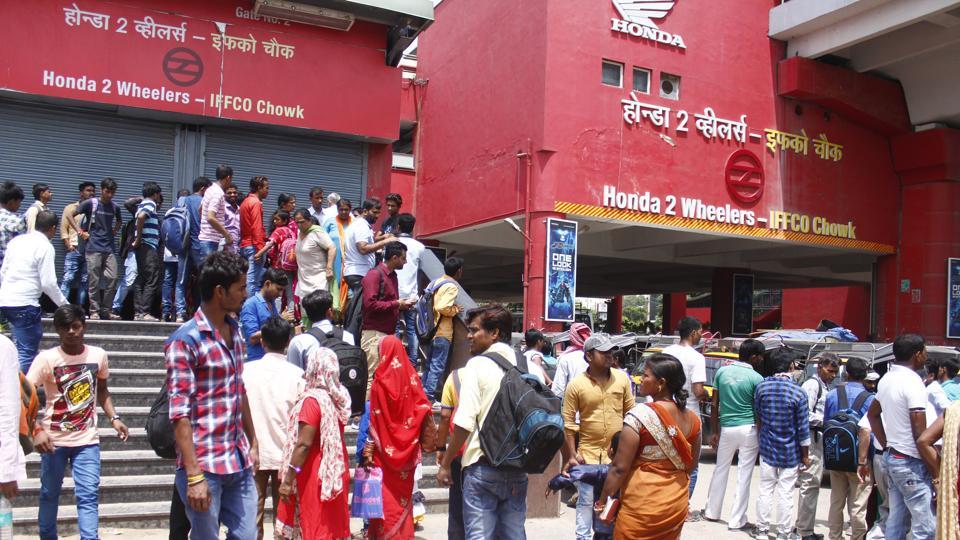
The National Institute of Urban Affairs (NIUA), which was asked last year to review the TOD policy, has already submitted its recommendations to the land-owning agency. Setting up a nodal agency to monitor the implementation of TOD; allowing TOD implementation only on high footfall nodes (Metro stations) and defining the type of development along nodes are some of the changes recommended by the NIUA.
A senior DDA official said, “We will hold discussions with NIUA on the proposed changes in the policy soon.”
The TOD policy, which is aimed at sustainable development around rapid transit facilities such as Metro, was notified in July 2015. It couldn’t be implemented due to objections from the public against DDA regulations issued in 2016. In March 2017, the Union housing and urban affairs ministry had directed DDA to review the policy.
The land-owning agency had initially approved two TOD projects at Karkardooma (spread over 30 hectares) and near Sanjay Lake (spread over 10.26 hectares) in 2014 and 2015 respectively. It had tasked the National Buildings Construction Company (NBCC) for the implementation of two projects. Work couldn’t start as the policy was never finalised.
In its report, NIUA has recommended some major changes in the policy. Jagan Shah, NIUA director, said TOD should be implemented along nodes (Metro stations) which have a high footfall. Under the existing policy, TOD development can happen around any Metro station irrespective of footfall. “We have recommended that TOD should be allowed around nodes where footfall is high. Based on an economics rationale, for the initial rollout, we have defined a threshold for a node to be considered for TOD,” said Shah.
The research body has also suggested extent of development around the nodes. It has divided the area around the node into three concentric zones based on distance. “Multi-modal integration should be fully implemented within 300m of the node. It will allow for facilities for users and higher capitalisation of the footfall within the node. Within 500m, we have suggested higher Floor Area Ratio (FAR of 400 is permitted in TOD), and mixed land use like commercial and small residential units. In 800 m, there should be appropriate street level infrastructure for pedestrians and non-motorised vehicles. Car parking will be highly restricted within the zone,” he said.
Keeping in mind the multiplicity of authority in Delhi, NIUA has recommended that a special agency be setup to regulate the implementation of TOD.
DDA officials said it is not binding on the land-owning agency to incorporate all the NIUA recommendations.
A DDA official aware of the development said there are major concerns regarding the implementation of the policy and its impact on traffic and civic amenities. The policy proposes higher FAR within 500 metres of the transit facility. “We have to assess the effect of higher FAR on the neighbouring areas and existing civic amenities; traffic generated at the new development and its movement. There is a need to do an assessment of the impact,” said the official.
Experts stress on the need to ensure that the civic infrastructure is able to take the increase in load due to the new developments. “The main idea behind TOD is densification along the transit corridors to promote public transport. There is a need to do development impact assessment to ensure that the existing infrastructure is not burdened,” said R Srinivas, town and country planner, Town and Country Planning Organisation, an apex technical advisory body on urban and regional planning strategies. “For TOD to be a success, last-mile connectivity is crucial. Other modes of transport must be integrated with mass transit facility to provide last mile connectivity,” he said.
Experts say that efforts should be made to ensure that the new development doesn’t put a strain on the existing infrastructure and results in displacement of people living in the area.
Urban designers agree with NIUA’s recommendation that TOD should be location specific. They say densification should be carefully planned.
Arunava Dasgupta, head of urban design department at SPA, said: “To handle density around transit corridors/points is one of the major challenges. There is a need to rationalise the distribution of density along the mass transit corridor. Densification of already densely populated areas is not necessary as it will only add to the burden on civic infrastructure.”
Dasgupta was part of the initial deliberations in DDA on the TOD policy conceived by the Unified Traffic and Transportation Infrastructure (Planning & Engineering) Centre (UTTIPEC). “Another issue we raised was about displacement of population,” said Dasgupta. The real estate cost will go up manifold along the TOD corridor.
NBCC had initially planned a 100-storeyed signature tower at Karkardooma and 50-60 storeyed twin towers at Sanjay Lake project along with commercial, housing and recreational facilities. “The height of the Karkardooma project had to be revised, as we didn’t get necessary permissions. But it will around 50-60 storeyed,” said AK Mittal, chairman-cum-managing director, NBCC. “The designs for the two projects are ready and we are doing the final study to prepare the detailed project reports. We can start the work once the revised policy is notified.”

Stay updated with all top Cities including, Bengaluru, Delhi, Mumbai and more across India. Stay informed on the latest happenings in World News along with Delhi Election 2025 and Delhi Election Result 2025 Live, New Delhi Election Result Live, Kalkaji Election Result Live at Hindustan Times.


