
 E-Paper



Delhi draft policy caps felling of local tree species for projects
Foreign species such as the Vilayti Kikar (Prosopis julifora) and Eucalyptus (Eucalyptus globulus), which are a strain on water and soil, should not be transplanted, it says.


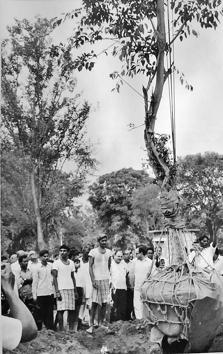
Delhi’s first draft tree transplantation policy, released on Thursday, states that at least 80% of Delhi’s ‘indigenous’ trees will have to be transplanted, with only the remaining being allowed to be felled for construction projects.
Foreign species such as the Vilayti Kikar (Prosopis julifora) and Eucalyptus (Eucalyptus globulus), which are a strain on water and soil, should not be transplanted, it says.
The policy also says that individuals applying to remove less than 10 trees would be exempt and only projects where more than 10 trees have to be removed would be considered for transplantation.
Officials said that citizens will be able to send in their comments to the forest department about the draft till March 15 after which the policy would be finalised. Delhi finance minister Manish Sisodia, in his budget speech on Tuesday, had said that Delhi would be the first state in India to come up with a tree transplantation policy.
Senior forest officials said that with the number of applications for removing trees for development and infrastructure projects had shot up significantly in recent years. Hence, the need to bring in a policy had become important as it will help ensure that ecological losses are minimised.
“Only indigenous trees would be considered for transplantation. Invasive species such as Vilayti Kikar and Eucalyptus won’t be transplanted. The policy says that 80% of the indigenous trees would have to be transplanted. Only 20% of such trees will be allowed to be cut,” said a senior official of the forest department.
The Delhi forest department had faced flak in June 2018 after it gave permission to cut down a few thousand trees for a redevelopment project of government colonies in south Delhi. The proposal was to remove at least 14,000 trees. The permission was later revoked after a huge public outcry and a series of litigations.
A series of other construction projects also got stalled and suffered delays because the forest department had temporarily stopped giving permission to fell trees because of litigations. Even though the draft policy allows to cut down exotic species, it says that at least 10 saplings of indigenous species would have to be planted against each tree removed (felled or transplanted) as a part of compensatory afforestation.
As the process will require special technical expertise, the forest department has also planned to come up with a list of empanelled agencies, which would carry out the task — pre-conditioning of the trees to be transplanted, site preparation, transplantation and after care.
“First a site report will be prepared, wherein physical verification of the site will be done to take photographs of the trees, geo tag them and a preliminary assessment would be done to identify the trees. Priority
would be given to in-situ transplantation,” said the forest official. In case the trees can’t be transplanted around the same spot, it would be transplanted along PWD-maintained roads. The forest department also plans to come up with a land bank for the purpose.
“A dedicated tree transplantation cell shall be established to facilitate and deal with all matters related to tree transplantation in Delhi,” said the official.
The policy also identifies ‘social audit’ as a crucial step for ensuring survival of trees. Ward and assembly level committees would be formed that will comprise citizens, experts and professionals. These committees will carry out regular monitoring of the transplanted trees and also the saplings that are planted as compensatory plantation.

Stay updated with all top Cities including, Bengaluru, Delhi, Mumbai and more across India. Stay informed on the latest happenings in World News along with Delhi Election 2025 and Delhi Election Result 2025 Live, New Delhi Election Result Live, Kalkaji Election Result Live at Hindustan Times.


