
 E-Paper



Delhi- NCR air quality ‘severe’ for 3 consecutive days, likely to improve today
Over the last 72 hours, the air quality in the city has been between 401 and 420. This is the first time this season that the AQI value has remained ‘severe’ for three days in a row.

 Prefer HTon Google


Pollution levels in the NCR remained in the ‘severe’ category for the third consecutive day on Sunday because of a combination of unfavourable weather conditions keeping dangerous pollutants from firecrackers used during Diwali and increased stubble burning in Punjab and Haryana suspended in the air, according to multiple experts who monitor air quality.
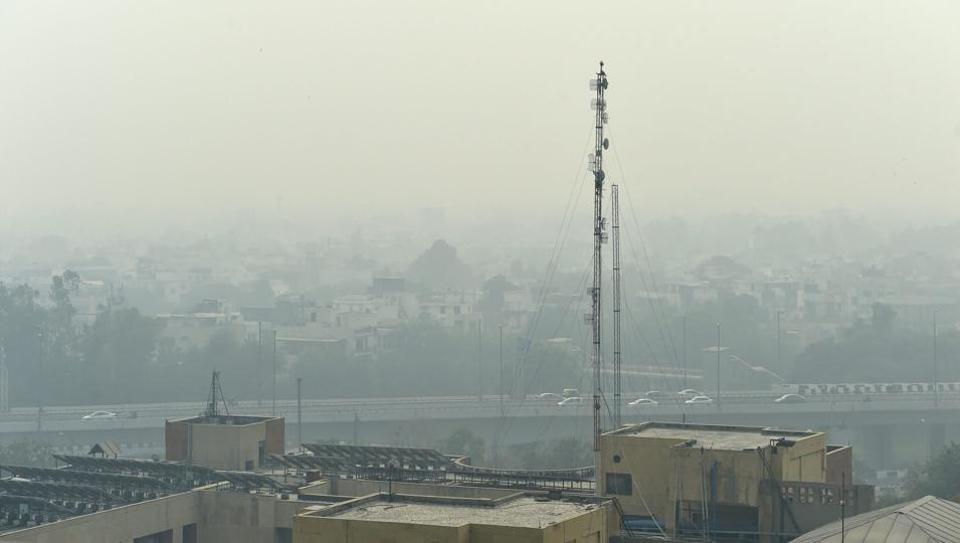
But the Central Pollution Control Board (CPCB) said some improvement was likely on Monday with the speed of surface winds, which have been also negligible for the last three days, expected to pick up.
Delhi’s air quality index (AQI) on Sunday, according to CPCB’s 24-hour average released at 4pm, was at 405. All NCR towns, including Noida, Gurugram, Ghaziabad and Faridabad, were in the ‘severe’ zone — in which even healthy people find it harder to breathe and doctors advise physical activity be kept at a minimum.
Over the last 72 hours, the air quality in the city has been between 401 and 420. This is the first time this season that the AQI value has remained ‘severe’ for three days in a row, indicating that the worst is not over for the region that plunges into a public health emergency every winter.
An AQI value between 0-50 is classified as good, 51-100 satisfactory, 101-200 moderate, 201-300 poor, 301-400 very poor, and 401-500 severe. If the AQI breaches 500 for a 48-hour period, emergency measures have been deployed according to the Graded Response Action Plan (Grap) to fight pollution.
These ‘severe plus’ steps include a ban on the entry of trucks, construction activity, the shutting of schools, and the odd-even road rationing scheme.
“No further action has been proposed at the moment. As per input received from the government’s air quality early warning system, air quality is likely to improve slightly on Monday, lifting pollutants trapped in the air. Pollution levels have been ‘severe’ mainly because of accumulation of pollutants from firecracker bursting on Diwali and smoke from stubble burning, which is not getting dispersed due to calm and cold wind conditions,” said Sunita Narain, a member of the Supreme Court-appointed Environment Pollution [Prevention and Control] Authority (EPCA).
On Saturday, EPCA extended some ‘severe plus’ measures — ban on entry of trucks within city limits, construction activities, and shutting of industries using coal and biomass — till November 12 on the advice of a CPCB task force. These measures can also be invoked if the levels of deadly particulate matter — PM2.5 and PM10 — cross 300 and 500 microgrammes per cubic metre.
The PM 2.5 and PM 10 levels on Sunday were recorded at 271 and 439 as against the safe limits of 60 and 100 respectively.
“As per the air quality forecast, AQI is likely to fluctuate between ‘severe’ and ‘very poor’ with only a marginal improvement expected on Monday. So far, landlocked Delhi is not able to disperse local emissions from November 7-8 [during Diwali] and those from stubble burning which have been building up for lack of adequate wind speed. With some sun and slight wind speed, AQI may improve to ‘very poor’ on Monday after which the task force will review the measures,” said a senior CPCB official who asked not to be named.
He added that air quality has also been ‘severe’ because the ‘mixing height’ (how quickly pollutants can get dispersed) increases during the day but comes down at night due to a fall in temperature. The minimum temperature on Sunday was 12 degrees Celsius, two notches below average.
“The amount of smoke pollutants from stubble burning in neighbouring states, which majorly contributes to PM2.5 levels has been around 13%. Even when local emissions are controlled, smoke coming to Delhi with the northwesterly winds from Punjab and Haryana again spikes pollution. Also, cold and weak winds along with fog results in a thick cover of haze, not allowing pollutants to disperse,” the CPCB official said.


