
 E-Paper



Delhi buses popular but few, cheaper but unreliable
HT SPOTLIGHT | Millions in India’s metropolises are affected by the slowly decaying public transport networks. Here, a Delhi resident narrates her ordeal of commuting on a DTC bus. The city has over 5,000 buses but needs a total of 11,000


It is 9.20am and Samprity Biswas, a researcher in Jawaharlal Nehru University (JNU), sets out from her in-campus hostel to the nearest bus stop. Thursdays being her “reading session” day, her destination is the American Center Library at Kasturba Gandhi Marg in the heart of the Capital.
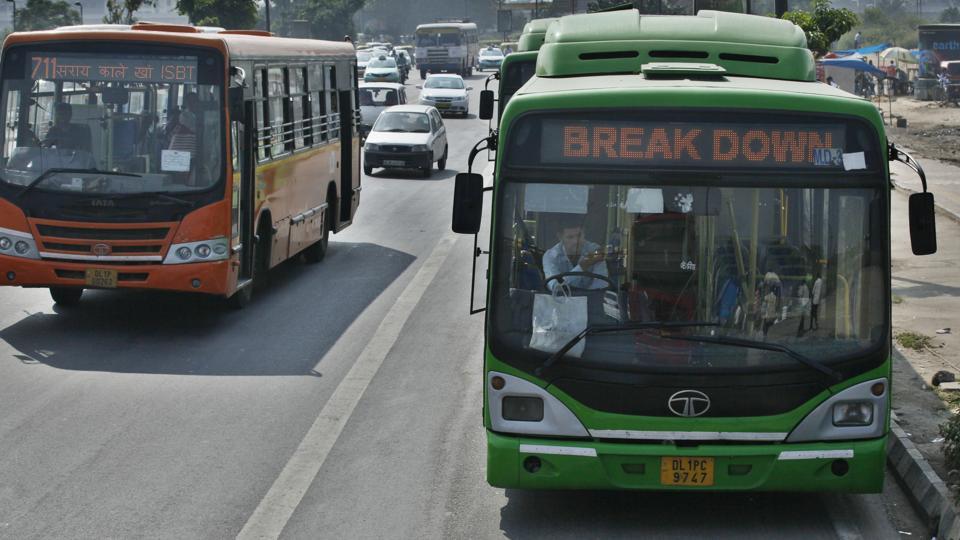
Biswas takes seven minutes to reach the bus stand on foot and it is from here that her ordeal begins, she says. She waits for 20 minutes but there is still no sight of bus number 615, which drops her near Scindia House in Connaught Place.
Bored, she watches a dog crossing her and settling on the bench of the deserted bus stop. “The condition of bus stands not just in JNU, but across Delhi is so pathetic that people prefer to wait outside the shelter on the roads. At some spots, either the bench is broken or the roof is missing,” Biswas said.
Delhi government data indicates at least 700 bus queue shelters are in need for immediate renovation. Besides, the city has only 1,864 shelters against the need of around 4,000.
After waiting for about 30 minutes, which she claimed “is usual”, the 25-year-old MPhil student boards the bus. “The service is still better here as this is the campus area. I have had to wait for up to an hour in areas like Jhandewalan and Karol Bagh for a bus. It becomes a big safety issue, especially when it gets dark. Imagine the plight of other women in the city,” she said.
When asked why she opts for buses despite the uncertainty of their arrival or departure, Biswas said because it is the cheapest mode of transport in the city. It is also the most popular, despite the Delhi Metro expanding its network.
Rates of bus tickets in Delhi start from Rs 5 and go up to Rs 25, whereas, Metro fares range from Rs 10 to Rs 60.
But, it is only when she has ample time that she opts for a bus. “Buses in Delhi are not for those who are tight on schedule as there is no fixed time table and frequency is too low,” she said after managing to get a seat.
The bus journey took her an hour or so, and from the end stop her library was a five-minute walk.
Like Biswas, millions of people in the Capital have to endlessly wait for a bus. This is because despite the Delhi high court directing that there should be a fleet of 11,000 buses, the city has only 5,426 of them.
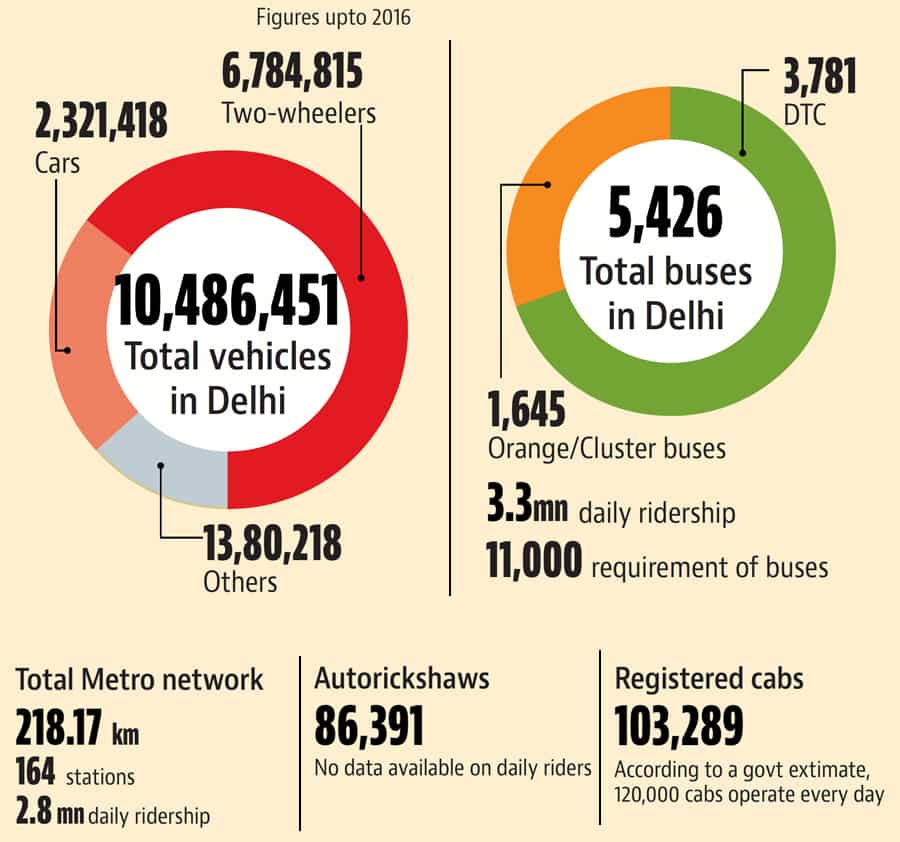
Delhi’s vehicular population is more than 10 million with at least 1,500 new vehicles being registered every day. Two wheelers are around 6.7 million in the city, followed by cars at more than 2.3 million.
Most bus commuters Hindustan Times spoke to said it was rare for them to use the same medium on both legs of the journey. Biswas too fell under the same category.
“It has never been that I have used a bus to get back to campus. I use it only from JNU as the bus number, route and stops are known to me,” she said.
On Thursday too, she took the metro to return to her campus as it is quicker against finding the correct bus, a bus stop and then waiting for it.
She admitted she felt most unsafe in buses. “Men constantly stare and I feel powerless. Safety-wise, I am more comfortable travelling in a Metro,” she said.
Even as she lauded the reliability, frequency and the 217-km-long network of the Delhi Metro, Biswas said the problem in taking the train was that of last-mile connectivity.
“If I have to take an autorickshaw between campus and Hauz Khas, our nearest metro station, auto drivers ask as much as Rs 80-100, while the fare by meter is only Rs 50,” she said.
Now with app-based cab aggregators offering a plethora of deals, Biswas and her friends often take a shared taxi ride to or from the metro which costs them Rs 35-37 per person only.
“In fact, after the metro fare hike, we have also stopped taking metro for short distances that fall in the radius of 5km as cabs turn out to be cheaper,” Biswas said.

Stay updated with all top Cities including, Bengaluru, Delhi, Mumbai and more across India. Stay informed on the latest happenings in World News along with Delhi Election 2025 and Delhi Election Result 2025 Live, New Delhi Election Result Live, Kalkaji Election Result Live at Hindustan Times.


