
 E-Paper


Delhiwale: That M word
A street stall man who refuses to consider himself a migrant.

 Prefer HTon Google


He has been living in the Capital since 1974, “so I’m definitely not a migrant,” says Muhammed Zafar, uttering the M word in English. But this is also true that his entire family—his wife and five of his six children—live in his native village in Bihar, and have never visited him here.
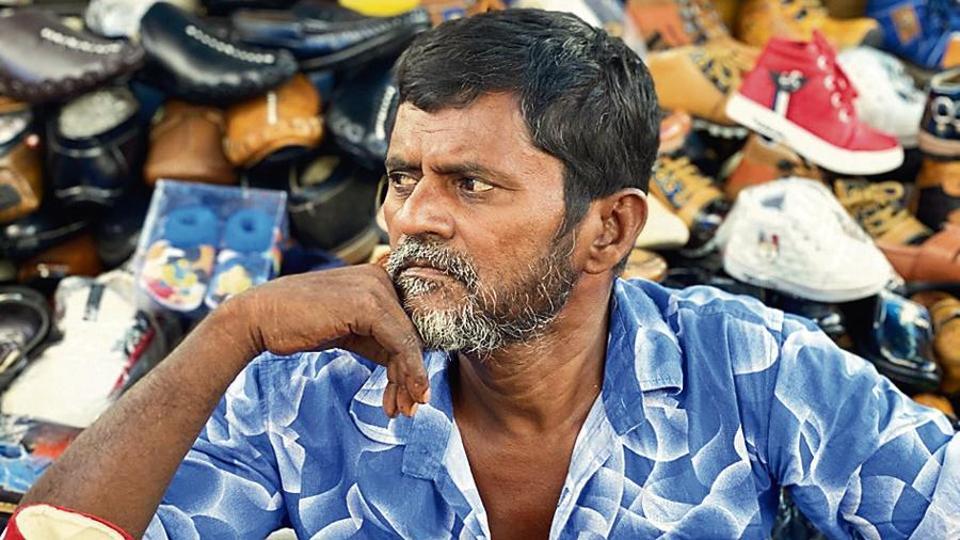
“To tell you frankly, I feel like a migrant when I go to visit my people in the village,” he says in a dead serious tone, as if his solemn expressions would add credibility to his arguments.
In his late 50s, Mr Zafar sells ladies and children footwear on a central Delhi pavement. This morning he is sitting in the middle of the sandal rack, filled up with small and big sandals of all kinds of glossy varieties. Mr Zafar is actually sitting at the very centre of the sloping stall, his figure surrounded by the merchandise he is selling. A small table fan is placed next to him. The roof is a plastic awning that protects him and the sandals from rain and sunshine.
This isn’t his shop though, he clarifies. He works on behalf of the owner.
After decades of being in the city, Mr Zafar does not have a street stall of his own — it doesn’t make him feel unsuccessful, he explains. “My accomplishment lies in being able to feed my family.” That was the reason he left his village all those years ago.
Mr Zafar calls the city his “asli ghar (true home)”, but he has no illusions about the indifference it shows to its dwellers. He cites the coronavirus-triggered lockdown, when all the markets had to shut down, “and suddenly I was out of work, out of money... and nobody here came to my help.”
He went back to his family in Darbangha district “and for the first time in many years I stayed there for four months straight.” Usually, Mr Zafar would visit the place annually for a month, in the winters.
There, despite being among his wife and children, he just couldn’t feel at ease. “Only in Dilli I feel at home. I feel sukoon (calm).”
When urged to explain this dichotomy, Mr Zafar thinks hard for a while. Speaking slowly, he says: When I’m in the village, I’m always full of tensions, for there are few opportunities to earn, and spending my days there means I’m losing out on the money I could have earned in the sheher (city).”
Mr Zafar points out that his eldest son lives in the Delhi region too. “He works in a restaurant in a mall in Noida.” They rarely meet but the son also supports the family in the village.
Anyhow, the moment the footwear seller says he feels most content is when sending money to his family through mobile phone. “And that is possible because of this place,” he says, implying Delhi.
Although these days there are barely any shoppers, “I’m back at work,” and theatrically gesturing his arm about the sandals, he says, “and here is my life.”


