
 E-Paper



Soon, remote sensing detectors to check emissions of vehicles entering Delhi
The Environment Pollution (Prevention and Control) Authority on Wednesday said it will issue a directive to agencies to install remote sensing devices at Delhi’s borders to ensure smart policing of emissions.


Soon vehicles entering Delhi will be automatically tested for toxic tailpipe emissions using remote sensing technology.
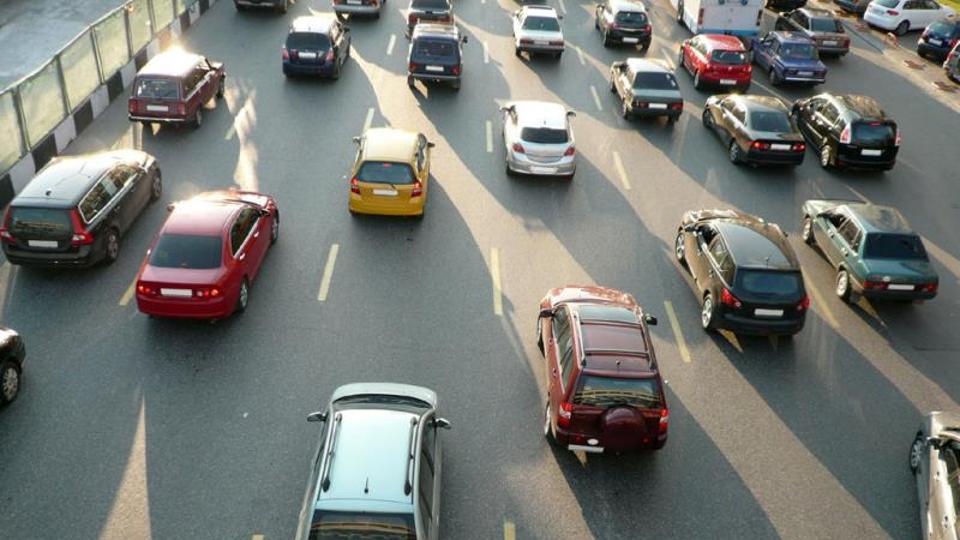
The Supreme Court-mandated Environment Pollution (Prevention and Control) Authority (EPCA) on Wednesday said it will issue a directive to agencies to install remote sensing devices at Delhi’s borders to ensure smart policing of emissions.
EPCA member Sunita Narain said an official announcement on this would be made next month when the radio-frequency identification (RFID) project kicks off.
“Using remote sensors will be crucial in detecting grossly polluting vehicles and this system will be in addition to the existing set-up of fitness tests. The technology will not only help the traffic police to issue spot fines to polluting vehicles, but also help in data collection about specific models of vehicles that are more polluting than others,” she said at a seminar organised by the Centre for Science and Environment (CSE).
A remote sensing device comprises a light source and a detector that is placed on the side of the road or at a height to transmit a laser beam. The beam measures the exhaust fumes remotely through spectroscopy when vehicles cross its light path. “It can measure exhaust plume, and detect opacity, nitric oxide, carbon monoxide, hydrocarbons, and carbon monoxide in 0.5 seconds,” Anumita Roychowdhury, CSE, said.
Beijing in China has heavily invested in remote sensing devices with 27 fixed and 22 removable machines installed across the city. The International Centre for Automotive Technology (ICAT) said it has already conducted trials on 82,000 vehicles so far at three spots – the Delhi airport toll point, Gurugram-Faridabad toll point and Manesar.
“Of the 82,000 vehicles, we could tally only 52,000 as the remote sensing devices do not work accurately when vehicles move in groups. Next, we are going to conduct trials on the Ghaziabad-Dasna toll,” Dinesh Tyagi of ICAT said.
Narian said implementing this in Delhi would be easier. “From next month, RFID would be implemented for which vehicles will anyway have to move in queues to get the scanning done properly. So, along with that, remote sensors would also be able to test individual vehicles in an orderly manner,” she said.


Stay updated with all top Cities including, Bengaluru, Delhi, Mumbai and more across India. Stay informed on the latest happenings in World News along with Delhi Election 2025 and Delhi Election Result 2025 Live, New Delhi Election Result Live, Kalkaji Election Result Live at Hindustan Times.


