
 E-Paper



Capital must get its tree mix right
Plantation drives need to match the needs of the tree with the type of soil, the moisture regime and the climate of Delhi.


You think of New Delhi and the sight of grand buildings surrounded by picture-perfect greenery comes to mind.
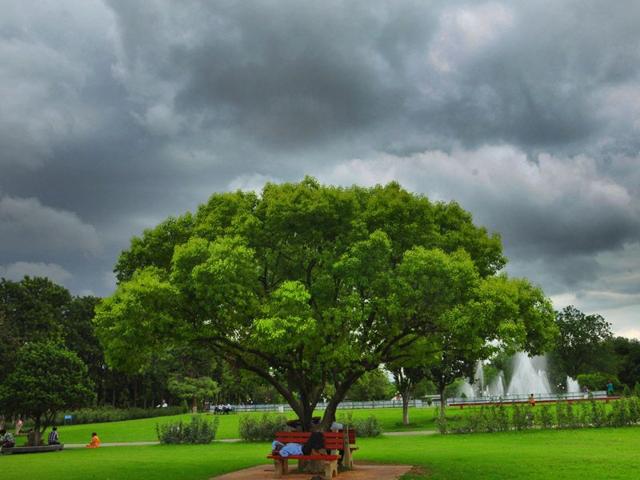
However, trees that have been planted in the city and are thriving now don’t necessarily belong here.
The big trees on both sides of any Central Delhi road include 13 types of avenue trees planted by the British and chosen only because they did not obstruct the view.
“There were mainline species like Jamun, Neem, Arjun, Imli, Sausage Tree, Baheda, Peepaland Pilkhan. Four lesser common species, confined mostly to single avenues, like Putranjiva, Mahua, Jadi and River Red Gum, were also planted. Five other species were planted spottily, mixed, not in ‘pure’ avenues. These are Khirni, Ulloo, Buddha’s Coconut, Anjan and Laurel fig. The British consciously tried to avoid planning trees that they knew to be deciduous, trees that seasonally shed their leaves,” tree expert Pradip Krishen, who has done a detailed study on the flora of the Capital in his book, Trees of Delhi, said.
According to him, if you plant right, you maximise the chances of a tree surviving. This means matching the needs of the tree with the type of soil, the moisture regime (wet/dry), and of course, the climate.
“We know what Delhi’s climate is like. Searingly hot in summer, cold in winter with around 60cm of rain a year, almost all of it falling between July and early September. So most of the year is dry, and this is an important limiting factor for a tree to survive (without assistance) in this city. The soil is not uniform all over Delhi. The Ridge, for example, is rocky and thinsoiled and only trees able to cope with severe drought are likely to survive in Ridge-like conditions. Closer to the river where the soil is deep and loamy is a zone capable of sustaining a lot more trees,” Krishen said.
One of the examples of not planting a tree right is the vilayati kikar.
Most of the Ridge forests are populated with this highly invasive South American plant also called Mexican mesquite. Planted in an afforestation bid, the tree has taken over by killing local flora.
“It behaves like a mad person. Not only does it destroy native plants and biodiversity, it also sucks up groundwater quickly,” naturalist and ecological conservator Vijay Dhasmana said.
The forest department claims that it is not planting vilayati kikar anymore.
Tarun Coomar, additional principal chief conservator of forests, Delhi, says the department in its plantation drives is planting trees which are flourishing in the city. “We have seeds of around 40 species in our nurseries. These are actually growing and flourishing in the city and the seeds, too, are collected from Delhi,” Coomar said.
According to the forest official, the type of saplings being planted depends largely on the soil type of a particular area. In areas near the Yamuna, trees like Jamun and Arjun are planted.
However, for rocky areas saplings of Salai, Dhau, Doodhi and Dhak are better options.

Stay updated with all top Cities including, Bengaluru, Delhi, Mumbai and more across India. Stay informed on the latest happenings in World News along with Delhi Election 2025 and Delhi Election Result 2025 Live, New Delhi Election Result Live, Kalkaji Election Result Live at Hindustan Times.


