
 E-Paper



A gender-wise profile of India’s workers | Number Theory
The concluding part will take this disaggregation further and look at it from the prism of gender and the nature of salaried work in the Indian economy
Updated on: Dec 1, 2025, 09:04:20 IST

 Prefer HTon Google
Share via


Copy link

The first part of this story looked at official labour market data on India and showed that salaried employment peaks much earlier than overall employment in India if analysed by age of workers. The concluding part will take this disaggregation further and look at it from the prism of gender and the nature of salaried work in the Indian economy.

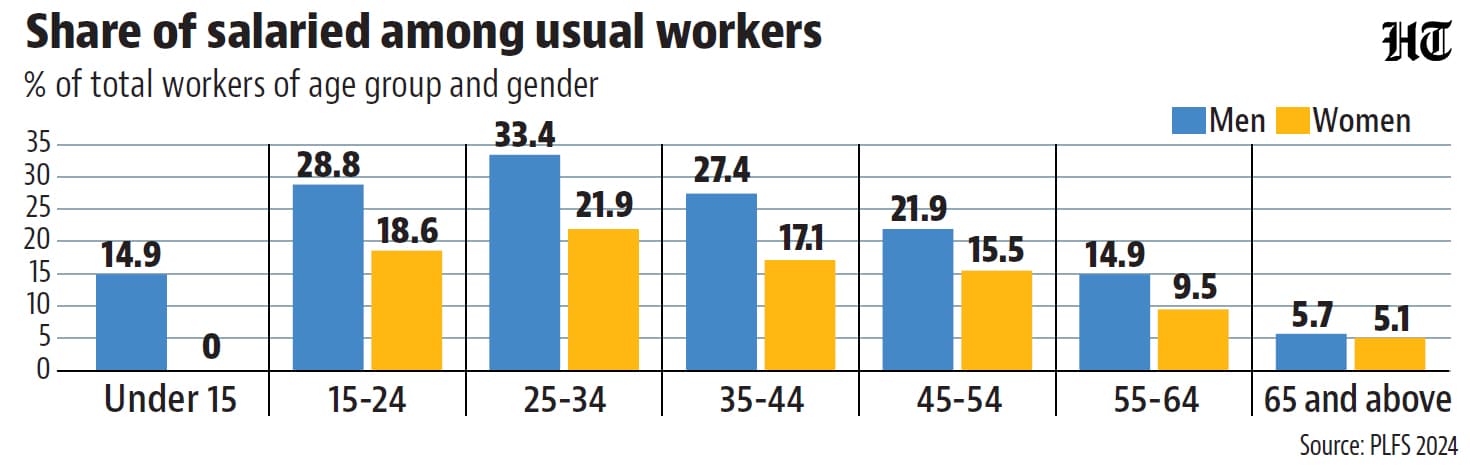
 Women are less likely to have salaried jobs in India than menThat women are less likely to work compared to men in India is a well-known fact. The labour force participation rate (LFPR) for women is 31%, 28 percentage points lower than for men. That women have to shoulder a greater burden of household work and care giving is one of the major reasons for this deficit. However, even among the women who do manage to break the glass ceiling to enter the job market, the disadvantage far from disappears. The share of women workers who have a salaried job in India is significantly lower than this is for men. However, this disadvantage does seem to come down with age.
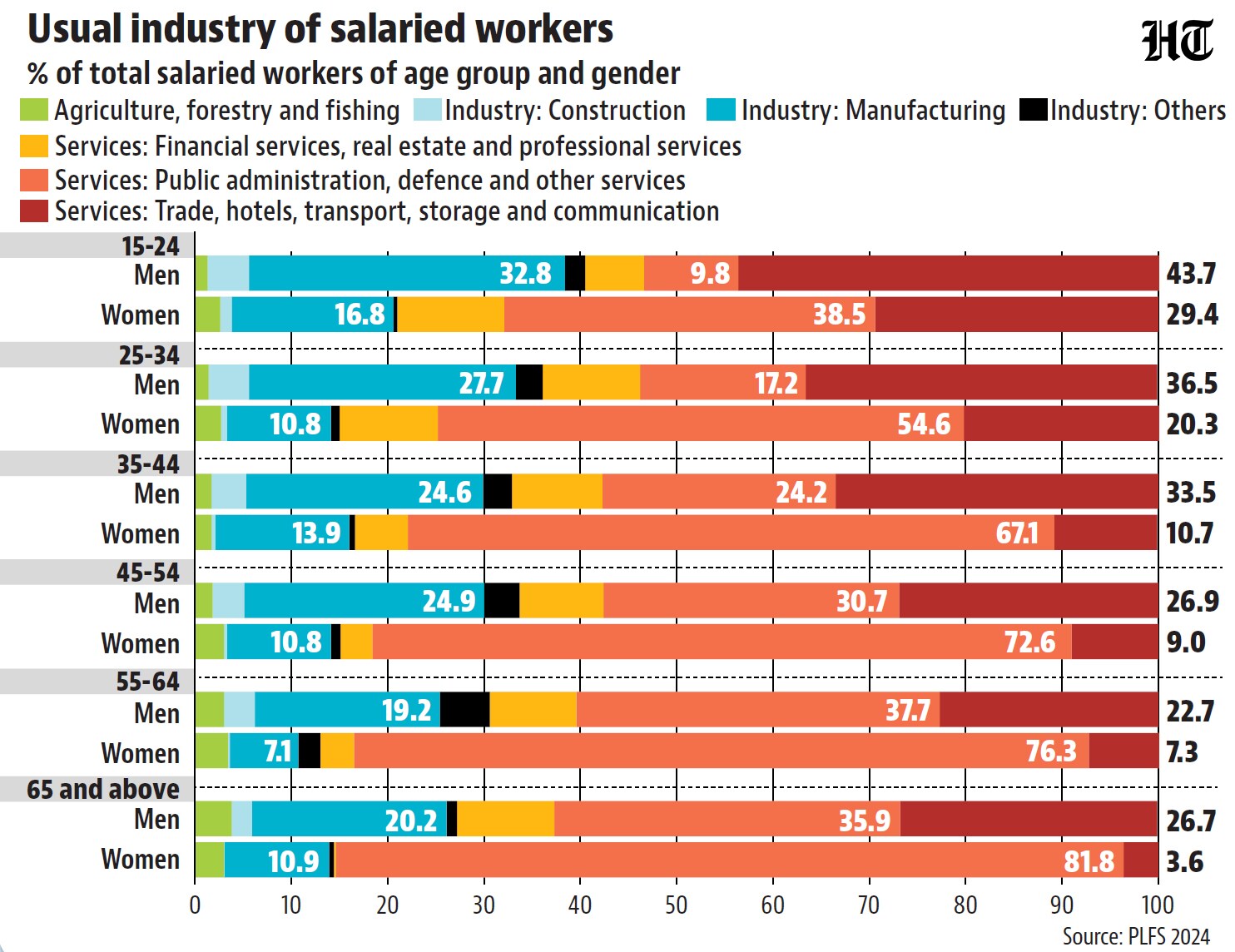
- Women are significantly more likely to be in services salaried jobs than menWhile services have a much larger share in salaried jobs in India than manufacturing, as was shown in the first part of the series, the difference is even bigger for women when compared to men across age groups. The share of salaried jobs for women in services is almost seven times the share of such jobs in manufacturing. This is almost thrice what this difference is for men, and it holds across age groups. What is even more interesting is the fact that a lot of the difference between the share of salaried jobs for men and women in services is on account of just one sub-sector of services: public administration, defence, and other services. To be sure, this sub-sector also includes jobs such as teaching. In fact, the share of other two services sub-sectors – financial services, real estate and professional services; and trade, hotel, transport, storage and communication – in salaried jobs of men is greater than women in India.
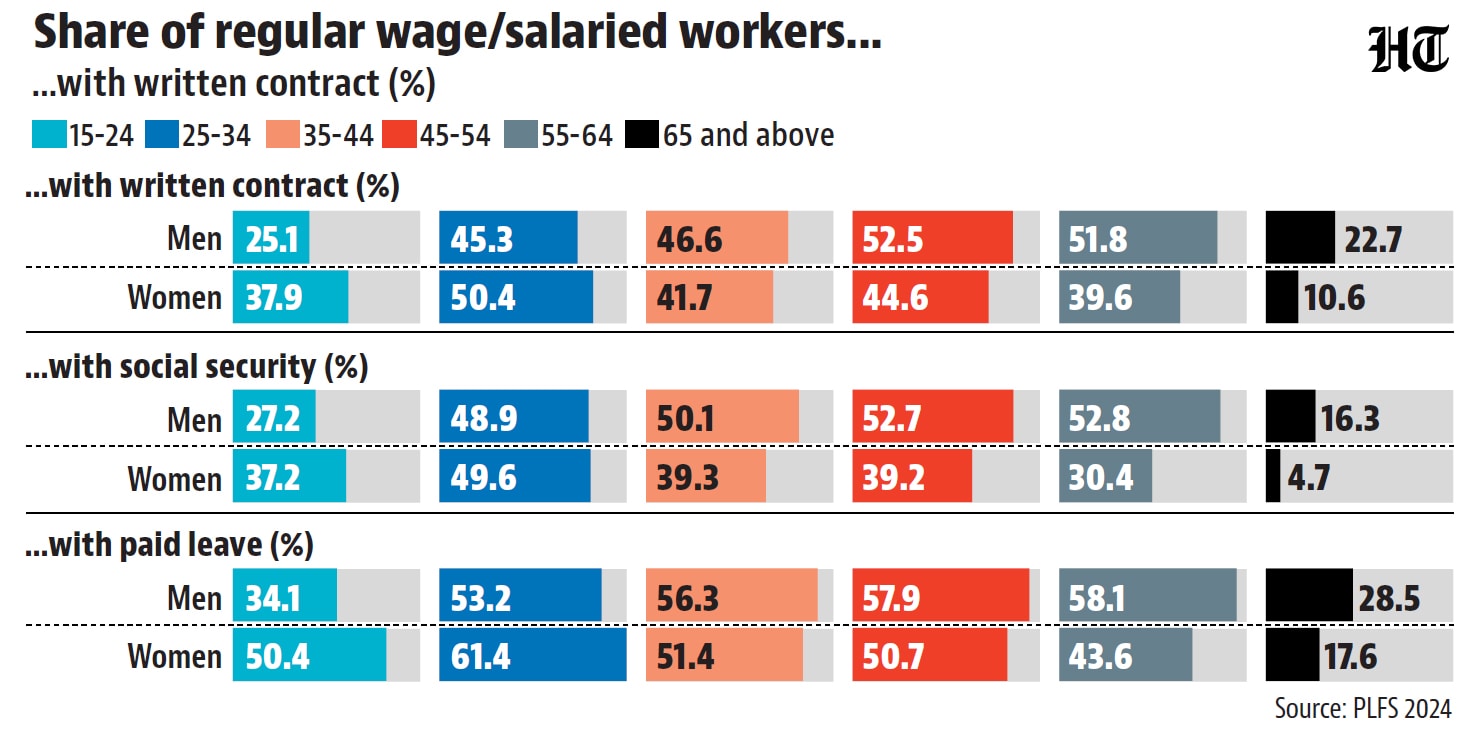
- The gender gap is muted when it comes to quality of salaried jobsThis is another interesting aspect of the labour market in India. While women face a disadvantage in entering the labour market and getting a salaried job, this gets relatively muted when it comes to the chances of landing a better salaried job. The gap between men and women salaried workers in things such as a job with a written contract, paid leave, or social security is much lower than what it is for gender gap in the labour force or salaried workers as a whole. Once again, age seems to play an interesting role here. The disadvantage for women when it comes to the quality of a salaried job increases for women as they grow older because things deteriorate for women salaried workers and improve for male salaried workers.
- While some of the provisions in the recently passed Labour Codes could potentially boost employment of women via steps such as mandatory creches and allowing them to work night shifts in factories, a lot of the gender gap in employment will need social rather than legal course correction.



Unlock a world of Benefits with HT! From insightful newsletters to real-time news alerts and a personalized news feed – it's all here, just a click away! -Login Now!


