
 E-Paper



HistoriCity: When a Portuguese woman in the Mughal court owned land in Jamia Nagar, Sarai Jullena
The history of Jamia university is well known, but that of its surrounding areas remains obscure

 Prefer HTon Google


It is generally accepted that the Mughal empire’s golden age ended with the death of its 6th emperor, Aurangzeb, in 1707. The capital Delhi too began losing its pre-eminence as regional centres became more powerful.
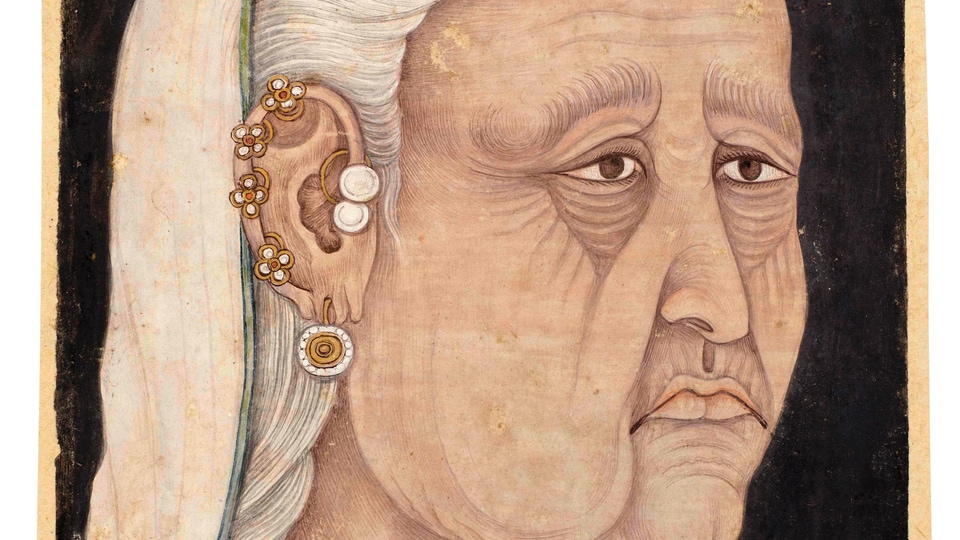
However, even in its twilight the empire lit up the life of Dona Juliana Dias da Costa (1645-1734), a woman of Portuguese descent who arrived during in the Mughal court during Aurangzeb’s time but whose star rose in the court of emperor Bahadur Shah I (reign 1707-1712), and whose memory lives on in the name of Sarai Jullena, a bustling neighbourhood near Jamia Millia Islamia University in Delhi.
Juliana’s arrival in Delhi is the subject of informed speculation but it is well accepted that she was Portuguese and came to Delhi because her husband, a surgeon was in the service of the emperor Bahadur Shah I.
Contemporary accounts are scarce except for that of Italian Jesuit Ippolito Desideri who visited Delhi in 1714. He recorded the incredible influence that Juliana held. According to Desideri’s account, she nearly converted Bahadur Shah to Christianity owing to her piety, and miraculous powers. He wrote, Juliana “was the support and ornament of our holy faith in the empire”.
Other Christian sources also hype her abilities but as Taymiya R Zaman writes in Visions of Juliana, some of this was mere wishful thinking. Zaman says, “The rumors about Bahadur Shah’s conversion on his deathbed are impossible to corroborate, but their presence in
Desideri’s account points to the circulation of tales based partly on truth, namely Juliana’s Christian faith and proclivity for helping Jesuit missions but partly on wishful thinking and embellishment. Francois Valentyn’s Oud en Niew Oost’s Indien (1726), a record of the Dutch Embassy to India under Johan Josua Ketelaar, mentions Juliana
in similarly glowing terms. Ketelaar arrived in Lahore in 1711, the last year of Bahadur Shah I’s reign, and wrote that the king (was) friend to the Christians because of her”.
Saving Bahadur Shah from Defeat
Bahadur Shah I became king despite serious challenges from court factions and his brothers. In this tale of survival Juliana appears as a key character according to the account of Jean Baptiste Joseph Gentil, a French Army Colonel, who fought for the army of Awadh under Shuja ud Daulah in the early 18th century.
Gentil married a grand-niece of Juliana, his account tells us that following a war between heir to the throne, Bahadur Shah with whom rode Juliana on an elephant, and his brother Azam Shah near Agra, Juliana’s sway became stronger. According to Gentil so great was
Juliana’s contribution that Bahadur Shah I said, “If Juliana were a man, I would make her a minister.” She may not have been made a minister but she was richly rewarded including lands that probably comprised most of present day Jamia Nagar, New Friend’s colony, and other neighbouring areas.
Zaman writes, she “was declared the protector of the Christians, a royal title, and the palace of Dara Shikoh”. Attributing Gentil, Zaman adds, “the coronation of the king was held on the same day as the feast of John the Baptist and it was Juliana who crowned the king”.
Juliana was born in Bengal, raised in Kochi, Hooghly or perhaps Surat, and lived in Agra and Delhi where she became a part of the Mughal elite and received lands near present-day Jamia Nagar. She passed away in 1734 as a septuagenarian and left behind considerable wealth for her descendants. However, with the departure of Portuguese
from India as well as the decline of Mughal rule in 1857, the legacy of Juliana diminished incrementally each decade. Now even fragments of her story are difficult to find.
Besides Sarai Jullena, an old cemetery in north Delhi contains the grave of one of her grandsons. RV Smith, the chronicler of Delhi’s history wrote in Lingering Charm of Delhi, “Manuel D’Eremao, after whom the cemetery was named, was born in Delhi about AD 1744 and was probably brought up by his maternal grandfather, Manuel
Gascoine, though most of the wealth he inherited came from his paternal grandmother, Donna Juliana Diaz da Costa. The Captain served as an officer in Scindia’s army, and was in charge of the Fort at Hansi until he surrendered it to Lord Lake in 1803, in return for a large pension and confirmation of his ancestral holdings in Delhi.”
Today, Sarai Jullena is considered a hub for the Malayali community. The area around it is known as Masihgarh (Messaih’s Fort), reported to be Delhi’s only Christian majority neighbourhood. It prides itself on various establishments like churches, schools and hospitals and has a variety of Christian organisations present such as Don Bosco, Holy Family and others. With a proposed plan to declare a crumbling old building considered to be the sarai built by her on the old Agra road, Juliana’s legacy may get a new lease of life.
Agra Canal: A British Scheme to Increase Revenue
Abutting the old Agra road along the course of the Yamuna runs the Old Agra Canal. Its construction began in 1869, after the rebellion had been quelled and the British had acquired total dominance of north India. The motivation was to shift farmers in the present-day NCR region from traditionally grown crops such as jowar, bajra, and cotton, barley, gram, and bejhar (mixed barley and gram) to ‘richer’ crops.
Elizabeth Whitcombe writes in her seminal work, Agrarian Conditions in Northern India, “The next stage would be the introduction of sugar cane, indigo, and opium—all hitherto almost unknown in the area—and an increase in kachhiyana (garden produce); double-cropping would become prevalent. Two or three years later, R. S. Whiteway recorded in the settlement report that sugar cane had in fact been planted extensively along the canal distributaries; the coarser kharif crops, such as jowar, had in fact been “greatly superseded by the more valuable ones,” including cotton, and even indigo had been sown in some villages”.
The canal begins at the Okhla barrage where Yamuna’s water is diverted into it. The canal shoots like an arrow for almost all of its length of 230 kms before re-joining the Yamuna and its tributaries just before Agra.
Visible while landing and taking off from Delhi airport, the canal’s straightness could be confused for a road. When its construction began the reason offered was famine relief. However, the motivation was economic, and also ignored by the British rulers were the ecological damage as well as health risks posed by the swamps that were created due to such barrages and canals. It was engineering challenge as the weir at Okhla had to be made from locally quarried stone, which required the construction of a nearly 5 ft wide Standard
Gauge tramway to carry this stone. This size of Gauge was then exceptional in the country and two suitable locomotives were brought from England to transport the stone.


