
 E-Paper



Is SIR cleaning up rolls or disenfranchising voters? | Number Theory
The concluding part of this series will try to juxtapose some numbers and arrive at possible explanations
Updated on: Sep 4, 2026, 06:30:43 IST

 Prefer HTon Google
Share via


Copy link

The first part of this series looked at the key numbers from the Special Intensive Revision (SIR) results. The larger question, however, remains. What exactly is driving these results? A definite answer is not easy, especially because India’s last published census figures, from 2011, are now obsolete. The concluding part of this series will try to juxtapose some numbers and arrive at possible explanations.
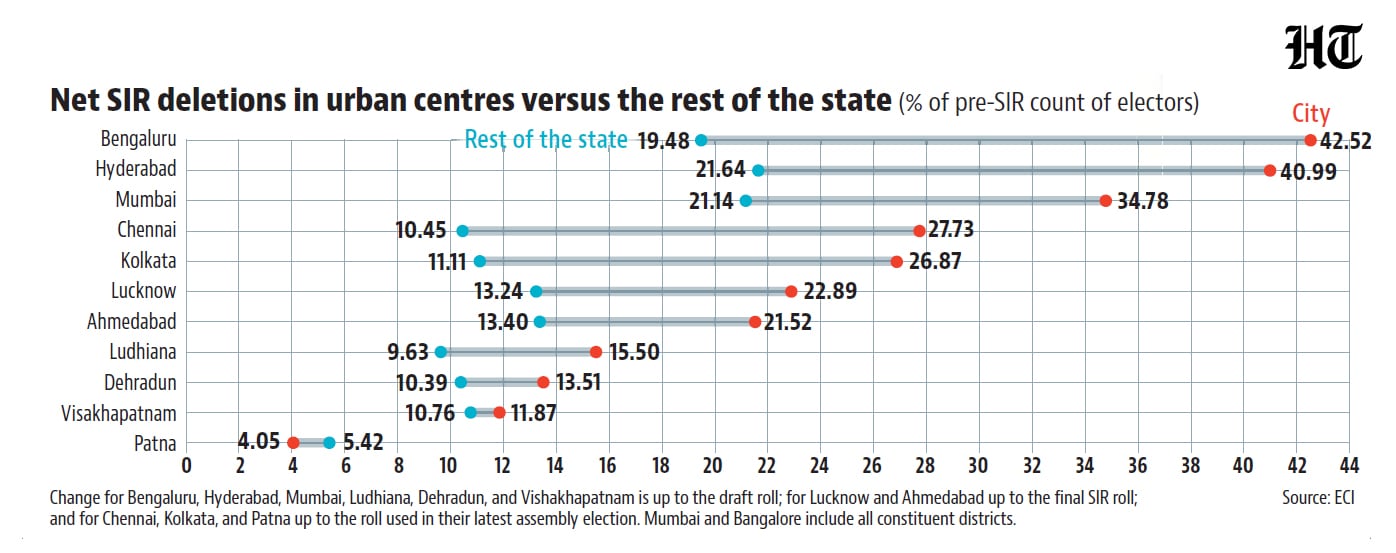
 Higher deletions in larger urban centers support theories of duplicate entries in elector rollsDelhi’s draft SIR roll has underlined a theory, these pages first proposed in a story on March 2. India’s largest urban centers, which are also likely to receive the highest number of migrants, have seen relatively larger deletion from electoral rolls in the SIR exercise. This could well be a result of the fact that many migrant workers were registered as voters in their native places as well as their place of migration, and chose to retain the former registration when SIR forced them to make a choice.
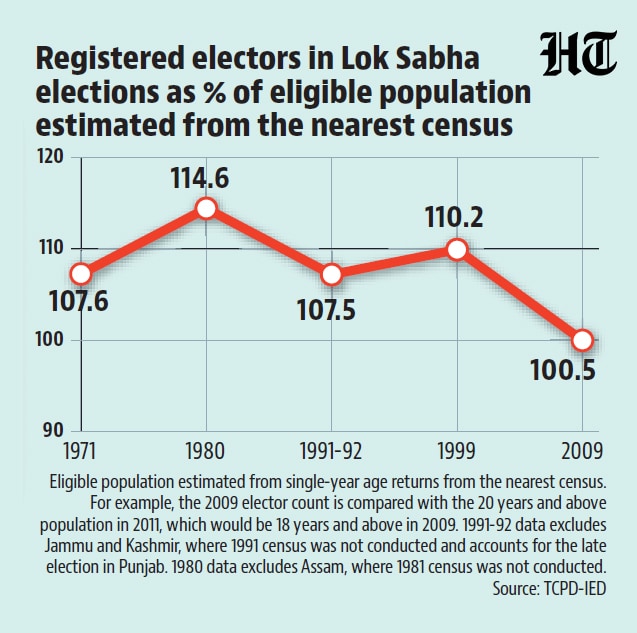
- But an exact confirmation or rejection of this theory requires latest population dataHere is a rather contrarian and provocative take on the entire SIR controversy. If voters were indeed registered in more than one constituency and the SIR is actually getting rid of a lot of duplication, then it also means that India’s adult population is lower than what we believe it to be. While this is not to discount possible wrongful deletions during the SIR exercise, if all 118 million were being deleted wrongly, it should have led to large-scale protests across the country. A comparison of India’s previous electoral rolls with elector count in the closest election supports this theory, as the number of electors has always been higher than the voting-age population. The gap did reduce in the 2009 election, which followed an SIR exercise between 2002 and 2004.
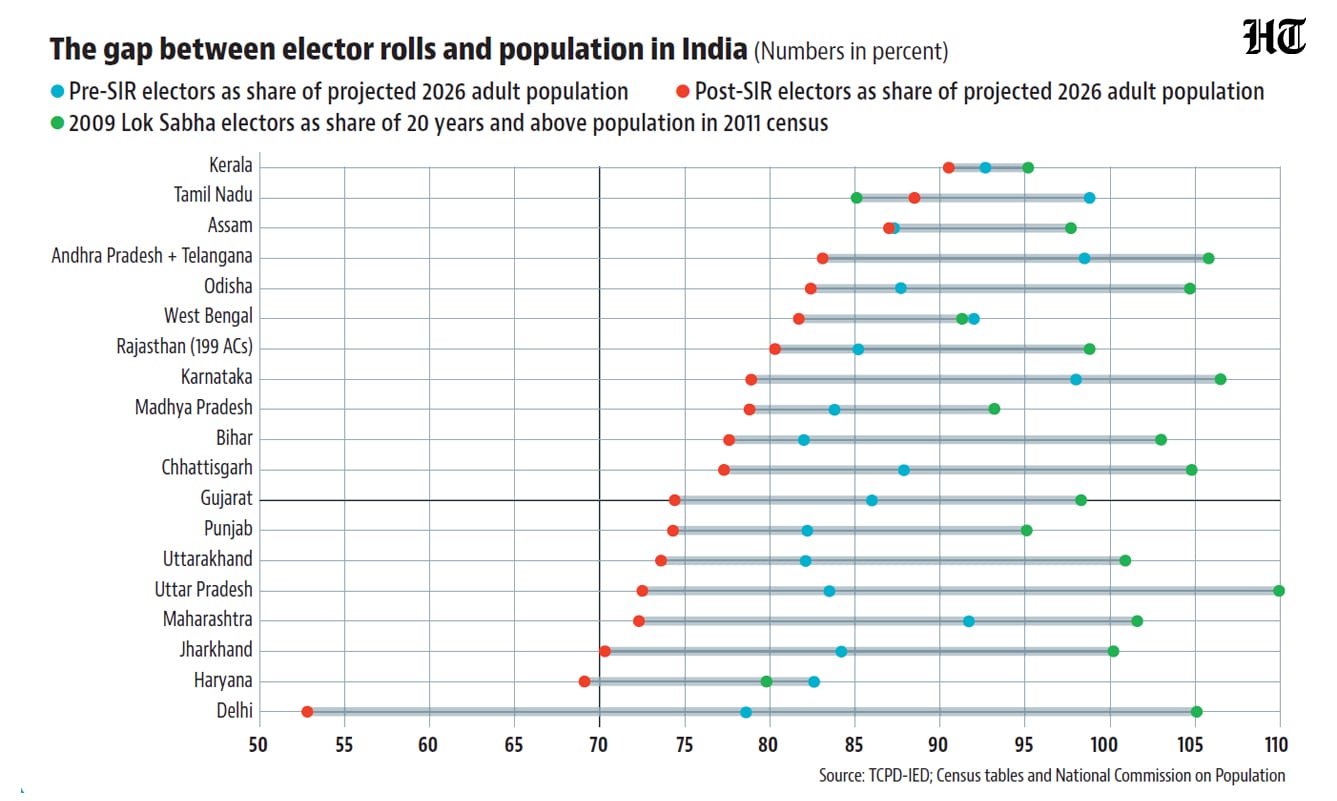
- Right now most states show a lower than estimated population voter count for even pre-SIR electorsThis is the most perplexing part about the data. If the logic is that another SIR was needed to purge the rolls of deadwood entries, then the pre-SIR electoral rolls should have shown a higher number of electors than what comparable adult population projections suggest. But all 20 states and UTs for which a projection is available show a lower number of pre-SIR voters than their estimated adult population. The gap has only increased in the post-SIR numbers, as is to be expected. In 2009, state-wise elector numbers diverged from the census population data on both sides.
- What do all these numbers mean? Some of the deletions in SIR are entirely natural, such as those of people who have died. Some might be rooted in socio-economic factors, such as marriage and migration for work. Some might indeed be wrongful exclusions because of institutional oversight or the sheer scale of the exercise. We will never be able to know their exact shares. But in a situation where most states were already reporting lower numbers of electors than population projections suggest; another possibility cannot be ruled out: India’s adult population may be lower than the projections suggest. We will have to wait for the 2027 Census data to solve the mystery.



Unlock a world of Benefits with HT! From insightful newsletters to real-time news alerts and a personalized news feed – it's all here, just a click away! -Login Now!


