
 E-Paper



Can apprenticeship act as a means of elaborate on-the-job learning?
Apprenticeship is “a system of training a new generation of practitioners of a trade or profession with on-the-job training.


It is a well-known fact that our educational ecosystem isn’t particularly good at blending learning with working, or learning by working. We have introduced numerous programs in our schools and higher education institutions that focus on practical learning by project works, group activities, competitions, hackathons, etc. – all appreciable initiatives; but their very existence proves that we believe learning as a process different from working, and that one has to learn to work before beginning to work.
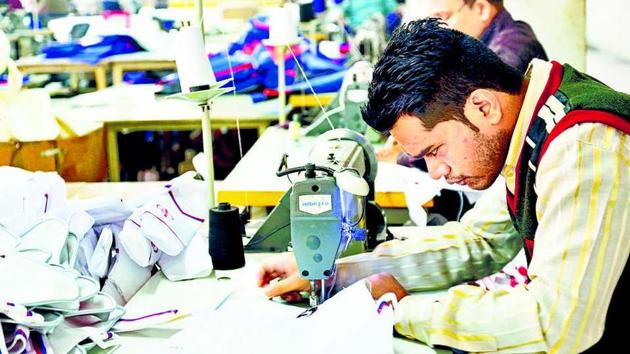
Experts explain apprenticeship as “a system of training a new generation of practitioners of a trade or profession with on-the-job training.” That’s precisely how learning went about in earlier times. If a person wanted to excel in Goldsmith art, he went to work with a Goldsmith and learnt the intricacies of his art over years. Today, we’ve confined that duration to a certain period of leave from formal learning. That way we fail to understand the due significance of one of the oldest forms of learning-known to mankind.
BRIDGING THE INDUSTRY EDUCATION GAP WITH APPRENTICESHIP
In present-day relevance, apprenticeship holds the potential to emerge as a solution to multifarious industry-related problems. We have been listening to the industry pundits talk about our engineers not being industry-ready and our MBA holders not being competent enough to be employable. This is happening despite us constantly, and to some extent successfully, elevating the standards of our educational institutions at par with international benchmarks. There is clearly a gap between the jobs that are vacant and the workforce that is available to fill in the roles.
We should start by creating awareness in general masses, particularly youth – no matter how good their college or university is and irrespective of how experienced a faculty it possesses, there can be no viable substitution for the experience that the student obtains when he/she works in the industry. Therefore, apprenticeship is the clear answer to the widening gap between our education and job roles.
The Government of India is now emphasizing on promoting apprenticeship; the Ministry of Human Resource Development (MHRD) and the Ministry of Skill Development and Entrepreneurship (MSDE) will be responsible for execution of these ambitions. Both of them, quite commendably, have outlined substantial plans and schemes in this direction, with MHRD coming up with the National Apprenticeship Training Scheme (NATS), Scheme for Higher Education Youth in Apprenticeship and Skills (SHREYAS) and National Employability Enhancement Mission (NEEM) while MSDE has introduced the National Apprenticeship Promotion Scheme (NAPS)*. Understanding designated trade, optional trades, BOAT,
DGT, SSC, SAA, AAA etc. before placing an apprentice in the industry is complicated for the industry HR personnel.
The distribution of candidates amongst these and the lack of seamless communication between the concerned schemes and departments often end up creating unnecessary hassles for the industry. This has had detrimental implications on the success scale of these programs. Despite willingness to hire apprentices, industries tend to do so by private means, ignoring the Government’s offerings.
To avoid such a situation and to provide ample opportunities to apprentices enrolled under these programs, we have to sketch ways to lure companies into cooperating more with the Government-run programs. I suggest we open a single window – at the industry’s end – to help them scroll, find and hire apprentices fit for available job roles. A single window for hiring from various programs will not only decrease the inconvenience caused to recruiters, but also encourage them to hire more apprentices from the larger pool of diverse options available at such a window. For the fact that we are promoting apprenticeship, it’s best to have one brand name, one policy under uniform set of rules instead of having different ministries with different schemes and rules for the same set of students and institutions.
HIGHER EDUCATION CONUNDRUM
A large chunk of candidates who opt for industry apprenticeship want to pursue their higher education. Our country’s higher education framework is often subject to criticism from various factions of intelligentsia for failing to accommodate diverse learning platforms. Apprenticeship kind of solves this higher education learning conundrum but is limited in operation as students can’t be at two places simultaneously. Higher Education Institutes in India have to abide by archaic rules & regulations when it comes to minimum classroom attendance. Confining talents into a room, where it is uncertain if they’ll grasp whatever is being taught, is definitely a system that we need to reconsider our stance on.
In an environment of transforming jobs infrastructure, it would be wise to accommodate broader learning processes such as apprenticeships or skilling programs, leaving it on the student to decide the mode of learning he/she is most inclined towards. With high-tech tools providing us numerous monitoring means, the institutes can track if the student is being regular in his/her endeavors through means of an AADHAR-based or GPS-based authentication system.
VALUING APPRENTICES THROUGH TRAINING
On part of the Industry, it should start appreciating apprentices by providing them with what they seek the most from their program – training. These days, we often hear from apprentices that they are made to do inferior jobs and are treated like secondgrade employees. This must end. In fact, to enable fruitful learning experience, employers must seriously consider hiring Training Partners (TPs) to skill their apprentices in areas which are not covered in course of their regular work. This training could coincide with work, with separate times allotted for formal training and regular work.
CONCLUSION
For ‘Make in India’ to be fruitful, we need our youth to be passionate about penetrating into the industries and understanding their work environment. Countries like Japan, UK and China understood this early and have excelled in this sector. We should draft a policy around providing a push to apprenticeship that looks beyond convention in our higher education framework. It’s high time that apprenticeship is brought to the mainstream education and skill ecosystem. If we want our talented youth to be the torch-bearers of industry, then we must do the needful in ensuring that they have the necessary ‘light’ to fire that torch.


