
 E-Paper





For over a decade, the Hindustan Times Digital Streams – Education Desk has been a trusted source for accurate, in-depth, and timely news on education and careers. We bring the latest updates on board exams, competitive exams, results, employment news, study abroad, scholarships, and school and college admissions, helping students, job seekers, and educators make informed decisions. Our Coverage Areas 1. Board Exams & Results: Comprehensive reporting on CBSE, CISCE, and state board exams (UP, Bihar, Maharashtra, West Bengal, Rajasthan, Andhra Pradesh, Telangana, Karnataka, Tamil Nadu, and others), including schedules, admit cards, answer keys, results, and career opportunities. 2. Competitive Exams: Insights into major exams like UPSC, JEE, NEET, GATE, CAT, SAT, and state and central government services. Exam Results: Timely updates on UPSC, SSC, SBI, IBPS, NTA, IIMs, and other competitive exam results. 3. Employment News: Notifications on government and private sector jobs, vacancies, eligibility, application processes, and results. 4. Study Abroad: Information on top universities, courses, tuition fees, scholarships, visa regulations, and career prospects for international students. Features & Analysis: Opinion pieces, expert explainers, deep-dive reports, and interviews with key figures in education. 5. Breaking Education News: Real-time updates on major policy changes, institutional reforms, and trends shaping the education sector. 6. With a commitment to factual, unbiased journalism, HT Digital’s Education Desk has seen continuous growth in readership, offering credible and engaging content tailored for students, parents, and professionals. Meet the Team 1. Nilesh Mathur – News Editor A journalist with 24 years of experience, including 18+ years at Hindustan Times, Nilesh leads editorial planning, ensures factual accuracy, and enhances audience engagement through strategic content. 2. Papri Chanda – Deputy Chief Content Producer With over a decade of experience in education journalism, Papri specializes in exam-related content, study abroad insights, and education trends. She also explores new opportunities in education that benefit students. 3. Bishal – Senior Content Producer Active in the education and jobs sector since 2019, Bishal focuses on tracking developments, analyzing trends, and crafting informative content for students and job aspirants. 4. Gaurav Sarma – Deputy Chief Content Producer A multimedia journalist with 9+ years of experience, Gaurav is skilled in research-based storytelling, feature writing, and reporting on competitive exams, online courses, and education trends. At Hindustan Times Digital Streams – Education Desk, we strive to be the go-to platform for students and professionals navigating the dynamic world of education and careers.
Digital divide may turn shift to online classes operational nightmare, warn experts
Suicide by a Kerala schoolgirl allegedly over not having access to a smartphone to attend classes, stories of students in remote areas having to sit on rooftops to catch Internet, siblings competing to get their parents’ gadgets are just a few case studies of the existing “worrisome” digital divide, they said.


From virtual classes to open-book exams, the coronavirus pandemic may have forced classroom learning online but the digital divide in the country may turn it into an “operational nightmare”, experts have warned.
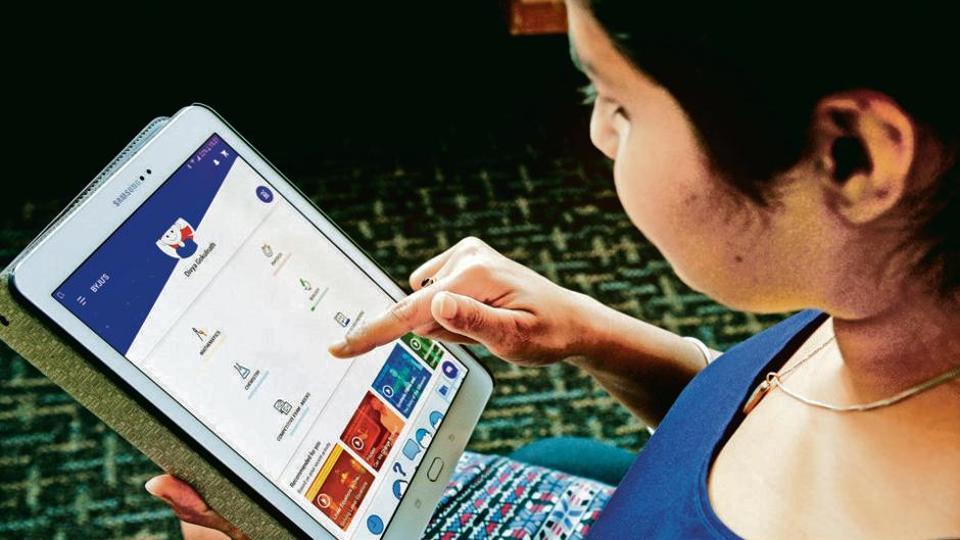
Suicide by a Kerala schoolgirl allegedly over not having access to a smartphone to attend classes, stories of students in remote areas having to sit on rooftops to catch Internet, siblings competing to get their parents’ gadgets are just a few case studies of the existing “worrisome” digital divide, they said.
According to the Key Indicators of Household Social Consumption on Education in India report, based on the 2017-18 National Sample Survey, less than 15 per cent of rural Indian households have access to Internet as opposed to 42 per cent in urban households. A mere 13 per cent of people surveyed (aged above five) in rural areas -- just 8.5 per cent female -- could use the Internet. The poorest households cannot afford a smartphone or a computer, according to the survey.
“The implications of school closures in the country due to COVID-19 pandemic are not just about education. They are manifold. The Kerala schoolgirl’s death, pictures of a girl trying to study from a tilted rooftop to get signals, three kids in a house trying to have their share of their parents’ phone to attend the lessons, these are worrisome case studies. “An unprecedented social disaster can be avoided if more entities pitch into short-term and long-term future of the children in this digital divide,” said Rajni Palriwala, HOD, Department of Sociology, Delhi University.
Universities and schools across the country have been closed since March 16, when the Centre announced a countrywide classroom shutdown as part of a slew of measures to contain the COVID-19 outbreak. A nationwide lockdown was announced on March 24, which came into effect the next day. As per official statistics, there are over 35 crore students in the country. However, it is not clear as to how many of them have access to digital devices and Internet.
While the government has announced easing of certain restrictions, schools and colleges continue to remain closed.
“It is good that we have moved online for teaching and learning to ensure that schooling is not completely suspended. But there is a flip-side to it too. When the world has moved indoors and technology has taken over major roles, the digital have-nots are pushed to the edge. Sooner or later they will be left out of the race. “The students in rural India or the poor populace in urban centres are having extreme difficulties in using such services and we don’t have any policy in place to address that. In a way, we are only heading towards an operational nightmare,” a Delhi University professor said.
The professor is among a group of four faculty members who have written a letter to President Ram Nath Kovind against Delhi University’s decision to conduct online exams through open-book mode, saying it will push students belonging to economically weaker section and those with disabilities on the wrong side of the digital divide.
“Education is the greatest equalizer but the coronavirus crisis has come as a setback to this journey in important ways. When schools and colleges move online, students with lesser digital access get further disadvantaged, and those without any digital access are at risk of dropping out altogether. “Especially, at the school level, the digital divide poses a risk of nullifying some of India’s hard-won enrolment gains,” said Sangeeta D Gadre, a professor at Kirori Mal College.
The principal of a school in Haryana’s Mewat, who refused to be identified, said, “Like every other country, India is also witnessing an e-learning boom. Classes on Zoom, WhatsApp and Skype are becoming the norm. But the digital disparity is growing starker as more schools begin to adopt virtual tools.” “We are reading a lot about how learning is happening online, but are not able to implement it here (Mewat) for the simple reason that not everyone has access to a smartphone or Internet. There can be no shortcuts to either learning or inclusivity. Our policy-makers need to address the fact that online courses will exclude numerous students,” she said.
Infosys Chairman Nandan Nilekani has also flagged the issue, saying the shift to online learning is only a “short-term response”.
“Reimagining education and staying ahead of the curve should be the number 1 priority for the government right now. For households that don’t have access to smartphone or feature phone, we will have to use our physical infrastructure. “People may not have a device but they could be close to a digital service centre which will have the devices. Worksheets can be delivered to students and once student finishes the worksheets it can be delivered back to the centres. The centres can then upload the worksheet. Himachal is doing this. We will have to innovate,” he said at a virtual conference on “Reimagining Education”.
Urvashi Sahni, a fellow at the Center for Universal Education at the Brookings Institution, said, “Technology has the potential to achieve universal quality education and improve learning outcomes. But in order to unleash its potential, the digital divide (and the embedded gender divide) must be addressed”. “Access to technology and Internet is an urgent requirement in the information age. It should no longer be a luxury,” she said.


