
 E-Paper



Canada SDS explained: What is Student Direct Stream, why has it been closed & what does it mean for Indian students?
Canada has discontinued SDS ending the faster visa processing for international students from specific countries, which also includes India.

 Prefer HTon Google


Canada has been a popular destination among students who want to study abroad, clearly for the fact that the country has some highly-ranked institutions, as seen in the QS World University Rankings 2025. From the University of Toronto to the University of British Columbia, you name it. There are many such institutions where Indian students aspire to study and carve a successful career.
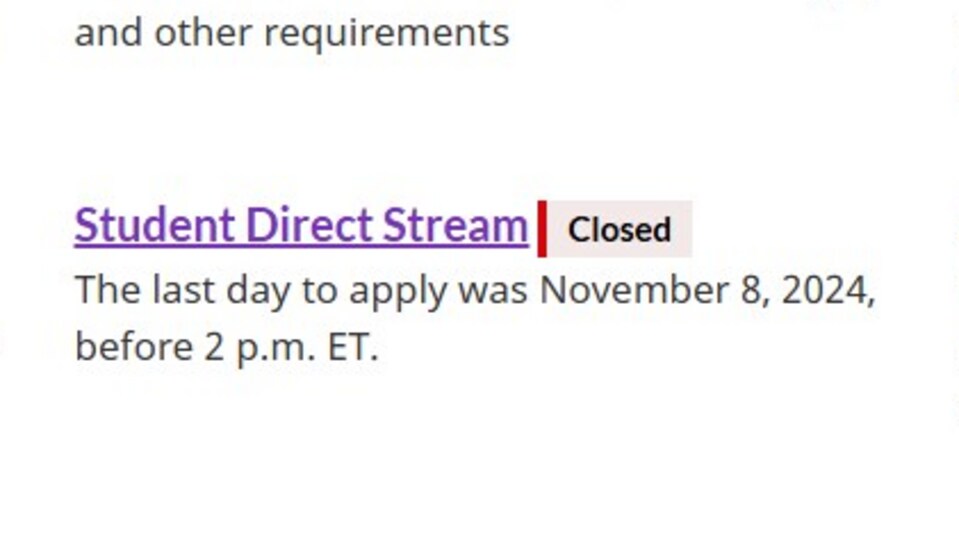
However, a recent move by Canada may make this journey difficult moving forward. On Friday, Canada discontinued the Student Direct Stream (SDS) initiative, ending the faster processing for international students from specific countries, which also includes India.
Also read: UPSC CSE 2024 marks of non-recommended candidates released at upsc.gov.in, direct link here
Before we look at why the SDS has been terminated, let’s understand how international students benefitted from it.
SDS Explained:
As per the official website of the Canadian Immigration Law Firm Canadim, the Student Direct Stream, introduced in 2018, helps fast-track the processing of study permits for certain international students, with a processing time of 20 days in most cases. The 14 countries covered by SDS include:
- Antigua and Barbuda
- Brazil
- China
- Colombia
- Costa Rica
- India
- Morocco
- Pakistan
- Peru
- Philippines
- Senegal
- Saint Vincent and the Grenadines
- Trinidad and Tobago
- Vietnam
A report by ETV Bharat quoted Canadian government as saying that since 2018, visa applications of 110,049 Indian students out of 173,025 were approved in 2019.
Likewise, in 2020, 36,057 such applications out of 74,655 were approved.
In 2021, a total of 137,535 visas were approved out of the 230,860 applications.
Why has SDS been discontinued?
Although Canada has been making changes in its immigration policies since some time now, the discontinuation of the SDS comes as a major move. The Canadian government said in its official website that the SDS has been discontinued in line with its “goal is to strengthen program integrity, address student vulnerability, and give all students equal and fair access to the application process, as well as a positive academic experience.”
The move aims at stabilizing the country’s foreign student population. The website further states, “Prospective students are invited to apply through the regular study permit stream, which accepts Guaranteed Investment Certificates as proof of financial support. Canada will continue to welcome international students from all around the world.”
Also, Marc Miller, the Minister of Immigration, Refugees and Citizenship, stated in the official website, “We are adjusting certain immigration streams to better support newcomers and our country’s future. We’ve taken action to address challenges with the international student program, including updating financial requirements for prospective students, establishing a cap on most study permit applications, reforming work options for students, and introducing a system to verify letters of acceptance.”
The website further states, “In 2023, 682,889 permit holders entered Canada. From this number, 319,991 were females and 362,824 were males. More study permit holders are now making the transition to permanent residency. In fact, in 2023 25,605 study permit holders were granted permanent residency, a 30% increase from 2022.”
How will the discontinuation impact Indian students?
The unavailability of SDS will now mean that getting an approval for visa will have longer waiting period to begin with. Furthermore, such students will now have to apply for a visa through the standard application process that is available for all, which is slower compared to the SDS.
Additionally, students will also have to provide more documents for financial proof.
Recently, Canada also brought in changes in the Post-Graduation Work Permit (PGWP) Program “to better align with immigration goals and labour market needs. The proposed changes will be imposed from November 1, 2024, onwards,” as informed by the Canadian government.


