
 E-Paper



Want to Build India’s Next Rocket? BIT Mesra professor decodes the skills future aerospace engineers need
BIT Mesra Professor Dr. Priyank Kumar explains what students need to learn today to prepare for the aerospace careers and space missions of tomorrow.

 Prefer HTon Google


When Chandrayaan-3 touched down near the Moon's south pole, India celebrated a technological milestone — the moment the country now marks every year as National Space Day. Behind that success, though, sits a quieter question. Who trains the engineers who will build the spacecraft of the next three decades? And how?
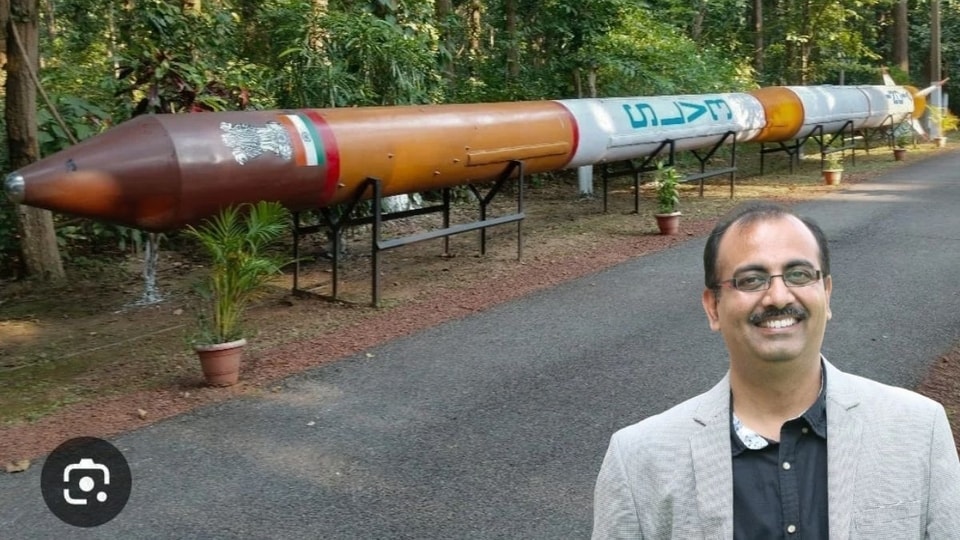
For most of the last century, aerospace education followed a fairly settled formula: classroom theory, laboratory experimentation, iterative design. That formula produced the engineers behind India's launch vehicles, satellites and aircraft, and it still holds. No one designs a rocket without understanding fluid mechanics, combustion, structures, guidance and control, or orbital mechanics. Physics hasn't changed.
Beyond Enrolment: Are India's universities preparing youth for the economy of 2047?
What has changed is the engineering process and technology.
A single rocket engine test now throws off millions of data points. Satellites transmit telemetry around the clock while generating enormous volumes of Earth observation data. High-fidelity simulations solve flow fields involving hundreds of millions of computational cells. The bottleneck today isn't information. It's turning that information into something usable.
That's the gap artificial intelligence and data science are filling in space engineering. The common framing, though, is off. AI isn't here to replace the aerospace engineer. It does something narrower: it changes how engineers think and design.
Loop Engineering: The new skill Indian students can't afford to ignore
Take a launch vehicle. Engineers used to design, build and test components in repeated cycles that could stretch across years. Now high-performance computing can run thousands of operating conditions in simulation. AI sifts through the output, flags promising designs, and predicts performance well before anything reaches a test stand. The experiments haven't disappeared. They've gotten sharper about which ones are worth running.
That changes what today's aerospace graduate needs to know. They need to read complex datasets, build predictive models, work with digital twins, and move between physical labs, numerical simulations and computational platforms.
From Data Analysts to Decision-Makers: The new skills businesses need
The laboratory itself looks different now too. A rocket engine test can feed a digital twin that learns from the experimental run as it happens. Simulations generate thousands of virtual experiments while AI models sift through the results, flag anomalies and suggest what to test next. Engineering judgement still decides what actually gets built.
Computational methods have complemented experimental research for decades. AI adds a third leg to that stool. The future of engineering education rests on three pillars: experimentation, simulation and intelligence. Experiments tell you what's real. Simulations explain why. AI learns from both to move faster.
For India, this shift matters more than it does in most places. Alongside ISRO, the country's space ecosystem now includes NewSpace India Limited, which handles commercial launches, and IN-SPACe, which has opened the sector to private players. Companies such as Skyroot Aerospace and Agnikul Cosmos are building their own launch vehicles. None of them need narrow specialists. They need engineers who can move between machine learning, computational simulation and hardware validation.
Getting there needs more than a revised syllabus. Universities need real computing infrastructure, research that crosses departmental lines, and working relationships with industry and national laboratories. Give it a few years, and GPU clusters will matter to an aerospace department the way a wind tunnel always has.
None of this works without the fundamentals. An engineer who does not understand the physics of combustion or aerodynamics cannot meaningfully judge what an AI model produces. They'll accept a wrong answer as readily as a right one. The engineers who matter most in this next phase won't just be the ones using AI. They'll be the ones who pair real scientific grounding with it.
This same shift is already reshaping curricula at institutions with a long history in experimental aerodynamics and rocket propulsion. The goal is to keep those strengths as rigorous as they've always been, while building in the computing and AI skills graduates will need at ISRO, at NSIL, or any of the private players now hiring. Several such institutions are beginning to set up GPU-powered centres alongside their existing labs, not to replace decades of expertise but to keep it relevant.
As India works toward reusable launch vehicles, autonomous spacecraft, lunar habitats and eventually missions to Mars, the harder problem probably isn't technological. It's educational. Universities are no longer training students for the missions ISRO flies today. They're training them for missions nobody has designed yet.
The engineer of the future will still need a scientist's curiosity, an engineer's precision and an explorer's nerve. But they'll also need to use AI and data science without losing sight of the physics underneath. That's the real work ahead for India's universities, and perhaps the more interesting part of the job.
(The author, Dr Priyank Kumar, is the Head of the Space Engineering and Rocketry Department at Birla Institute of Technology (BIT), Mesra)


