
 E-Paper



How Delhi University students raised the pitch for freedom in 1942
From enduring a ban on wheat supply to facing arrests, DU students went all out for independence

 Prefer HTon Google


Students of Delhi University participated enthusiastically in India’s Independence movement, especially during the 1942 Quit India Movement.
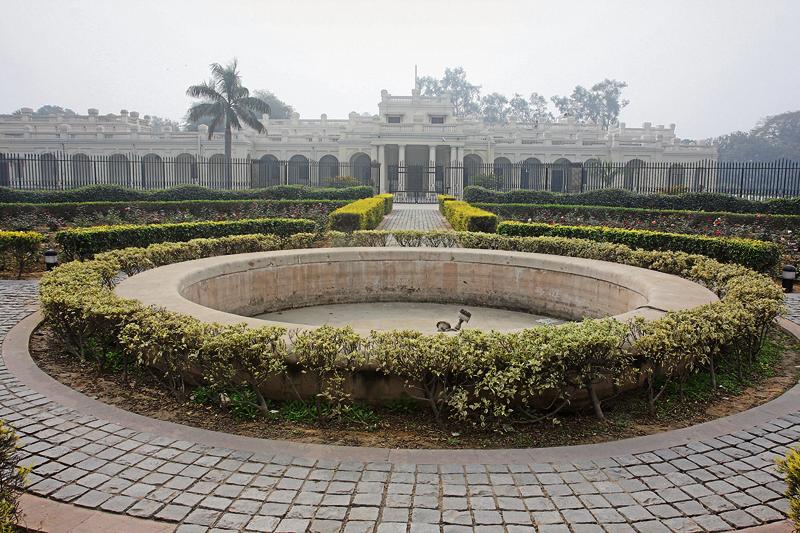
How involved the students of Indraprastha College (IP) were in the fight for freedom is evident from the fact that the students’ union organised virtually no academic or entertainment programmes in 1942. The students remained engaged in planning and hosting general strikes and protests and demanding the release of the national leaders, says Dr Aparna Basu, professor of history and author of the book University of Delhi (1922-1997).
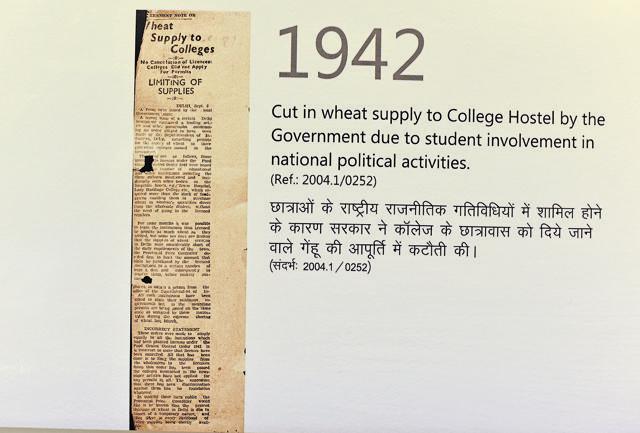
In 1942, the wheat permit (wheat supplies for food) to three DU colleges was also cancelled because its students had participated in the freedom movement.
Read more: When Delhi University was witness to Independence
The students of IP college also started a charkha association in college against the principal’s order. The principal discouraged the idea for fear that if this activity was permitted, it could evoke the British government wrath and prohibitory orders would be imposed on the college. Undeterred, the students started the association under the aegis of the Social Service League of the Students Union and by 1944, it had acquired ten charkhas, five of which were bought by the students’ union and the same number donated by the teachers.
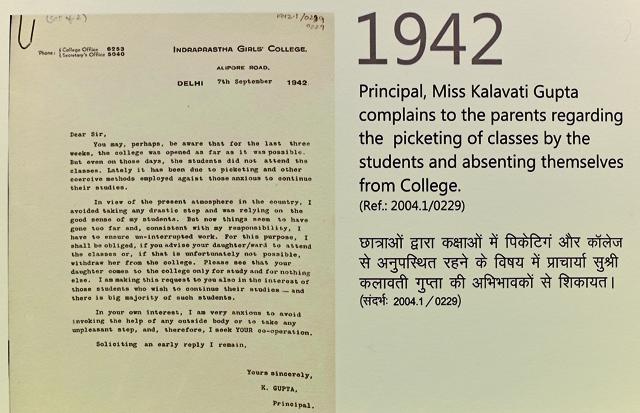
To protest the events of 1942 and 1945, the Indian Peoples Theatre Association (IPTA) was started. It performed shadow plays and pantomimes with contemporary themes with the purpose of attacking the government. IPTA sets had a wooden bed, white sarees to serve as props and most plays were aimed against the government.
Since posters and microphones were not allowed, IPTA members would use black pens to mention the titles of the plays and venues on newspapers and paste them at select spots on the roads leading to the Yamuna river. People going to the river for a dip would read the ‘notices’ and perhaps attend the performance, says the current principal of the college Babli Moitra Saraf.
Even teachers at the time of getting employment had to assure the college authorities that they would not involve themselves in any political activity, she says.
After independence, to provide food relief to refugee camps, the Social Service League of the college requested the principal for a plot of land within the college campus on which they could grow vegetables.
Wheat supplies discontinued
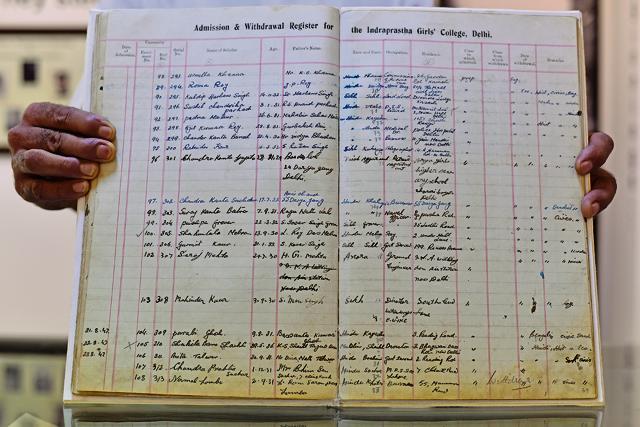
The University of Delhi recognised Indraprastha College as a degree college in 1937, which meant that it could provide instruction up to BA (pass) in English with a vernacular language, economics, history, mathematics, philosophy, Sanskrit, Hindi, Urdu and Bengali. “The tuition fee was Re 1 then, an additional Re 1 was charged from students who opted for English as a medium of instruction,” says Meena Bhargava, professor of history and author of the book Women, Education and Politics – The Women’s Movement and Delhi’s Indraprastha College.
The college moved to the present location, Alipur House, formerly the commander-in-chief’s office, only in 1939. Student activities, especially those pertaining to literary pursuits and relating to the freedom movement are chronicled in the handwritten magazine brought out by the college, called The Torch Bearer.
In September 1942, the government cancelled the wheat permits of hostels of three colleges of Delhi University – Indraprastha College, Hindu College and Commercial College (now Shri Ram College of Commerce) without assigning any reasons for the order. The newspapers in those days termed it as “a sort of omnibus vendetta for any sins of omission or commission”. The contention was that even if there was political warfare against the government, cutting off food supplies could not be a fair and legitimate weapon. The ban, however, continued until 1945, informs Bhargava. The immediate cause of cancellation of the wheat permit of the college seemed to be the fact that the girls of the college had participated in a ‘rakhi’ expedition. They had sent rakhis to their Muslim brethren to emphasise Hindu-Muslim unity and communal harmony. By 1942, the government had successfully created a wedge between the two communities and this action of the students did not meet with their approval. Accusing the students with fuelling political carnage, the government banned the wheat supply.


