
 E-Paper



NEP 2020: Impact of National Education Policy on preschools
The National Education Policy is very promising and futuristic which takes into consideration that the first 1000 days are very crucial for the child.

 Prefer HTon Google


The National Education Policy is very promising and futuristic which takes into consideration that the first 1000 days are very crucial for the child. Therefore, the right kind of early childhood environment is very important for each child. The gap between the existing learning outcomes and the outcomes which are actually required, must be bridged by undertaking major reforms that bring the highest quality, equity, and integrity into the system, right from early childhood care and education through higher education.
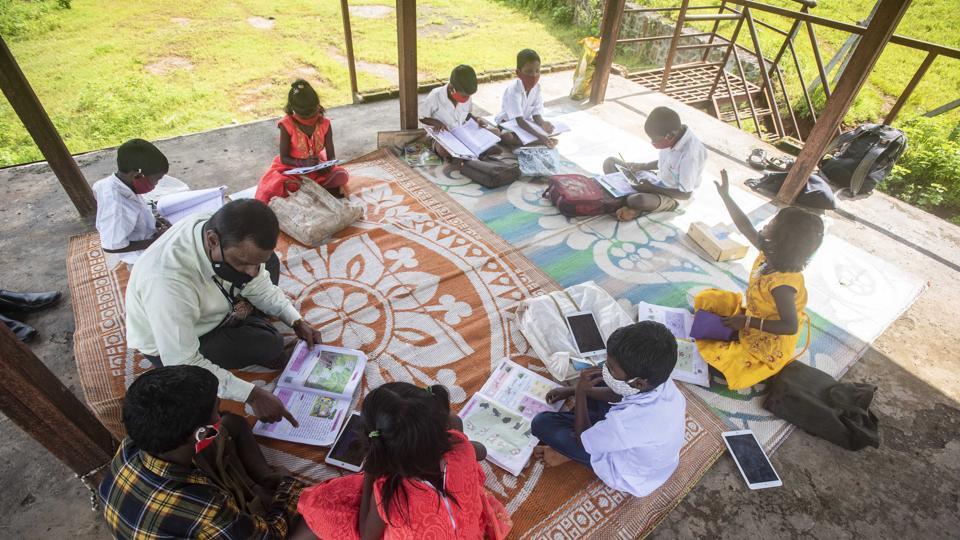
Currently, children in the age group of 3-6 are not covered in the 10+2 structure as Class 1 begins at age 6. However, the new National Education Policy is based on 5+3+3+4 structure wherein a strong base of Early Childhood Care and Education (ECCE) from age 3 is also included, which will surely help in promoting better learning, development and the overall well-being of children.
ECCE ideally consists of flexible, multi-faceted, multi-level, play-based, activity-based, and inquiry-based learning concepts which comprise of alphabets, languages, numbers, counting, colours, shapes, indoor and outdoor play. Puzzles, logical thinking, problem-solving, drawing, painting and other visual art, craft, drama and puppetry, music and movement are also an integral part of the concepts. It also includes a focus on developing social capacities, sensitivity, good behaviour, courtesy, ethics, personal and public cleanliness, teamwork and cooperation.
The major aim of ECCE is to attain optimal outcomes in the domains of: physical and motor development, cognitive development, socio-emotional-ethical development,
cultural/artistic development, and the development of communication and early language, literacy, and numeracy. The attempt to hone a child from the foundational age of 3 years instead of 6 years brings our new education policy at par with the global developed nations, but it’s the focus on education technology that takes it ahead of them by leaps. The best part is that the Policy aims to include each child, irrespective of the location, who is particularly socio-economically disadvantaged.
The emphasis on ECCE teacher training whether for Anganwadis or preschool teacher in accordance with the curricular/pedagogical framework developed by NCERT, provides a great impetus to the teachers, mentioning the different mediums like digital/DTH to train them. The policy reflects on the dearth of professionally trained teachers at different levels which is one of the main causes of low quality in ECCE and large pupil to teacher ratio or high rates of illiteracy. Hence, it tries to cover up the gap by filling up teacher vacancies at the earliest.
On the curriculum side, there will be an increased focus on foundational literacy and numeracy - and generally, on reading, writing, speaking, counting, arithmetic, and mathematical thinking - throughout the preparatory phase.
At present, with the lack of universal access to ECCE, a large proportion of children already fall behind within the first few weeks of Grade 1. The Policy also aims to ensure that all students are school-ready, an interim 3-month play-based ‘school preparation module’ for all Grade 1 students, consisting of activities and workbooks around the learning of alphabets, sounds, words, colours, shapes, and numbers, involving collaborations with peers and parents, which will be developed by NCERT and SCERTs.
The greater focus is on experiential learning – a key element in international education and curriculum options. This means more projects, better real-life training, more interactions and better skills. With these developments, one is left with options that are on similar levels of quality, flexibility and exposure. The National Education Policy has really tried well to address the needs of the 21 st century and tries to create a student-friendly environment in schools and colleges, for their holistic development. All in all, it is a progressive and visionary policy and its success will be directly proportional to its implementation and execution, practically.
(Author Preeti Kwatra is Founder and Director Petals India’s Pre School Club. Views expressed here are personal.)


