E-Paper



Govts set to increase fossil fuel production leading to breach of Paris goals: Report
Governments are planning to produce 110% more fossil fuels in 2030 than is consistent with limiting global warming to 1.5°C, according to a report. The production increase of 69% by 2030 is also in conflict with the Paris Agreement goals. The report calls on governments to reduce coal, oil, and gas production in line with limiting warming to 1.5°C. The report assessed the fossil fuel production policies of 20 major producer countries, which account for 82% of global production and 73% of consumption.

 Prefer HTon Google


New Delhi: Governments plan to produce more than double the amount of fossil fuels in 2030 than would be consistent with limiting global warming to 1.5°C, a new report titled “The Production Gap” said on Wednesday.
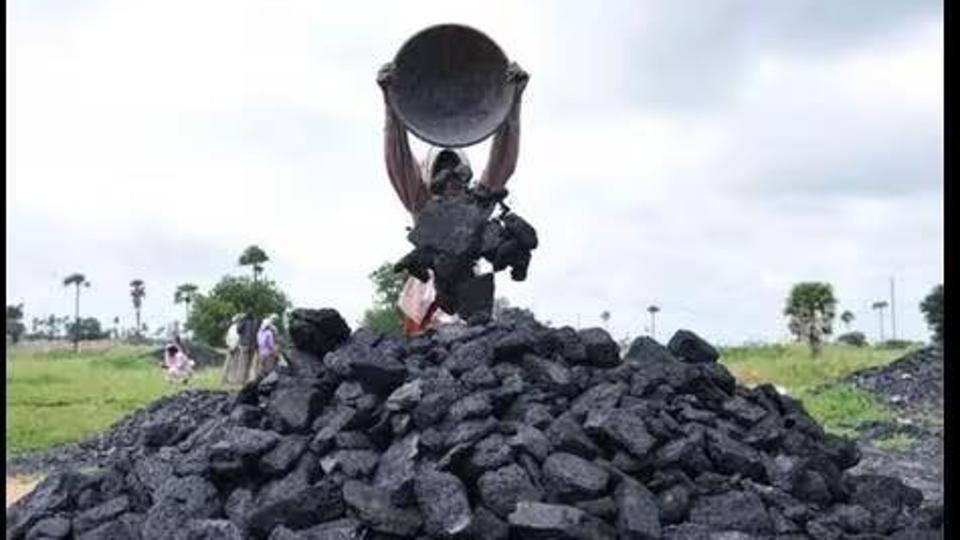
They plan to produce around 110% more fossil fuels in 2030 than would be consistent with limiting warming to 1.5 degree C, and 69% more than would be consistent with 2 degree C. Taken together, government plans and projections would lead to an increase in global coal production until 2030, and in global oil and gas production until at least 2050. This not only will lead to failure of the Paris Agreement goals of keeping warming under 2 degree C and preferably under 1.5 degree C, but also in conflict with the net zero goals many countries have pledged.
“Major producer countries have pledged to achieve net-zero emissions and launched initiatives to reduce emissions from fossil fuel production, but none have committed to reduce coal, oil, and gas production in line with limiting warming to 1.5°C,” the report by Stockholm Environment Institute, The International Institute for Sustainable Development (IISD), United Nations Environment Programme among others states.
The new data in the report also clashes with expectations that global demand for coal, oil, and gas will peak within this decade even without new policies.
“”If global carbon dioxide (CO2) emissions — of which close to 90% stem from fossil fuels — continue at the current pace, the world could exceed the remaining emissions budget compatible with a 50% chance of limiting long-term warming to 1.5°C by 2030,” the report added indicating that the world is most certainly heading towards 1.5 degree C warming in coming years.
Many major fossil-fuel-producing governments are still planning near-term increases in coal production and long-term increases in oil and gas production. In total, government plans and projections would lead to an increase in global production until 2030 for coal, and until at least 2050 for oil and gas, creating increasingly large production gaps over time.
The report assessed fossil fuel production policies and strategies of 20 major fossil fuel producer countries including Australia, Brazil, Canada, China, Colombia, Germany, India, Indonesia, Kazakhstan, Kuwait, Mexico, Nigeria, Norway, Qatar, the Russian Federation, Saudi Arabia, South Africa, the United Arab Emirates, the United Kingdom of Great Britain and Northern Ireland (UK), and the United States of America (US). Altogether, these countries account for 82% of production and 73% of consumption of the world’s fossil fuel supply.
“While 17 of the 20 countries profiled have pledged to achieve net-zero emissions, and many have launched initiatives to reduce emissions from fossil fuel production activities, most continue to promote, subsidize, support, and plan on the expansion of fossil fuel production. None have committed to reduce coal, oil, and gas production in line with limiting warming to 1.5 degree C,” the report added.
For India, coal production is on an increasing trajectory by 2030 but there is no data for oil and gas. For Russian Federation all three are on the rise. In US, coal is on a decline but oil and gas production is expected to increase. In China, coal is on a decline but gas production is increasing; in Canada both oil and gas are increasing; in Saudi Arabia and UAE also both oil and gas are expected to increase in production until at least 2030.
“We find that many governments are promoting fossil gas as an essential ‘transition’ fuel but with no apparent plans to transition away from it later,” said Ploy Achakulwisut, a lead author of the report and SEI scientist.
“But science says we must start reducing global coal, oil, and gas production and use now — along with scaling up clean energy, reducing methane emissions from all sources, and other climate actions — to keep the 1.5°C goal alive,” he added.
“The 2023 Production Gap report is a startling indictment of runaway climate carelessness. It reveals that governments are on track to produce more than twice the amount of fossil fuels in 2030 than would be needed to limit the global temperature rise to 1.5 degrees Celsius. In other words, governments are literally doubling down on fossil fuel production; that spells double trouble for people and planet,” said Antonio Guterres, UN Secretary General in a statement on Wednesday.
“Countries must phase out coal – by 2030 in OECD countries and 2040 elsewhere. And the G20 must take the lead in ending licensing and funding for new oil and gas. COP28 must send a clear signal that the fossil fuel age is out of gas – that its end is inevitable. We need credible commitments to ramp up renewables, phase out fossil fuels, and boost energy efficiency, while ensuring a just, equitable transition,” he added.
“The UNEP Production Gap report exposes the glaring hypocrisy at the heart of global climate action. Countries that present themselves as climate champions on the global stage are betraying the spirit of the Paris Agreement by intensifying the climate crisis through increased production of coal, oil, and gas,” Harjeet Singh, head of global political strategy at Climate Action Network International, said.
Singh added that wealthy nations, equipped with the means and bearing the historical responsibility to lead by example, continue their dangerous addiction to fossil fuels.
“We must close the vast gap in the global climate policy framework with a binding commitment to halt new exploration and agree on a managed and equitable phase-out of fossil fuels. The time has come to shun empty words, shift from fossil fuel dependency to a just global transition, and hold the polluters accountable,” Singh said.