
 E-Paper



Digital Arrest: Breaking Down the Scam Everyone Is Talking About
The Indian government has launched extensive campaigns to inform the public and combat these criminal networks.

 Prefer HTon Google


Until recently, most people had never heard the phrase "digital arrest." Today, it has entered everyday conversations, family WhatsApp groups and news headlines. The name itself sounds official, which is probably why it has become so effective.
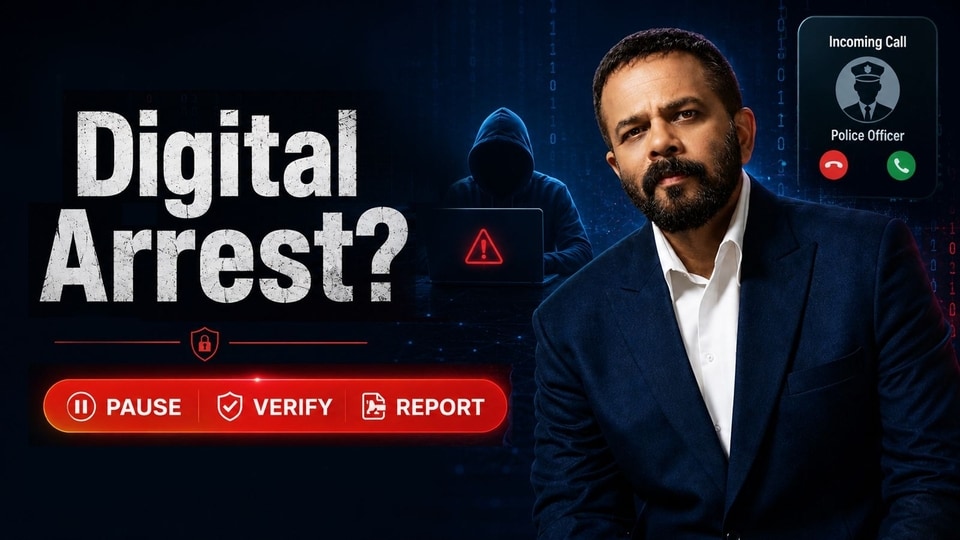
The reality, however, is much simpler. There is no legal procedure in India called a digital arrest. The Ministry of Home Affairs (MHA) has repeatedly clarified that no police agency, investigative authority or regulator conducts arrests over video calls or asks citizens to transfer money as part of an investigation.
Yet despite repeated advisories, fraudsters continue to exploit the fear associated with criminal investigations. They are not hacking phones or breaking into bank accounts. Instead, they are convincing people to voluntarily hand over their savings.
As awareness initiatives such as Cyber Cop, Bandhan Bank's CSR initiative presented by Hindustan Times and implemented by Aident, continue to encourage safer digital habits, understanding how these scams actually unfold has become just as important as knowing they exist.
The scam begins long before money is mentioned
One reason digital arrest scams continue to succeed is because they don't begin with a demand for money. Instead, they begin with a story.
Someone receives a call claiming to be from the police, customs, the CBI, the Enforcement Directorate or another government agency. The caller may refer to suspicious financial transactions, a SIM card allegedly used for illegal activities, an Aadhaar number linked to a criminal case, or a parcel booked in the victim's name that is purportedly found to contain illegal items such as drugs, fake passports or prohibited goods. The victim is often then connected to individuals posing as law enforcement officials to escalate the fear and create a sense of urgency.
The objective at this stage isn't to steal money. It is to make the victim believe that something has gone seriously wrong. Once that happens, the fraudster has gained something way more valuable than bank details: the victim's undivided attention.
Authority is their strongest suit
Most people are conditioned to respond immediately when they believe they are speaking to law enforcement and cybercriminals understand this very, very well.
They often introduce fake case numbers, forged identity cards, fabricated legal notices and official-looking documents, all with the authority of someone who seems to know exactly what they are doing. Many victims are shifted to video calls where the person on screen appears to be sitting inside what looks like a police station or government office. Some victims are instructed to remain on continuous video calls, keep their cameras switched on and avoid leaving the room. Fraudsters use these tactics to create a false sense of official custody, isolate victims from friends and family, and prevent them from independently verifying the claims being made.
The Ministry of Home Affairs has warned that organised cybercriminal groups are using uniforms, staged offices and video conferencing platforms to create an illusion of legitimacy. The more convincing the setting, the less likely someone is to question anything they are being told.
So, why don't victims simply hang up?
People often assume they would immediately recognise such a scam. In reality, that becomes very difficult once the conversation continues, with fear battling logic.
Fraudsters tend to insist that the matter is confidential. Victims may be instructed not to disconnect the call, not to contact family members and not to inform their bank because doing so could supposedly “interfere” with an ongoing investigation.
Hours can pass this way.
The continuous interaction serves an important purpose. What this really does is leave very little opportunity for someone to step away, seek advice or independently verify what they have been told. Every additional minute makes it easier for fear to replace rational judgement.
The money transfer is presented as a solution
Contrary to popular belief, victims are rarely asked to "pay a fine." Instead, the transfer is often presented as a procedural requirement.
Some are told their funds need to be moved into a "safe account" for verification. Others hear that their bank balance has to be audited before they can be given a clean chit. Some are also assured the money will be returned once the investigation is complete.
The language is deliberately chosen to sound administrative rather than suspicious. By the time money enters the conversation, many victims have already spent hours trying to prove they have done nothing wrong and are already vulnerable, on the back foot.
Why is recovering stolen money so difficult?
Once the transfer is made, the funds rarely remain in one place. Investigators have highlighted the growing role of mule accounts, where stolen money is quickly moved across multiple bank accounts before being withdrawn or transferred again. Recognising how central these accounts have become to organised cyber fraud, the Indian Cyber Crime Coordination Centre (I4C) has shared information on more than 27.37 lakh Layer-1 mule accounts with banks and financial institutions through its Suspect Registry, helping participating entities decline fraudulent transactions worth over ₹9,518 crore.
This rapid movement makes tracing funds significantly more challenging and leaves victims with only a narrow window in which financial institutions and law enforcement agencies can intervene. The speed of these transactions is one reason authorities consistently advise reporting fraud immediately rather than waiting until the next day.
The Government's response is growing
The scale of digital arrest fraud has prompted a nationwide response. The Indian Cyber Crime Coordination Centre (I4C), under the Ministry of Home Affairs, has launched awareness campaigns across television, radio, social media, newspapers and telecom networks to educate citizens about these scams. The campaign has also included multilingual caller tunes promoting the national cybercrime helpline 1930.
Enforcement efforts have expanded as well. According to information shared by the Government in Parliament, I4C has proactively blocked more than 3,962 Skype IDs and 83,668 WhatsApp accounts linked to digital arrest scams. Authorities have also cancelled more than 12 lakh suspicious SIM cards, blocked over 3 lakh mobile IMEI numbers, safeguarded or returned ₹8,189 crore through 3.61 lakh cyber fraud complaints, and arrested 20,853 accused persons as part of the broader crackdown on cybercrime.
These figures illustrate that digital arrest scams are not isolated incidents carried out by individual fraudsters. They are often supported by organised networks using multiple communication channels and digital identities.
Cyber Cop, Bandhan Bank's CSR initiative presented by Hindustan Times and implemented by Aident, complements these national awareness efforts by helping citizens recognise common cyber frauds, understand safe digital practices and respond appropriately to suspicious online activities. Through educational content and awareness outreach, the initiative seeks to build greater cyber resilience among individuals and communities.
How to separate a genuine investigation from a scam?
Understanding what does not happen during a legitimate investigation can be one of the easiest ways to identify fraud.
- Government agencies do not ask citizens to remain on long video calls for hours.
- They do not ask people to transfer money as proof of their innocence.
- They do not threaten arrest simply because someone asks questions.
- They most certainly do not instruct citizens to keep an investigation secret from their family.
The Ministry of Home Affairs has repeatedly urged the public to disconnect such calls immediately and report them rather than engage with the caller.
Some common red flags of a digital arrest scam include:
● Threats of immediate arrest or legal action without due process.
● Requests to transfer money for verification, investigation or account validation purposes.
● Instructions to keep the matter confidential from family members, friends or colleagues.
● Demands to remain on video calls for extended periods.
● Pressure to act immediately without independently verifying the claims.
A few minutes of verification can prevent months of regret
Digital arrest scams will continue to evolve. The names of the agencies may change. The stories may become more convincing. New technologies may help criminals appear increasingly authentic. But the objective remains exactly the same: creating enough fear that people stop questioning what they are being told. That is why understanding how these scams work remains one of the best ways to avoid becoming a victim.
Before responding to any unexpected allegation involving your identity, finances or alleged criminal activity, take a deep breath, pause and then verify the claim independently using the organisation's official website or helpline rather than the contact details shared by the caller.
If you suspect you've been targeted by a scam, act quickly. Report the incident through the National Cyber Crime Helpline 1930 or the National Cyber Crime Reporting Portal (www.cybercrime.gov.in), and inform your bank immediately so it can block or freeze suspicious transactions. Change the passwords for any accounts that may have been compromised, enable additional security features wherever possible, and preserve evidence such as screenshots, messages, transaction details and phone numbers, as these could assist the investigation. Depending on the circumstances, you may also need to file a complaint with your local police.
Campaigns such as Cyber Cop, Bandhan Bank's CSR initiative presented by Hindustan Times and implemented by Aident, are built around a simple idea that remains just as relevant today – when something feels urgent, the safest response is often to slow down, verify the facts and act only after confirming that the situation is genuine.
Sometimes, taking it slow can be the fastest way out of a tricky situation.
Note to the reader: This article has been produced on behalf of the brand by HT Brand Studio and does not have journalistic/editorial involvement of Hindustan Times.


