
 E-Paper



Souvik Ghosh Wins iF Design Award 2026 for ‘Roots’ — A Lighting System Inspired by Nature and Sustainability
Souvik Ghosh, Creative Head at Goldmedal Electricals, wins the iF Design Award 2026 for his innovative lighting concept, Roots.

 Prefer HTon Google


Indian industrial designer Souvik Ghosh, Creative Head at Goldmedal Electricals Pvt. Ltd., has been honored with the prestigious iF Design Award 2026 for his innovative lighting concept, “Roots.” The award, one of the most respected global recognitions in design, celebrates groundbreaking ideas that merge creativity, functionality, and sustainability. Ghosh is set to receive the award in Berlin on April 25–27, 2026.
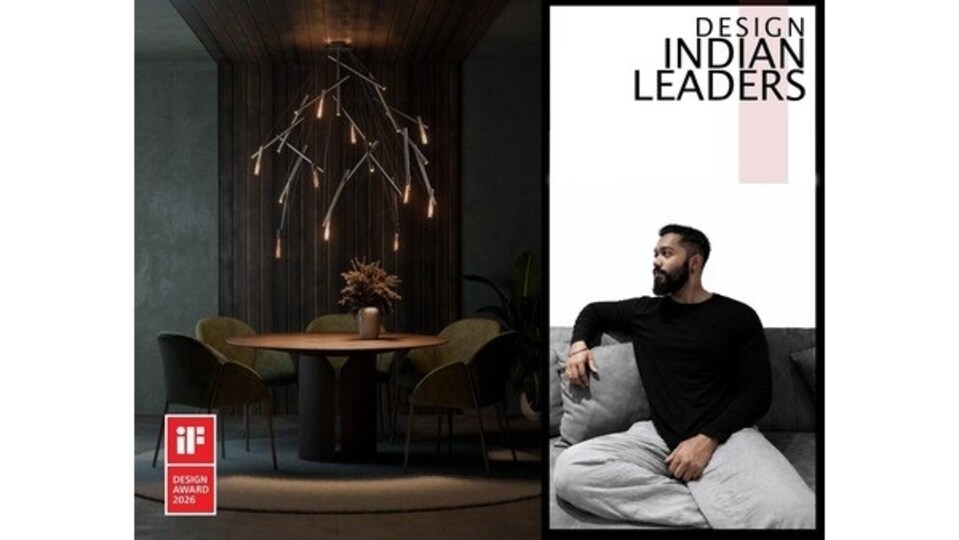
The winning project, “Roots,” is not just a lighting fixture but a conceptual reimagination of how design can connect humans with nature. Designed as a chandelier lighting system, Roots draws direct inspiration from the underground structure of trees — their roots — translating this natural phenomenon into a striking indoor experience.
At its core, Roots creates an immersive spatial illusion. When installed in a living space, the design gives users the sensation of sitting beneath the earth, as if the ceiling represents the ground above and a massive tree extends downward into the room. The branching root-like structures spread across the ceiling, embedded with multiple light sources that emit illumination as if it were flowing naturally from the roots themselves.
What sets Roots apart is its strong narrative-driven design approach. Rather than being just a decorative object, the system tells the story of a living organism. The form, structure, and interaction are all derived from how roots behave in nature, making the product both visually compelling and conceptually meaningful.
A key innovation within the Roots system is its integration of environmental awareness through technology. At the top of the structure, near the ceiling mount, an air-quality sensor continuously monitors the surrounding environment. When the air quality deteriorates, the system responds dynamically: internal motors subtly contract the wire-supported root structures, causing them to shrink inward — visually mimicking how natural roots wither when deprived of nourishment.
This transformation acts as an intuitive signal to the user, alerting them to declining air conditions. As the user improves the environment — for example, by activating an air purifier — the system gradually restores itself. The roots expand back to their original, healthy state, symbolizing recovery and balance. This real-time interaction transforms the product into a living indicator of environmental health.
Another defining aspect of the Roots design is its modular and sustainable approach. The lighting system incorporates multiple bulbs embedded across the root structure. However, unlike conventional lighting products, these components are fully reusable. If a part of the system is damaged or if the user wishes to change the setup, the bulbs can be repurposed into entirely new configurations.
With additional modular attachments, users can convert the same lighting elements into pendant lights, wall lights, or table lamps. This flexibility effectively allows a single product to function as multiple lighting solutions, significantly extending its lifecycle and reducing waste. The design thereby challenges traditional notions of sustainability — shifting the focus from just material selection to longevity and adaptability.
From a manufacturing perspective, the design also introduces efficiency. By enabling multiple product variations from a single core system, production processes can be streamlined, reducing tooling complexity and cost. This creates a rare balance where both the end user and the manufacturer benefit equally — a true win-win scenario in product design.
Ghosh’s philosophy of sustainability is deeply reflected in this project. Rather than limiting sustainability to biodegradable materials, he emphasizes extending the lifespan of products through thoughtful design. In Roots, this philosophy comes alive through modularity, reusability, and emotional engagement, ensuring that the product remains relevant and valuable over time.
The inclusion of healing light elements further enhances the experience. Carefully designed lighting tones contribute to a calming atmosphere, reinforcing the connection between nature, well-being, and everyday living.
With Roots, Souvik Ghosh has demonstrated how design can transcend functionality to become storytelling. By merging nature-inspired behavior, interactive technology, and sustainable thinking, the project stands as a powerful example of next-generation lighting design.
As the global design community gathers in Berlin this April, Ghosh’s award-winning work is expected to draw attention not just for its aesthetics, but for its deeper message — that design, when done right, can educate, engage, and inspire.
https://www.instagram.com/souvikghosh_designs?igsh=MWk0aHpodWoxdm5xMA==
Note to readers: This article is part of HT's paid consumer connect initiative and is independently created by the brand. HT assumes no editorial responsibility for the content, including its accuracy, completeness, or any errors or omissions. Readers are advised to verify all information independently.
Want to get your story featured as above? click here!


