
 E-Paper



Gurgaon: Quality of air dips from moderate to very poor as city gets colder on Sunday
Experts said that a dip in temperature caused a sudden rise of pollutants, which made the air thicker and caused discomfort in breathing.


The quality of air in Gurgaon slipped from the moderate level on Saturday to very poor on Sunday. Experts said that a dip in temperature caused a sudden rise of pollutants, which made the air thicker and caused discomfort in breathing.
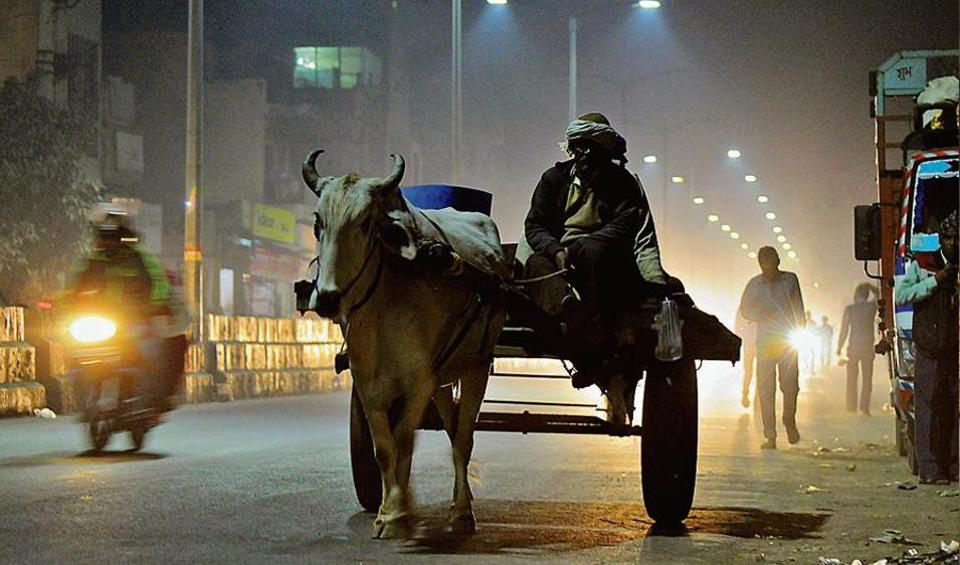
The minimum temperature on Sunday was 7.2 degrees Celsius, a dip of almost three degrees Celsius from Saturday, and the maximum temperature was 22 degrees Celsius.
According to the data from Haryana State Pollution Control Board (HSPCB), the pollution level has remained above permissible limits since Diwali. However, the PM 2.5 level, despite being above the permissible limit, was lower in the last week.
Bhupender Singh, regional officer, HSPCB said, “At present, the air quality of the city is marked as ‘very poor’ as the PM 2.5 level is at 370 micrograms per cubic metre (µg/m3), which was 161µg/m3 on Saturday. The pollutants consist of suspended particulate matter, carbon dioxide, carbon monoxide and nitrogen compounds.”
Singh said that the deterioration of air quality can be attributed primarily to the temperature dip on Sunday. Due to a lower temperature, pollutants in the air are trapped, resulting in higher pollution level, he said.
Meanwhile, doctors advised residents to avoid stepping out in the dust and smoke. They said that the high pollution level can cause skin and lung disorders. Oxides of nitrogen in the air cause an increase in ozone level, which is harmful, doctors said.
Dr Sanjeev Chaudhary, director of cardiology at Fortis Memorial Research Institute, said, “Certain activities more commonly performed during cold weather might also contribute to the risk of breathing problems. This is not only attributed to physical exertion but also due to dip in temperature. We tell our patients, especially those who are older, to protect themselves from the changing temperature.”
He also advised residents to go for walks in the warm sun and avoid the early morning cold.
Doctors also suggested precautions such as avoiding exposure to cold, wearing warm clothes, avoiding dust and consuming fluids to help protect from respiratory problems.
“Despite temperature dip in the last few days, we are already receiving more patients, around 40-50 a day, who complain of respiratory issues and eye infections. The common cold and viral fever are common this season,” Dr Rajesh Kumar, consultant, internal medicine, Paras Hospital, Gurgaon, said.

Stay updated with all the Breaking News and Latest News from Mumbai. Click here for comprehensive coverage of top Cities including Bengaluru, Delhi, Hyderabad, and more across India along with Stay informed on the latest happenings in World News.


