E-Paper



Healthcare in India cheap but not for most Indians

 Prefer HTon Google


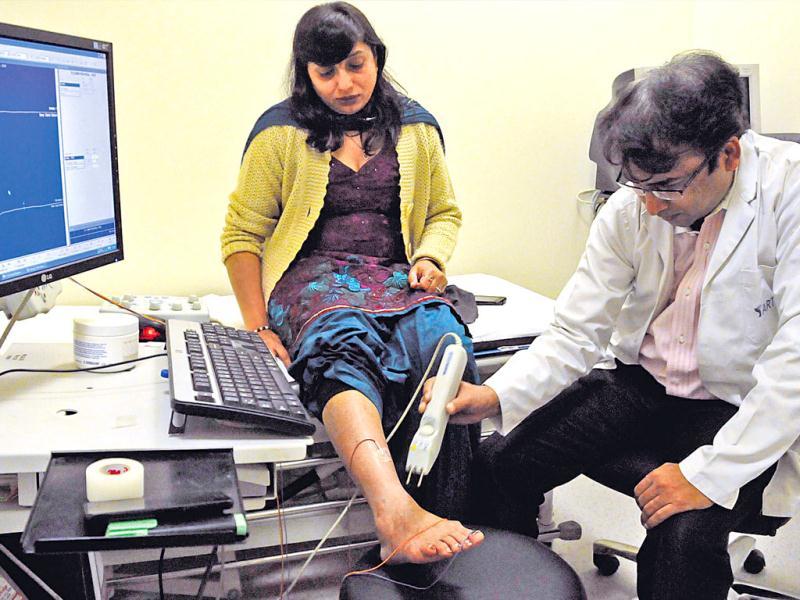
For instance, one cycle of chemotherapy and radiation therapy at AIIMS Cancer Centre costs just Rs 750. But 40% of those getting treated there can’t afford it and request the bill be waived.
India’s healthcare costs may be among the lowest in the world but they are still out of the reach of a vast majority of its citizens.
For instance, one cycle of chemotherapy and radiation therapy at AIIMS Cancer Centre costs just Rs 750. But 40% of those getting treated there can’t afford it and request the bill be waived.
“Advances in medical technology and new medicines are indeed a boon, but to work in India they have to be value for money. Most people can’t even afford conventional treatments at subsidised prices in public hospitals,” says Dr MC Misra, director, AIIMS.
Low on cost, high on quality of care and with a wide range of treatments available — the Indian healthcare system draws over 1.3 million patients from abroad each year. The sector is expected to generate $3 billion by the end of 2013. In Harvard Business Review’s November issue, a study by authors Vijay Govindarajan and Ravi Ramamurti gave private hospitals in India a thumbs-up for “delivering world-class health care, affordably”.
Yet, 99% of India’s population cannot afford these services, shows World Bank data.
Each year, 39 million people are pushed into poverty by out-of-pocket payments for healthcare, with households on average devoting 5.8% of their expenditures to medical care, the data reveals.
Manali Shah (name changed on request), a 33-year-old software engineer working in the private sector, lost her savings of eight years in a day when her father, 65, underwent a liver transplant in a private hospital. “Not only did my savings go, I also had to borrow money from the family to foot the bill. The procedure and hospitalisation cost almost Rs 30 lakh, and we have to continue spending Rs 10,000 each month for medicines, follow-up consultations and diagnostics,” she says
Each round of chemotherapy and radiation costs her almost Rs 1 lakh, but she didn’t consider AIIMS because the radiotherapy machine there is booked for the next seven months.
“I worry what will happen should the rest of my family — mother, my younger sister or me — need healthcare. We need a monthly income of a few lakh to meet health expenses,” she says.
'Her father didn’t pay, so her mother got her treated'
Santana Hazra, 35
Had it not been for her mother’s perseverance, 35-year-old Santana Hazra would not have made it to Delhi to get her heart valve repaired from her hometown in West Bengal. The Nadia-resident was diagnosed with a valve disorder in her teens, but her fish-trader dad refused to get specialised care for her. “The bias towards the girl child is rampant in society and her father was no different. It was the mother who saved up to get her treated,” said Noor Habib, her uncle who is with the family in Delhi for her treatment.
Hazra had mitral valve regurgitation, where the mitral valve does not shut properly when the heart pumps out blood, leading to the blood leaking from left ventricle into the left atrium (both chambers of the heart). She was referred to Fortis Escorts Heart Institute, where doctors recommended a valve replacement surgery. Her mother added up all her savings, but did not have enough, so Escorts did the surgery at a discount on October 17.
Dr Yugul K Mishra, director, department of cardiovascular surgery, says, “We opted for mitral valve repair than replacement so that she wouldn’t have to take anti-coagulation medicines for life.” Hazra will be discharged on Wednesday.