
 E-Paper



Memory loss is not the only indicant in diagnosing Alzheimer’s

 Prefer HTon Google



Memory loss alone should not be considered as the only clinical symptom while diagnosing Alzheimer’s disease, say researchers, adding that there are other indicants of the neurodegenerative disease that do not initially affect memory.
Memory loss alone should not be considered as the only clinical symptom while diagnosing Alzheimer’s disease, say researchers, adding that there are other indicants of the neurodegenerative disease that do not initially affect memory.
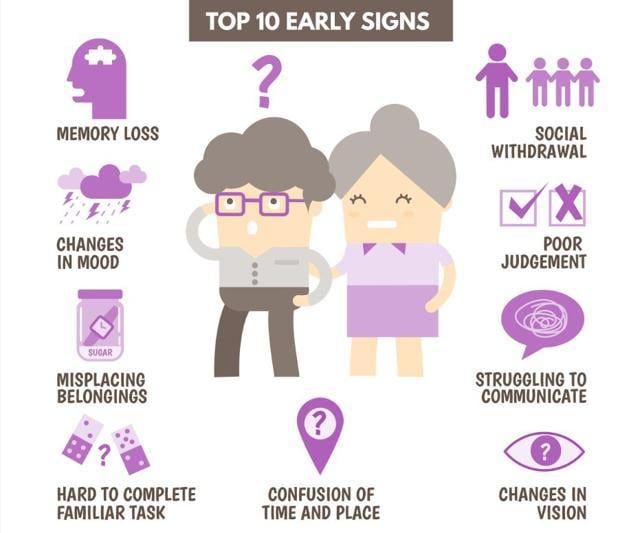
There is more than just one symptom of Alzheimer’s disease. These could be language problems, disruptive individual behaviour and personality disorder — even judgement of someone’s concept of the position of objects in space, said researchers at Northwestern University, in Evanston, of Illinois, in the US.
If it affects personality, it may cause lack of inhibition. For example, someone who was shy might one day go up to the grocery store clerk — who is a complete stranger — and try to hug or even kiss her.
This all depends on what part of the brain is affected by Alzheimer’s, the study said.
However, “these individuals are often overlooked in clinical trial designs and thus miss out on opportunities to participate in the experiments formulated to treat Alzheimer’s”, said lead author and Associate Professor Emily Rogalski at Northwestern University.
“Such individuals are often excluded because they don’t show memory deficits, inspite of sharing the same disease (Alzheimer’s) that’s causing their symptoms,” Rogalski added.
In the study, the authors identified the clinical features of individuals with primary progressive aphasia (PPA) — a rare dementia that causes progressive declines in language abilities due to Alzheimer’s disease.
During the initial phase of PPA, memory and other thinking abilities are relatively intact. Also, PPA can be caused either by Alzheimer’s disease or another neurodegenerative disease family called Frontotemporal lobar degeneration (FTLD).
The study demonstrated that knowing an individual’s clinical symptoms was not enough to determine whether PPA was due to Alzheimer’s or any other neurodegenerative disease — where progressive loss of structure or function of neurons, including death of neurons happen.
Therefore, an amyloid positron emission tomography (PET) scan — an imaging test — should be taken.
PET scan tracks the presence of amyloid -- an abnormal protein whose accumulation in the brain is a hallmark of Alzheimer’s.
PET scan should be used in early life to determine the likelihood of Alzheimer’s disease pathology in later life, the researchers said in the study published online in the journal Neurology.
Follow @htlifeandstyle for more.


