
 E-Paper



Australia announces curbs for families of international students: What new migration rules could mean for Indians
Minister says overhaul aims to cut net migration to 245,000 in 2026-27. Indians make up nearly 10.7% of Australia's overseas-born population.

 Prefer HTon Google


Australia will no longer let international students and graduate visa holders bring their families into the country, under stricter migration rules that Tony Burke, Australia's home affairs minister, announced on September 17.
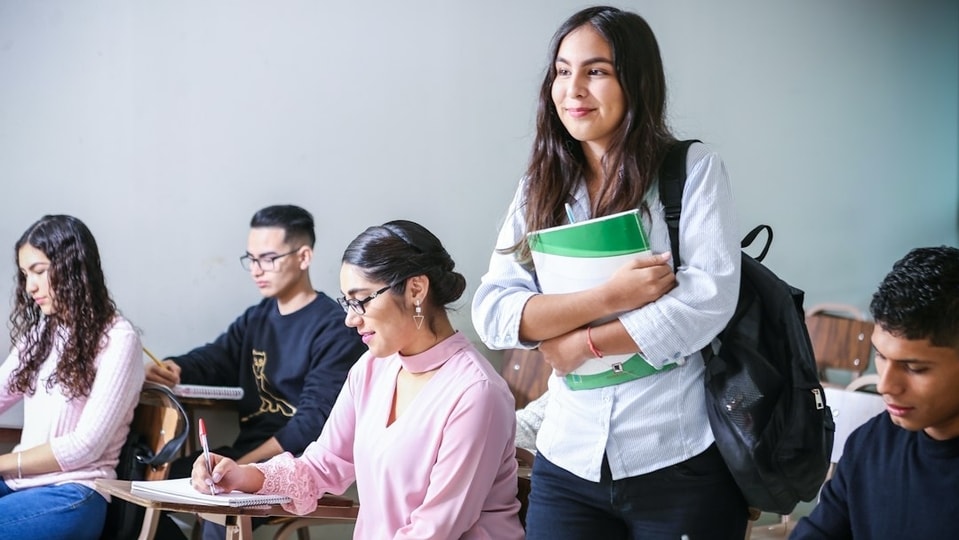
Burke also set out limits on students moving between visas, a new processing order for some skilled visas, a ballot for extending working holiday visas and a bar on visitors extending their stay. He did not say when the new rules will be effected.
The changes could be potentially relevant for Indians.
India was among the top five countries for migrant arrivals in Australia in 2024-25, including international students, and Indians form the country’s second-largest migrant community, at 3.4% of its total population.
Why Australia is tightening the rules
Burke said the reforms were aimed at two problems in the migration system. The first was its “demand-driven programme”.
“Effectively, the decision that Australia took when we had a demand-driven programme was to say that if employers can get the workers that they need, and our educational institutions can get the students who are willing to pay, and we get the business, then infrastructure and housing will take care of themselves,” he said, adding: “There is now an expectation on us that the pure demand-driven approach to major parts of the immigration system is not what Australians want, and they do want to see government able to take a higher level of control on different parts of the immigration system, compared to what previously has been there.”
The second, according to Burke, was "visa-hopping", a term used to describe situations in which people enter Australia on one visa and keep moving from one visa to another to stay on in the country.
Burke said not every move between visas counted. A student who trains in an area of skills shortage, moves to a graduate visa, finds sponsored work and then qualifies for permanent residency was, he said, “the system working at its absolute best”.
The problem, according to him, was individuals “who would never, in fact, meet the qualifications to be able to become a permanent resident, and effectively jump from visa to visa, use the appeals process to be able to stay here as long as possible until it eventually becomes absurd to not just let them stay, because at that point they have Australian citizen children and at that point they are so integrated into a local community”.
Burke also warned against deep cuts. He said jobs in Australian cities, from teaching to cleaning, depend on international education, which he called “an incredibly important export”, and that “drastic cuts, wherever you make them, hurt the economy in every part”.
Burke said the new rules are meant to help bring net overseas migration (NOM) down to 245,000 this financial year and to 225,000 in 2027-28. Official figures released on the day of the speech put NOM at 292,100.
Burke said “the housing shortage we have is not caused by immigration”, but that immigration needed “to be part of the solution for the housing crisis”.
Also read: New US visa rules from October 1: Which applicants must make social media profiles public?
What changes for students
Australia will "no longer be allowing the attaching of family members for international students or for graduate visas", Burke said. The rule exempts those already in the country, whom he said the government would not be "breaking up", students from Pacific and Asean nations, and certain courses, such as PhDs, where the circumstances are different.
Students will also be able to switch visas only if they move up the qualification ladder. “What we’ll be doing is setting a very simple rule: You can go up the qualification scale, but only up the qualification scale. So, at the end of a bachelor's degree if you want to then do a masters, that’s up the scale; that’s okay. But to hop around up and down to different institutions and claim that what is actually just seeking a migration outcome as part of Australia’s export of international education will come to an end as a model,” Burke said.
Students who need more time to finish a course can still apply for a 12-month visa extension, for instance after a serious illness or if their institution collapses. They can also still transfer credits to a different course, though that will now require a fresh visa application so the department can test that the move is legitimate. “It makes sure that we've got people actually studying things that they're good at, and in terms of international education, that's not the visa-hopping problem," Burke said.
A new queue for skilled visas
Since July 25, a ministerial order known as Direction 119 has set the order in which applications for certain skilled visas are processed, based on occupation and on whether the applicant is in Australia (onshore) or abroad (offshore) at the time of applying.
Defence and law enforcement applications come first, and onshore applicants go ahead of offshore ones.
Burke said the direction would be updated to add construction, agriculture, fisheries, resources and teaching to the priority list. Priority determines only an application's place in the queue and carries no guarantee of a visa.
A ballot for working holiday-makers
The working holiday visa allows people aged 18 to 30, or up to 35 for some countries, to take their first extended holiday in Australia for 12 months and work to fund the trip. To stay a second year, visa holders must work 88 days in regional Australia, and a third year requires six months of regional work.
Burke said those requirements will stay, but meeting them will now earn only a place in a ballot. The year-two ballot to get this visa will be limited to 45,000, against 57,000 people who qualified last year, and year three to 5,000, against 31,000.
“Not everybody will get through because we need to have some control and certainty of what those numbers are," Burke said. UK citizens are exempt under their country’s free trade agreement with Australia.
Burke said backpackers added 48,000 to net overseas migration last year.
No extensions for visitors
Australia will attach “a no further stay provision to visitor visas”.
The provision will stop visitors from applying onshore for any other visa except protection. Burke said the change would end a “double standard”: Australians whose overseas partners apply for partner visas wait years, while a partner who comes on a visitor visa and then applies onshore can stay on a bridging visa.
Because officials must be satisfied that a visit is for a genuine temporary purpose, he said, that route had led to refusals of visitor visas for weddings and family events, and the new provision would let such visas be issued, including to partners visiting while a spouse visa is processed.
"That will give some consistency as to what happens with family migration. It will have no impact on anybody who is already here because this is about the issuing of future visas and the rules for future visas," Burke said.
Implications & the debate
Indians make up nearly 10.7% of Australia's overseas-born population and are expected to be the hardest hit by the new rules. Data from Australia’s Department of Home Affairs show the Indian-born population more than doubled between 2014 and 2024, from 411,240 to 916,300. Its median age is 35.8, which is 2.5 years below that of the general population.
India is also the second-largest source of international students in Australia after China, with more than 110,600 Indian students in the country in 2026, according to the country’s Department of Education.
Immigration has become an increasingly fractious debate in Australia, as it has in the UK, US, Canada and Europe.
Alan Gamlen, director of the Australian National University's Migration Hub, told the Australian Broadcasting Corporation (ABC) that the debate “is being driven by misinformation and myths”, among them that rising migration caused the housing crisis and that migrants are stealing jobs or “lazing around on benefits”.
“We’re talking about net overseas migration (NOM), which is an abstract figure: arrivals minus departures that nobody really understands,” he said.


