
 E-Paper



Nobel winner Navi Pillay’s grandparents were ‘indentured labourers’: Theirs is a story of how Indians reached Africa
Indians came to Africa as slaves and later as indentured workers. The 2026 Nobel Peace prize winner’s family is part of that history.

 Prefer HTon Google


Aziz Hassim's The Lotus People, which opens in Durban in 1882, follows the descendants of two Indian emigrants in South Africa. Amitav Ghosh's Sea of Poppies (2008) sets off in 1838 aboard the Ibis, a former slave ship refitted to carry “indentured labourers” from Calcutta to the sugar estates of Mauritius. MG Vassanji's The Gunny Sack (1989) opens with a man in exile from Tanzania going through a sack left to him by his great-aunt, and recovering from its contents the life of his great-grandfather, who came to East Africa from Porbandar by way of Zanzibar. Abdulrazak Gurnah, the Zanzibar-born writer who won the 2021 Nobel Prize in Literature, writes of what Anders Olsson, who chaired the Nobel literature committee, called "a coastal area in and around the Indian Ocean marked by slavery", shaped by a succession of regimes and colonial powers, the Associated Press reported at the time.
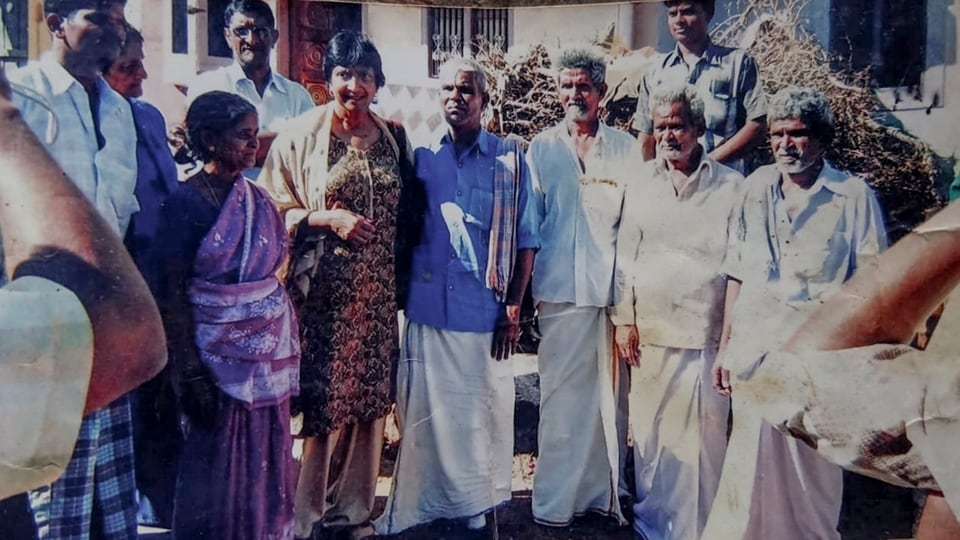
Earlier this month, the Nobel Peace Prize was awarded to a woman whose own family came from that history.
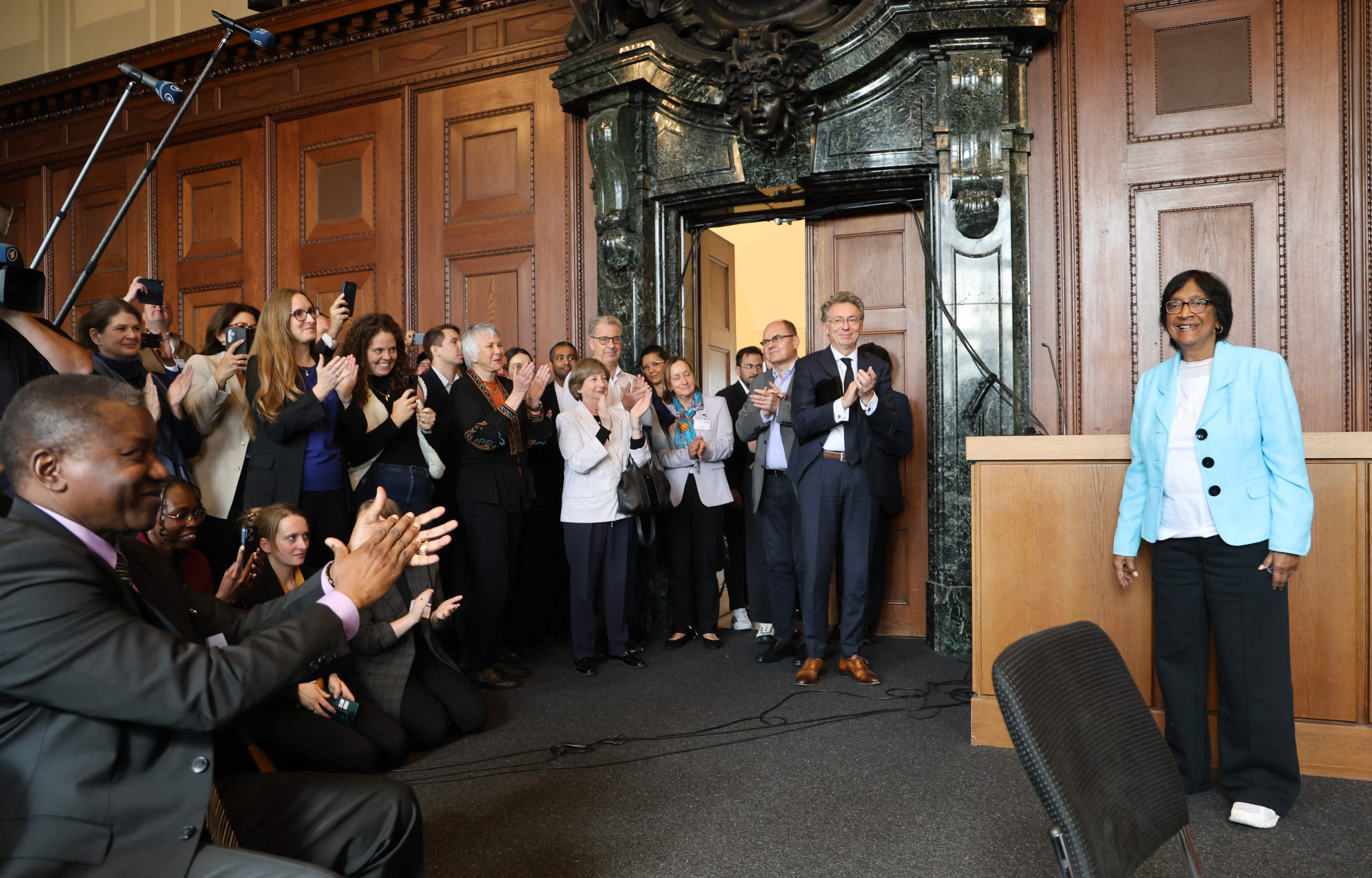
Navanethem Pillay, an 85-year-old South African jurist known as 'Navi' and a former United Nations High Commissioner for Human Rights, was honoured "for her efforts to promote peace and international law". She heard the news while attending a forum in Nuremberg, Germany, in the courtroom where Nazi leaders were tried after the Second World War. She is the fifth South African to win the prize, after Albert Luthuli, Desmond Tutu, and Nelson Mandela and FW de Klerk.
Pillay, who comes from a family of Tamil origin, was born in Durban in 1941. “My grandparents were shipped from India as indentured labourers," she'd said in a 2013 interview in the South African Yearbook of International Law, recalling that they worked on sugarcane plantations and that Mahatma Gandhi had described their lives as little better than slavery.
Her parents were born in South Africa, she said in that interview, and she was the fifth of their eight children. Her father was a bus driver and her mother a homemaker.
Pillay studied law at the University of Natal. In 1967, she became the first woman to start a law practice in South Africa's Natal Province, defending opponents of apartheid and establishing the rights of prisoners on Robben Island, according to a UN biographical note. She went on to serve as a judge and then president of the International Criminal Tribunal for Rwanda and as a judge at the International Criminal Court, before leading the UN's human rights office from 2008 to 2014. Most recently, she chaired a UN commission of inquiry that concluded in September 2025 that Israel had committed genocide in Gaza, a finding Israel rejected.
Her grandparents were among hundreds of thousands of Indians whom the British Empire moved to Africa as contract labourers in the 19th and early 20th centuries. Together with later migrants, their descendants now number in the millions across the continent, according to estimates by India's Ministry of External Affairs.
Also read: India condemns JD Vance's ‘indentured servants’ remark amid green card curbs
At the Cape
Indians were living in southern Africa long before the first indenture ships. From 1658, when the Cape was a settlement of the Dutch East India Company, until slavery ended in British colonies in 1834, people from India were among those taken there as slaves, according to a 2015 doctoral thesis by Parbavati Rama at the University of the Western Cape, which builds its count from colonial records held in the Western Cape Provincial Archives.
Indenture begins
After Britain abolished slavery in its colonies, it began recruiting workers in India on contracts that bound them to an employer for a fixed period, a system known as 'indenture'. In 1834, the British government chose Mauritius, an island in the Indian Ocean east of Madagascar, as the first site for what UNESCO calls the "great experiment" in using indentured, rather than enslaved, labour.
Between 1834 and 1920, almost half a million indentured labourers from India passed through Port Louis, the site of the Aapravasi Ghat immigration depot, to work on the island's sugar plantations or to be sent on to Réunion, Australia, southern and eastern Africa or the Caribbean, according to UNESCO, which made the depot a World Heritage Site in 2006. Other colonial powers adopted the system from the 1840s, and more than two million indentured labourers were moved around the world, UNESCO says.
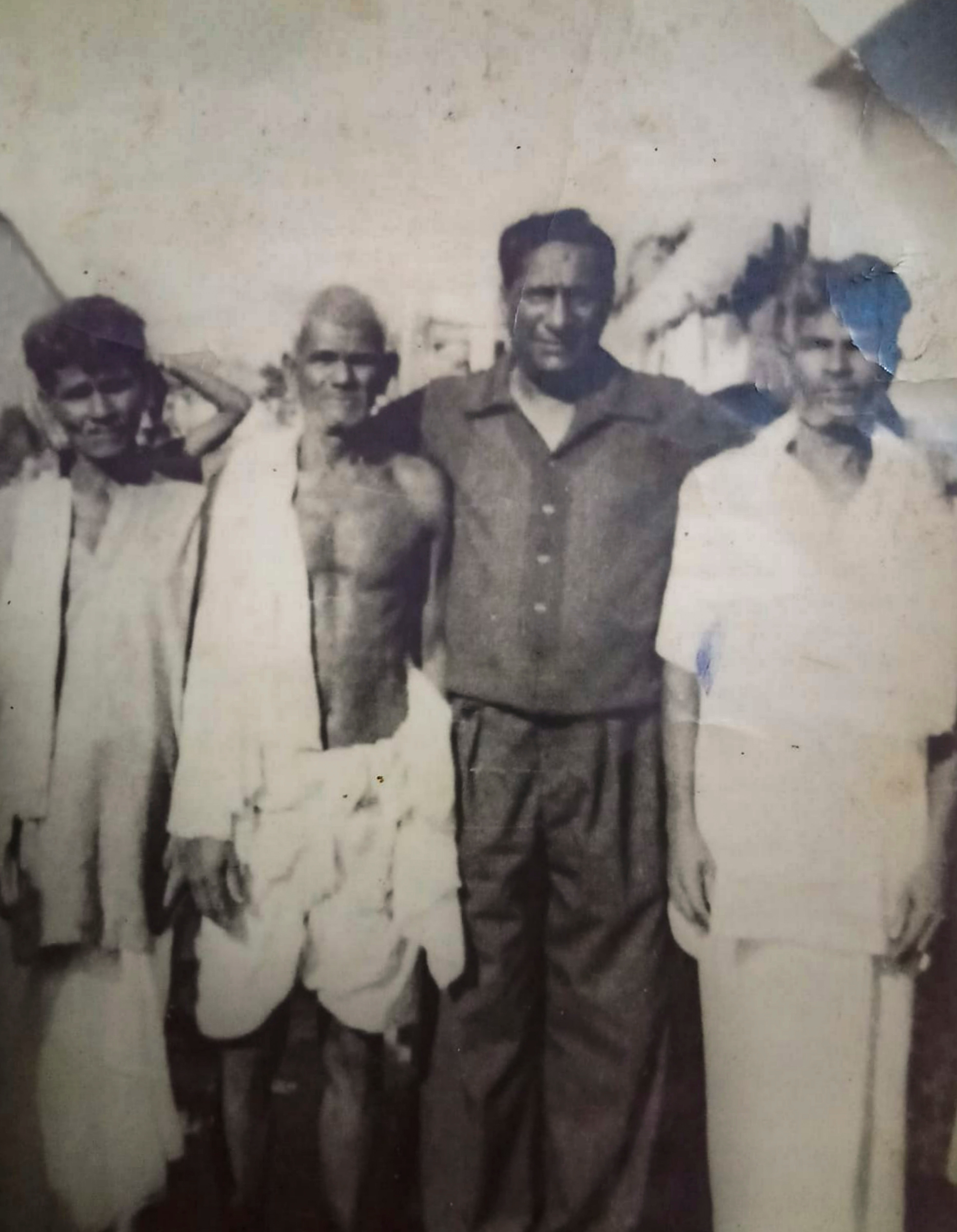
South Africa's first indentured Indians, bound for the British colony of Natal, came 26 years later aboard the Truro, which reached Natal on November 16, 1860. By the time the last ship, the Umlazi, came in on July 11, 1911, about 152,000 indentured Indians had made the crossing from Madras and Calcutta on 384 voyages, according to ship lists held by the Gandhi-Luthuli Documentation Centre at the University of KwaZulu-Natal.
And, the gradual end
The traffic to Natal was the first to be stopped, under pressure from within British India’s administration.
In 1910, the Imperial Legislative Council, the legislature of the colonial Government of India, adopted a resolution moved by the nationalist leader Gopal Krishna Gokhale asking that the Governor-General be given powers to prohibit the recruitment of indentured labour for Natal. The government accepted it, according to the council’s proceedings of March 1912. A telegram from the Governor of Natal to the Secretary of State for the Colonies, dated February 28, 1910, now held by the National Archives of India, noted that the resolution did not amount to an immediate ban.
Indentured emigration as a whole was halted in March 1917 under the Defence of India Ordinances, though a final shipment went to Mauritius in 1925, according to the University of Edinburgh's Coolitude archive.
By 1917, more than one million men, women and children had left India under indenture, most never to return, the historian Brij V Lal wrote in a 2021 book chapter on the system's end.
The Indian government ties its diaspora to that period through Gandhi. The MEA holds Pravasi Bharatiya Divas, its annual day for overseas Indians, on January 9 because Gandhi returned to India from South Africa on that day in 1915.
Also read: Margaret Hamilton, who led Apollo's software team, and the women whose work shaped modern computing
Indian communities today
Today, South Africa has the largest population of Indian origin in Africa, with MEA estimating the total at 1.8 million, 1,722,600 of them people of Indian origin and the rest Indian citizens.
South Africa’s census of 2022 counted 1,697,505 people in its Asian group, a category that accounted for Indians and people of other Asian origins, with 1,157,542 of them in KwaZulu-Natal, the province that includes Durban. But demographers Tom Moultrie and Rob Dorrington, in a 2024 technical report for the South African Medical Research Council, warned that the census probably overestimated the group and that its figures should be used with extreme caution.
Of those counted, 37.1% identified as Hindu, according to Statistics South Africa's 2025 report on cultural dynamics.
In Mauritius, where the 2022 census recorded about 1.24 million residents, MEA estimates 891,697 Indian citizens and people of Indian origin. It puts the figures for Kenya at 80,000, Tanzania at 55,000 and Uganda at 38,800.
Pillay’s pending case
Pillay is serving as an ad hoc judge at the International Court of Justice in The Gambia's case accusing Myanmar of genocide against the Rohingya.
Speaking in Nuremberg on the day of the award, she warned that attempts to weaken international criminal justice "risk returning us to a world in which power, rather than law, determines whose suffering matters".


