
 E-Paper



Margaret Hamilton, who led Apollo's software team, and the women whose work shaped modern computing
Hamilton's team wrote the software that kept Apollo 11's Moon landing going when its computer overloaded. She died on September 30, aged 90.

 Prefer HTon Google


Hamilton, who died on September 30 aged 90, led the team that wrote Apollo's onboard flight software. She was one of many women whose computing work was recognised late.
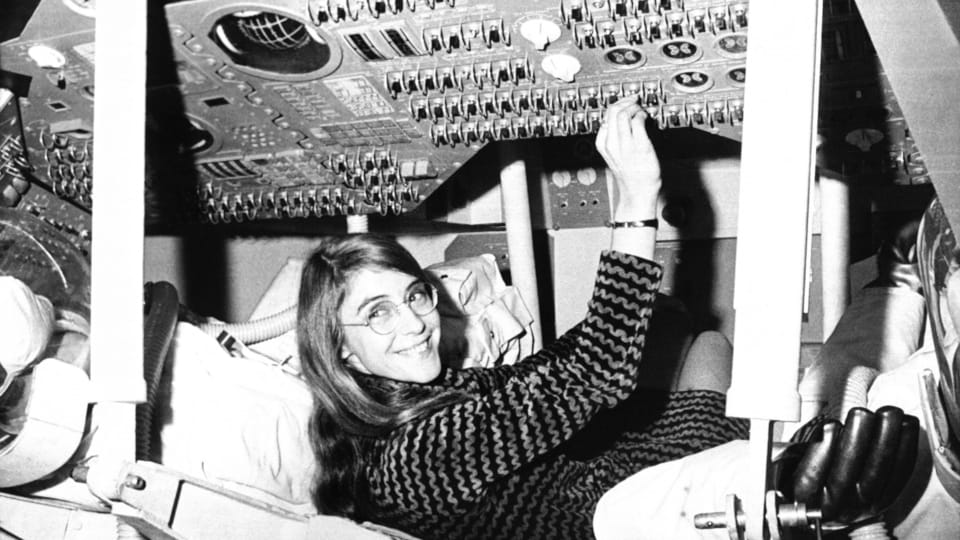
One day in the late 1960s, Lauren Hamilton, then four, was playing with the command module simulator at MIT's Instrumentation Laboratory. She somehow started P01, a program meant to run only before launch, while the simulated spacecraft was in mid-flight, and the simulator crashed.
Lauren's mother, Margaret, led software work on Nasa's Apollo programme at the lab.
The seemingly harmless incident prompted Hamilton to add a note to the technical documentation, warning users not to start P01 during flight. She also proposed a software fix, but was overruled because the highly trained astronauts were never going to make that mistake.
But during the Apollo 8 mission in 1968, astronaut Jim Lovell started P01 by accident and the spacecraft's navigation data vanished. Hamilton's team was then called in to fix it, and her changes went into the program, according to MIT.
The university calls the episode the 'Lauren error', describing it as an early example of defensive programming, the practice of building software that can anticipate or fix errors on its own.
Margaret Hamilton died on September 30 at a hospital in Cambridge, Massachusetts, aged 90, her daughter told The Associated Press. MIT also announced her death. Nasa administrator Jared Isaacman, writing on X, called her "a pioneer whose work helped make Apollo and humanity's first journeys to the moon possible".
Wider fame came late in her life.
"She definitely went from nobody knowing who she was to suddenly everyone knowing who she was, especially in her field," Lauren Hamilton told AP. Paul Curto, the Nasa technologist who nominated her for an agency award in 2003, said at the time that he was "surprised to discover she was never formally recognised" for her groundbreaking work.
From weather forecasts to the Moon
Hamilton was born in Paoli, Indiana, in 1936. She began studying mathematics at the University of Michigan in 1955, then transferred to Earlham College, where she graduated in 1958. She moved to Boston in 1959 while her husband studied law, according to MIT. She grew up mostly in Michigan's Upper Peninsula, AP reported.
Her first programming job was a temporary post in MIT's meteorology department, writing weather-prediction software for the MIT meteorology professor Edward Lorenz, whose later publications on chaos theory her work helped inform. In 1961 she joined MIT's Lincoln Laboratory to write software for SAGE, an early computerised US air defence system. In 1965, her husband spotted a newspaper advertisement from the MIT Instrumentation Lab, which needed people to write software for the Moon landings.
MIT says she was hired as the first programmer for the Apollo project at the university, and the project's first woman programmer, AFP reported.
By 1968 she was assistant director in charge of the team writing software for the command and service module, the spacecraft that carried crews to lunar orbit and back. More than 400 people were working on Apollo software by then, according to MIT. She went on to lead the lab's Software Engineering Division, overseeing the flight software for both the command module and the lunar module.
She was 32 when Apollo 11 touched down on the Moon.
What the software had to do
The Apollo Guidance Computer, designed at MIT, was the first significant use of silicon integrated circuit chips, according to the university. Its programs were stored in core rope memory, made by threading wire through magnetic rings. Each pattern of threads encoded the instructions.
Women at a Raytheon facility outside Boston made this memory by hand. One of them appears in an Apollo 11 press-kit photograph, unnamed, captioned as a "space age needleworker", according to the researcher Samantha Shorey.
Curto credited Hamilton with concepts that became the foundation of ultra-reliable software design. One was asynchronous software, which let the computer start jobs as they were needed rather than in a fixed order. Another was priority scheduling, which made sure the most important jobs always ran first. A third was end-to-end testing of the whole system. The fourth was keeping astronauts in the decision-making loop, for instance through priority displays that let the software interrupt their normal screens to warn of an emergency.
"There was no second chance. We knew that," Hamilton told MIT News in 2009. In the same interview, she said: “Because software was a mystery, a black box, upper management gave us total freedom and trust.”
Also read: Why India’s tech future needs more women at the helm
Five alarms over the Moon
In July 1969, in the final minutes before Apollo 11 touched down on the Moon, a warning flashed up on the lunar module's computer. The code read "1202". It meant the computer was overloaded, because of a fault in a hardware switch, according to MIT.
Put simply, the computer had been given more work than it could finish in time.
Don Eyles, an MIT programmer who wrote the landing software, later explained what went wrong in a paper published on Nasa's history website. A fault in the link between a radar and the computer kept loading it with extra work. That used up about 13% of the computer's time. The computer raised five alarms, all signalling overload, and restarted itself each time.
A restart could have been a disaster. It was not, because of how the software had been designed.
Peter Adler, another MIT programmer who worked on the lunar module's software, wrote in an account also hosted by Nasa that after each restart the computer picked up the jobs that mattered most, such as steering the engine that slowed the descent and keeping the astronauts' display working. The unwanted radar jobs were dropped.
Mission Control in Houston knew the landing could go ahead because MIT had tested this restart system thoroughly, Adler wrote. Nasa's 2003 announcement of Hamilton's award said the software's response allowed the mission to continue safely.
Recognition, decades on
The 2003 honour was Nasa's Exceptional Space Act Award.
Sean O'Keefe, then Nasa administrator, said the concepts Hamilton and her team created became the building blocks of modern software engineering. Nasa credits her with popularising the concept of software engineering itself. Hamilton said she began using the phrase to win software the respect given to other engineering disciplines, and that it was treated as a joke for a long time.
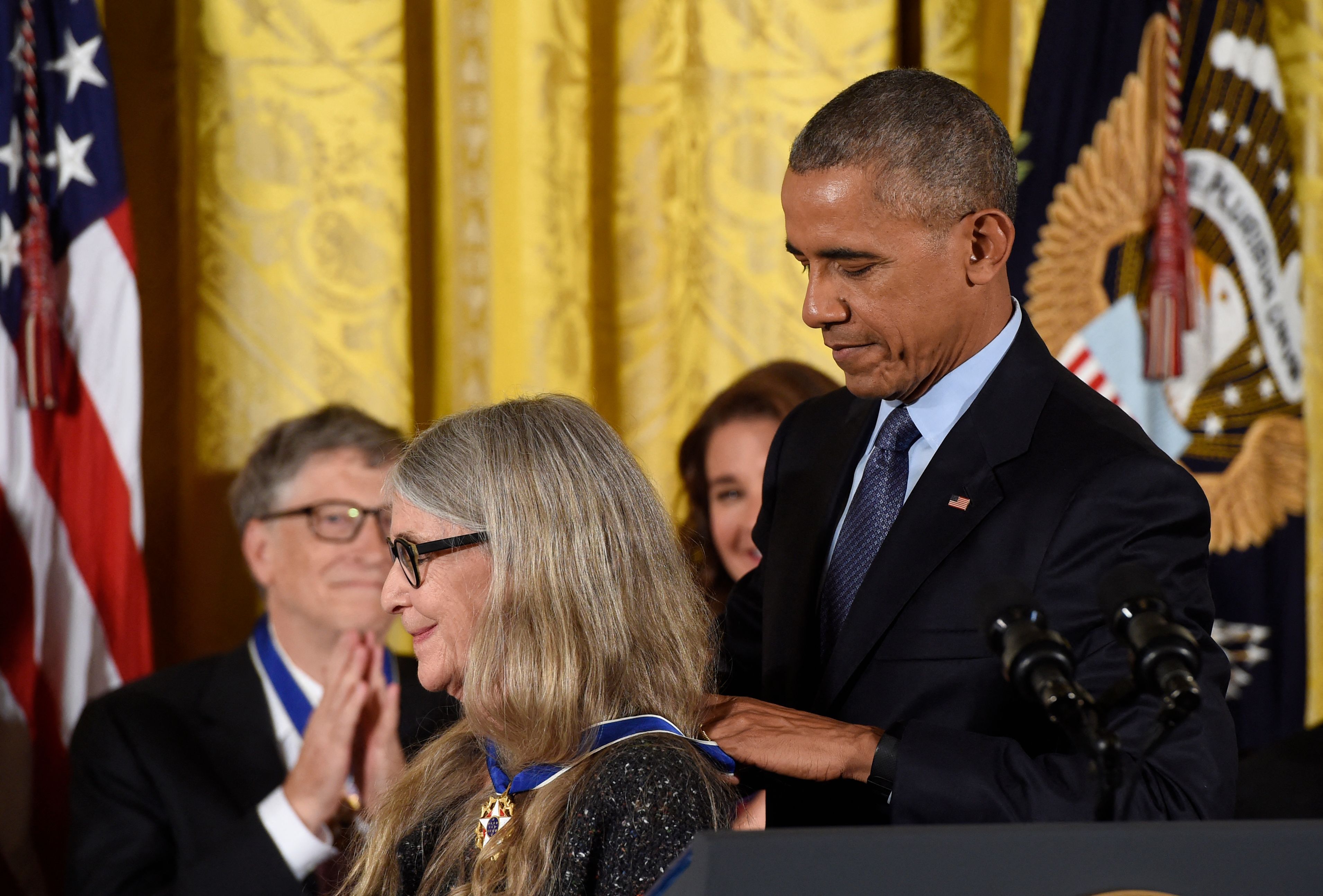
In 2016, President Barack Obama awarded her the Presidential Medal of Freedom, the highest US civilian honour. The citation said: "Her software architecture led to giant leaps for humankind." Grace Hopper, a US Navy mathematician and computing pioneer who helped develop early programming languages, was among that year's 21 recipients, honoured posthumously.
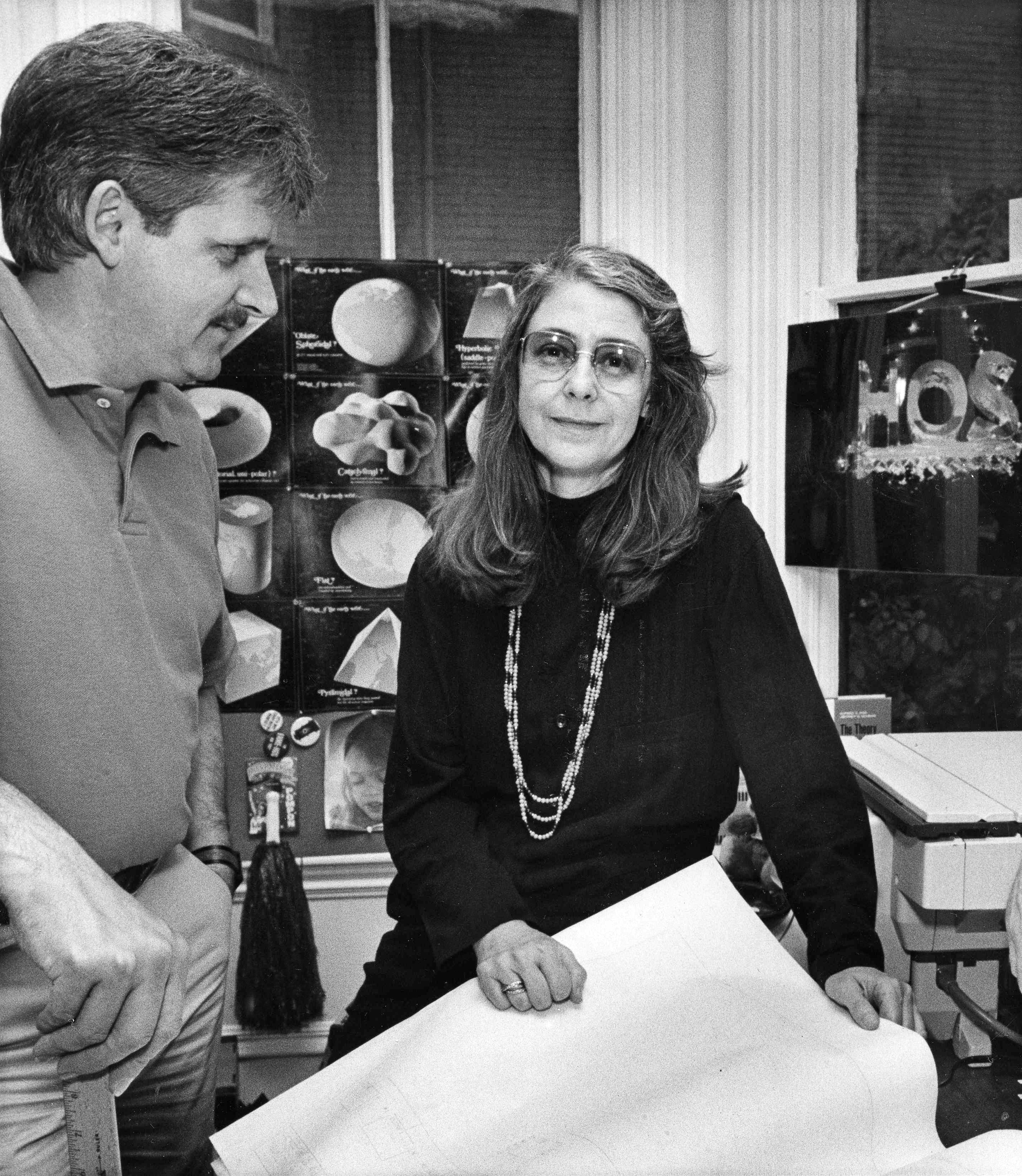
A Lego set celebrating the women of Nasa included a Hamilton figure in 2017, AP reported. The best-known image of Hamilton shows her beside printed listings of Apollo code about as tall as she is. Hamilton said an Instrumentation Laboratory staff photographer took it at MIT in 1969 to promote the lab's work.
She later founded two software companies, Higher Order Software and Hamilton Technologies, and published more than 130 papers. "She encountered a lot of sexism in her field but she didn't come back aggressively. She would disarm people with her sense of humor or … just kind of dominate quietly," her daughter told AP.
The university calls the episode the 'Lauren error', describing it as an early example of defensive programming**, the practice of** building software that can anticipate or fix errors on its own.
Margaret Hamilton died on September 30 at a hospital in Cambridge, Massachusetts, aged 90, her daughter told The Associated Press. MIT also announced her death. Nasa administrator Jared Isaacman, writing on X, called her "a pioneer whose work helped make Apollo and humanity's first journeys to the moon possible".
Wider fame came late in her life.
"She definitely went from nobody knowing who she was to suddenly everyone knowing who she was, especially in her field," Lauren Hamilton told AP. Paul Curto, the Nasa technologist who nominated her for an agency award in 2003, said at the time that he was "surprised to discover she was never formally recognised" for her groundbreaking work.
Also read: Sudeshna Sinha is the woman who brought order in computing from chaos
From weather forecasts to the Moon
Hamilton was born in Paoli, Indiana, in 1936. She began studying mathematics at the University of Michigan in 1955, then transferred to Earlham College, where she graduated in 1958. She moved to Boston in 1959 while her husband studied law, according to MIT. She grew up mostly in Michigan's Upper Peninsula, AP reported.
Her first programming job was a temporary post in MIT's meteorology department, writing weather-prediction software for the MIT meteorology professor Edward Lorenz, whose later publications on chaos theory her work helped inform. In 1961 she joined MIT's Lincoln Laboratory to write software for SAGE, an early computerised US air defence system. In 1965, her husband spotted a newspaper advertisement from the MIT Instrumentation Lab, which needed people to write software for the Moon landings.
MIT says she was hired as the first programmer for the Apollo project at the university, and the project's first woman programmer, AFP reported.
By 1968 she was assistant director in charge of the team writing software for the command and service module, the spacecraft that carried crews to lunar orbit and back. More than 400 people were working on Apollo software by then, according to MIT. She went on to lead the lab's Software Engineering Division, overseeing the flight software for both the command module and the lunar module.
She was 32 when Apollo 11 touched down on the Moon.
What the software had to do
The Apollo Guidance Computer, designed at MIT, was the first significant use of silicon integrated circuit chips, according to the university. Its programs were stored in core rope memory, made by threading wire through magnetic rings. Each pattern of threads encoded the instructions.
Women at a Raytheon facility outside Boston made this memory by hand. One of them appears in an Apollo 11 press-kit photograph, unnamed, captioned as a "space age needleworker", according to the researcher Samantha Shorey.
Curto credited Hamilton with concepts that became the foundation of ultra-reliable software design. One was asynchronous software, which let the computer start jobs as they were needed rather than in a fixed order. Another was priority scheduling, which made sure the most important jobs always ran first. A third was end-to-end testing of the whole system. The fourth was keeping astronauts in the decision-making loop, for instance through priority displays that let the software interrupt their normal screens to warn of an emergency.
"There was no second chance. We knew that," Hamilton told MIT News in 2009. In the same interview, she said: “Because software was a mystery, a black box, upper management gave us total freedom and trust.”
Five alarms over the Moon
In July 1969, in the final minutes before Apollo 11 touched down on the Moon, a warning flashed up on the lunar module's computer. The code read "1202". It meant the computer was overloaded, because of a fault in a hardware switch, according to MIT.
Put simply, the computer had been given more work than it could finish in time.
Don Eyles, an MIT programmer who wrote the landing software, later explained what went wrong in a paper published on Nasa's history website. A fault in the link between a radar and the computer kept loading it with extra work. That used up about 13% of the computer's time. The computer raised five alarms, all signalling overload, and restarted itself each time.
A restart could have been a disaster. It was not, because of how the software had been designed.
Peter Adler, another MIT programmer who worked on the lunar module's software, wrote in an account also hosted by Nasa that after each restart the computer picked up the jobs that mattered most, such as steering the engine that slowed the descent and keeping the astronauts' display working. The unwanted radar jobs were dropped.
Mission Control in Houston knew the landing could go ahead because MIT had tested this restart system thoroughly, Adler wrote. Nasa's 2003 announcement of Hamilton's award said the software's response allowed the mission to continue safely.
Recognition, decades on
The 2003 honour was Nasa's Exceptional Space Act Award.
Sean O'Keefe, then Nasa administrator, said the concepts Hamilton and her team created became the building blocks of modern software engineering. Nasa credits her with popularising the concept of software engineering itself. Hamilton said she began using the phrase to win software the respect given to other engineering disciplines, and that it was treated as a joke for a long time.
In 2016, President Barack Obama awarded her the Presidential Medal of Freedom, the highest US civilian honour. The citation said: "Her software architecture led to giant leaps for humankind." Grace Hopper, a US Navy mathematician and computing pioneer who helped develop early programming languages, was among that year's 21 recipients, honoured posthumously.
A Lego set celebrating the women of Nasa included a Hamilton figure in 2017, AP reported. The best-known image of Hamilton shows her beside printed listings of Apollo code about as tall as she is. Hamilton said an Instrumentation Laboratory staff photographer took it at MIT in 1969 to promote the lab's work.
She later founded two software companies, Higher Order Software and Hamilton Technologies, and published more than 130 papers. "She encountered a lot of sexism in her field but she didn't come back aggressively. She would disarm people with her sense of humor or … just kind of dominate quietly," her daughter told AP.
Women in computing
Ada Lovelace
In an 1843 paper, Lovelace, the 19th-century English mathematician, explained Charles Babbage's designs for a mechanical computer, and the paper has earned her the popular title of first programmer. Its last appendix, Note G, set out the steps by which the machine could, in theory, calculate the Bernoulli numbers, a sequence used in mathematics. Historians have long debated how much of the paper was her own work. Christopher Hollings and Ursula Martin of Oxford and Adrian Rice of Randolph-Macon College studied her papers in the Bodleian Library. They concluded she was a gifted mathematician, and their work challenges claims that Babbage probably wrote the paper himself.
The Eniac programmers
The US Army unveiled Eniac, one of the first general-purpose electronic computers, in February 1946. The six women who programmed it were not mentioned in the press or at the demonstration, according to the American Physical Society. The Army classified the women as "sub-professional", according to Communications of the ACM, the journal of the Association for Computing Machinery. Their story became known after Kathryn Kleiman, then a Harvard student, found a passing mention of them in 1986.
Kathleen Booth
In 1947, while working on an early computer at Birkbeck College in London, Booth, a British mathematician, created a way to write the machine's instructions as short, readable codes instead of strings of ones and zeros. The University of Saskatchewan, where she later taught, says it is now recognised as the world's first assembly language, a basic form of programming language. She died in 2022, aged 100.
Grace Hopper
Hopper was assigned to Harvard in December 1943 to work on the Mark I computer, according to Vassar College, her alma mater. Vassar describes her A-0 system, which translated mathematical code into machine-readable code, as the first compiler. She also helped create the Cobol programming language. In 1947, engineers on Harvard's Mark II computer found a moth stuck in a component, taped it into their logbook and wrote "first actual case of bug being found". The Smithsonian, which holds the logbook, says engineers had called small flaws in machines "bugs" since the 1870s. It also says the logbook was probably not Hopper's, although she and her team helped popularise the term.
Stephanie Shirley
Shirley, the British software entrepreneur, came to Britain as a child refugee in 1939. In 1962, she founded Freelance Programmers, a software firm that gave women jobs writing code from home, according to the University of Bath. She signed her letters "Steve" so that clients would take her seriously. Her firm wrote the "black box" flight-recorder software for Concorde, and she became the first woman to lead the British Computer Society.
Frances Allen
Allen, an American computer scientist, spent most of her career at IBM working on compilers, the programs that translate code written by people into instructions a computer can carry out. Her work made programs run faster. In 2007, the Association for Computing Machinery gave her its Turing Award for 2006. The award was first presented in 1966, and Allen was the first woman to receive it. In 1989, she had also become the first woman named an IBM Fellow, according to the ACM.
Karen Spärck Jones
In 1972, the Cambridge computer scientist set out a way for computers to judge which words in a document matter most. A word that appears in only a few documents tells a search engine more than a common one. Wolfson College, Cambridge, says her idea is considered the basis of how modern internet search engines work. Cambridge made her a Reader only in 1994, and a professor in 1999. An obituary in the journal Computational Linguistics said the university had “finally recognized her standing”.
Ritu Karidhal
Karidhal, an Indian Institute of Science graduate, was a deputy operations director on the Mars Orbiter Mission run by Indian space agency Isro, which reached Mars orbit in September 2014. In an account published by the institute, she wrote that the spacecraft needed onboard autonomy, software able to detect, isolate and recover from faults on its own. Thousands of lines of code were written for its onboard computers, tested and reviewed. "Onboard autonomy was a totally new venture for us," she wrote.
Missing from the story
In Programmed Inequality, published by MIT Press in 2017, the historian Mar Hicks argues that women formed Britain's largest trained technical workforce in computing from the Second World War to the 1960s. The British government neglected them as computing came to be seen as men's work, Hicks argues, adding that the later decisions damaged the industry in the country.
In the US, women earned 37.1% of computer science bachelor's degrees in 1983-84, according to the National Center for Education Statistics. The share then fell, to 17.6% in 2007-08, and stood at 20% in 2017-18.
Hamilton, speaking on the Apollo years in her 2009 interview with MIT News, said: “Looking back, we were the luckiest people in the world; there was no choice but to be pioneers.”


