
 E-Paper



India and Singapore can build Asia’s next health care corridor
This article is authored by Amit Varma, co-founder and managing partner, Quadria Capital.

 Prefer HTon Google


The next great health care opportunity in Asia is not simply to build more hospitals. It is to build institutions capable of delivering good health care to hundreds of millions of people, at standards they can trust and at costs they can afford.
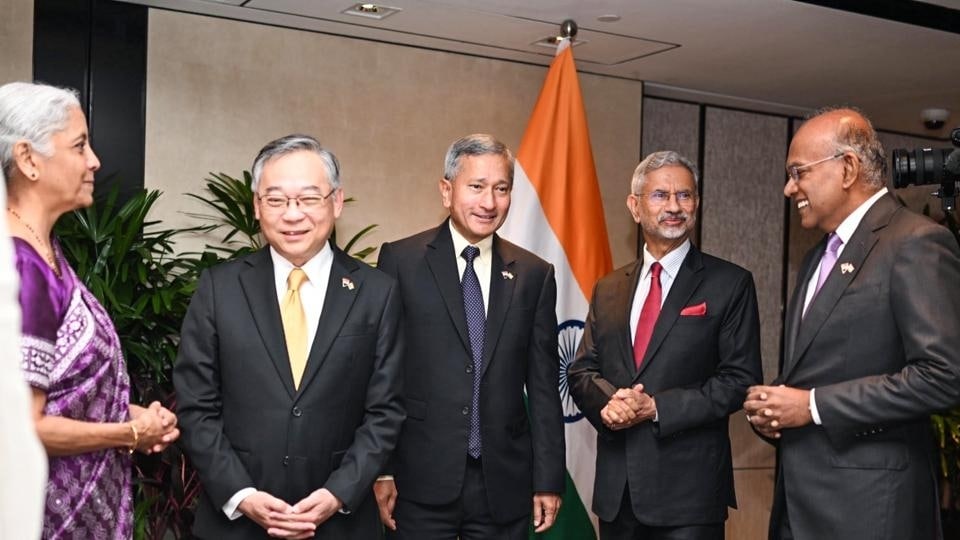
India and Singapore are unusually well placed to do this together. The 4th India-Singapore Ministerial Roundtable in August reaffirmed health care and medicine as one of the six pillars of the Comprehensive Strategic Partnership. In October, finance minister Nirmala Sitharaman took the conversation to Singapore, meeting the country’s leading institutional investors and health care groups, with hospital capacity expansion in India on the agenda. That matters. But capital has been ahead of diplomacy for some time.
Singapore was India’s largest source of FDI in FY2025-26, with inflows of $19.8 billion, and cumulative investment since 2000 has reached nearly $195 billion, almost a quarter of all FDI India has received. The question is no longer whether Singapore will invest in India. It is what the next generation of that investment should build.
Health care should be near the top of the list. India’s health care story is often reduced to demographics: 1.4 billion people, rising incomes, wider insurance coverage and an ageing population. All of that is true, but it misses the more important investment insight.
India is moving from scarcity of health care to demand for quality health care. Patients increasingly want better outcomes, more reliable diagnostics, specialist care closer to home and higher standards of service. Yet supply remains deeply uneven, with only about 1.6 hospital beds per 1,000 people and substantial shortages of doctors, nurses and infrastructure.
That gap cannot be closed by building more capacity the old way. India needs networks, not monuments. It needs specialist hospitals that extend beyond the largest cities. Diagnostic platforms that reach patients earlier. Pharmaceutical and life-sciences companies that compete on quality rather than cost alone. Technology that improves productivity without de-personalising care. And health care businesses that can grow rapidly without letting clinical standards slip.
This is precisely where Singapore becomes relevant. Capital is available from many places. Singapore’s advantage is the character of its capital: institutional, patient, internationally connected and accustomed to demanding standards of governance.
Health care needs exactly that because it is an unusual industry. Growth can destroy value if it outruns clinical quality. A hospital chain can add beds faster than it can build culture. A diagnostics company can add laboratories faster than it can maintain standards. A pharmaceutical business can increase output faster than its quality systems can mature.
The best health care investors therefore do more than finance expansion. They help build institutions, which makes the India-Singapore fit far more interesting than a conventional FDI story. India offers operating scale, entrepreneurial energy and clinical depth. Singapore offers institutional capital, governance discipline and a bridge to the rest of Asia.
Another dimension of this partnership deserves far greater attention: healthcare education and clinical training. Clinicians at India’s strongest medical institutions work at patient volumes few health systems can replicate, across an unusually wide spectrum of disease. In the same institution, a physician may see advanced non-communicable disease, complex infectious disease, rare pathology and late-stage presentations that are increasingly uncommon in wealthier health systems.
Clinical density is an asset. Medicine is learned not only from textbooks and technology, but through repeated exposure to patients, judgement under pressure and accumulated pattern recognition. This gives India the potential to become a major training ground for clinicians from Singapore and the wider ASEAN region.
This is not a one-way transfer of expertise. Singapore has built some of Asia’s most sophisticated health care institutions, with strengths in clinical governance, research, technology and systems design. India offers something complementary: Clinical scale and breadth that are difficult to reproduce.
A deeper partnership could, therefore, connect teaching hospitals, medical schools and specialist centres across both countries. Structured fellowships, specialist training programmes, faculty exchanges and joint centres of excellence could let doctors, nurses and allied health professionals from across ASEAN train in India, while Indian institutions gain exposure to Singapore’s systems, research capabilities and international networks.
Over time, this could become one of the most consequential parts of the relationship. Capital can finance a hospital. Training builds the people who determine what happens inside it.
The ambition should, therefore, be to combine capital, clinical capability and institutional knowledge. India can become both the laboratory where affordable healthcare models are built at extraordinary scale and the classroom where clinicians learn to manage extraordinary complexity. Singapore can become the platform through which the strongest of these models are financed, institutionalised, benchmarked and taken to other emerging Asian markets.
A cardiology network that succeeds in Indore or Coimbatore may hold lessons for Indonesia or Vietnam. An Indian diagnostics platform delivering quality at a fraction of developed-market costs may be relevant across Southeast Asia. A clinician trained in an Indian tertiary-care centre may return to an ASEAN health system having seen in a year a breadth of pathology that would otherwise take far longer to encounter.
The same logic applies to specialty care, medical devices, pharmaceutical manufacturing, health care technology and clinical research. This is where policy should now catch up with capital. The health care pillar needs a dedicated architecture that brings investors, operators, regulators, universities, teaching hospitals and innovators together. It should ease capital formation, deepen collaboration in health care skills and manufacturing, create structured pathways for clinical training and research, and give Indian healthcare companies better access to Singapore’s capital markets and regional networks. The October discussions on capital markets, NIIF and GIFT City offer ready channels for this.
The corridor must work both ways. Singapore should not merely be the place from which money enters India. It can be where successful Indian healthcare companies acquire the capital, credibility and reach to become regional businesses. Equally, India should not be seen merely as a market for healthcare investment. It can be a source of clinical capability, medical education and operating knowledge for the wider region.
The real prize is not another $10 billion or $20 billion of investment. It is the creation of health care institutions, clinical networks and pools of human capability that can outlive the capital that built them. The August roundtable put health care on the agenda; October’s conversations in Singapore kept it there. The next task is to put architecture behind the words. India has the patients, talent, entrepreneurs, institutional depth and scale. Singapore has the capital, governance, research sophistication and connectivity.
Together, they have the ingredients to build something much larger than an investment corridor: A health care corridor through which capital, knowledge, clinicians and institutions move across Asia and, ultimately, a new model for how the region finances, teaches and delivers health care.
(The views expressed are personal)
This article is authored by Amit Varma, co-founder and managing partner, Quadria Capital.


