
 E-Paper



Pakistan’s partial boycott and the perils of weaponising cricket
This article is authored by Aman Kumar Singh, head, Chairman’s Office, Adani Group and Shishir Priyadarshi, president, Chintan Research Foundation, New Delhi.

 Prefer HTon Google


History shows that sporting boycotts rarely remain contained to the original grievance. They metastasise—triggering sanctions, financial penalties, governance disputes, and diplomatic isolation. Pakistan’s decision to participate in the 2026 ICC Men’s T20 World Cup while refusing to play its match against India represents a far more consequential escalation than Bangladesh’s earlier withdrawal. It drags the International Cricket Council (ICC) into uncharted governance territory, exposes the Pakistani board to punitive action, and risks destabilising the commercial architecture on which global cricket now rests.
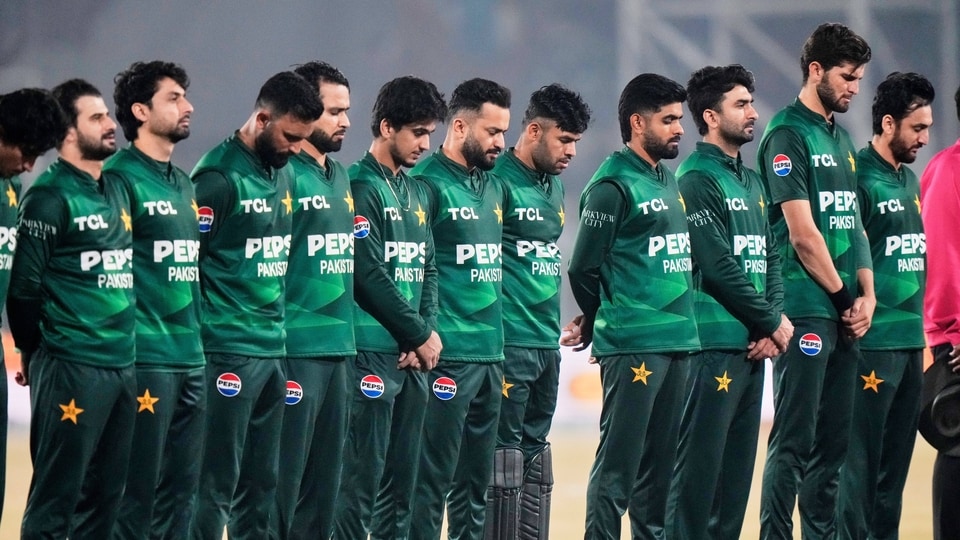
Unlike Dhaka’s exit, which removed a single team from the tournament, Islamabad’s move strikes at its core. India-Pakistan matches are not just fixtures; they are the sport’s single largest commercial engine, underpinning broadcasting contracts, sponsorship valuations, and tournament economics. A refusal to play while remaining in the competition amounts to selective participation--something ICC rules were never designed to accommodate.
The likely response will not be symbolic wrist-slapping. ICC participation agreements allow for fines, forfeiture of points, docking of revenue shares, and even future hosting penalties. In extreme cases, member boards can face suspension from ICC events altogether. Pakistan is, therefore, wagering not merely political capital, but millions of dollars in guaranteed distributions and a share of the sport’s most lucrative commercial cycle.
That makes this episode far larger than Bangladesh’s earlier withdrawal--and gives new resonance to what that protest had already revealed: in modern cricket, unilateral brinkmanship is an expensive strategy.
Dhaka’s decision to walk away from the same tournament over security concerns surrounding fixtures in India now looks like the opening act in a broader confrontation between national politics and cricket’s commercialised multilateral order.
The Bangladesh Cricket Board (BCB) had sought to relocate its matches to Sri Lanka, citing security concerns. After commissioning independent assessments, the ICC rejected the request, finding no substantiated threat, and--once the participation deadline expired--replaced Bangladesh with Scotland. The immediate costs were steep: industry estimates suggested losses of roughly $27 million in ICC distributions and related revenues, forfeited prize money, and potential fines reportedly touching $2 million. More damaging were the structural consequences—reduced bargaining power in broadcast negotiations, fewer high-value bilateral series, and erosion of goodwill among commercial partners.
At the time, Pakistani officials flirted publicly with the idea of boycotting the tournament in solidarity. That rhetoric fostered the perception in Bangladesh that it would not stand alone. It soon evaporated. Former Pakistani players and administrators warned their board that a withdrawal would hurt Pakistan far more than the hosts. Islamabad now appears to have opted for what it sees as a middle path: participation in the tournament, but refusal to contest its marquee fixture.
Ironically, that approach may expose Pakistan to even greater legal and financial jeopardy than Bangladesh faced. Walking away entirely is one thing; selectively refusing a scheduled match is quite another.
For the ICC and its commercial partners, this is not a moral debate but a contractual one. Broadcasting rights for global tournaments are priced around guaranteed India–Pakistan encounters. Removing that pillar threatens advertiser confidence and tournament valuations across markets from South Asia to the Gulf and the UK.
If Pakistan forfeits the match, it could lose match fees, prize eligibility, and portions of its annual ICC revenue distribution—sums running into tens of millions over a tournament cycle. Future hosting rights, bilateral scheduling leverage, and committee influence within the ICC could also suffer.
Bangladesh’s earlier miscalculation offers a cautionary preview. The BCB argued publicly that it would not suffer major losses in the current cycle, but that narrow accounting ignored reputational damage and long-term costs: ranking penalties that complicate qualification routes, fewer elite fixtures, and diminished commercial attractiveness.
Cricket boards today operate less like ministries and more like multinational enterprises embedded in a fragile web of media contracts, franchise ecosystems, and transnational sponsors. Actions that disrupt that web tend to rebound hardest on the disruptor, which is why, the decision by BCB, and now PCB, defies pragmatism.
Both disputes were catalysed not at the level of Test-match diplomacy, but in the franchise economy--specifically the Indian Premier League. Bangladesh’s escalation followed tensions over Mustafizur Rahman’s availability, eventually spilling into broadcast bans and hardened rhetoric. That leap--from a player-release disagreement to World Cup withdrawal--illustrated how quickly commercial disputes can metastasise into institutional crises.
Pakistan knows this terrain well. Its long absence from the IPL reduced player visibility, market valuations, and exposure to elite competition—effects that have coincided with a decline in its white-ball fortunes. Any renewed distancing from Indian cricket—formal or informal—risks recreating those opportunity costs at scale. Bangladesh’s experience should, therefore, have served as a warning. The franchise ecosystem now anchors player development, sponsorship flows, and national-team brand equity. Boards that allow political disputes to fracture that system do so at considerable risk.
What both episodes underline is a structural reality of contemporary cricket governance. The ICC is anchored commercially by a handful of dominant markets, chief among them India, which is often looked at like US is in geopolitics. Late-stage demands to rewrite tournament logistics, absent overwhelming coalition support or compelling new intelligence, face daunting odds.
Bangladesh entered its standoff without a voting bloc. Pakistan, despite its greater stature, is also acting largely alone. Neither approach alters the underlying asymmetry of power inside the global game. Sporting history is littered with protests that generated headlines but failed to shift institutional outcomes, while leaving the protester poorer and more marginalised. The Cold War Olympic boycotts remain the archetype: Moral theatre followed by athletic and financial self-harm.
If Pakistan proceeds with a partial boycott and the ICC enforces sanctions, the episode could entrench new governance norms--clarifying that participation in global tournaments is indivisible, not modular. Bangladesh’s withdrawal may then be remembered not as an aberration, but as the first crack in a fragile edifice.
For all concerned, the lesson is blunt. Principled protest in sport is not cost-free, and in an era where cricket’s revenues depend on predictability, quiet diplomacy will often achieve more than theatrical defiance. Weaponising absence may satisfy domestic audiences, but in the unforgiving economics of global cricket, it is frequently the boycotter—not the institution—who ends up paying the highest price.
This article is authored by Aman Kumar Singh, head, Chairman’s Office, Adani Group and Shishir Priyadarshi, president, Chintan Research Foundation, New Delhi.


