
 E-Paper



The Baltic Exchange: Early days to AI
In the 1980s, London was the centre of world shipping, and The Baltic Exchange in the City was the centre of shipping in London.

 Prefer HTon Google


In the 1980s, London was the centre of world shipping, and The Baltic Exchange in the City was the centre of shipping in London. Having an office within walking distance of The Baltic was a prerequisite for any meaningful involvement in this industry. It was an old and venerable institution, with its strong traditions, customs, and the motto ‘Our Word Our Bond’.
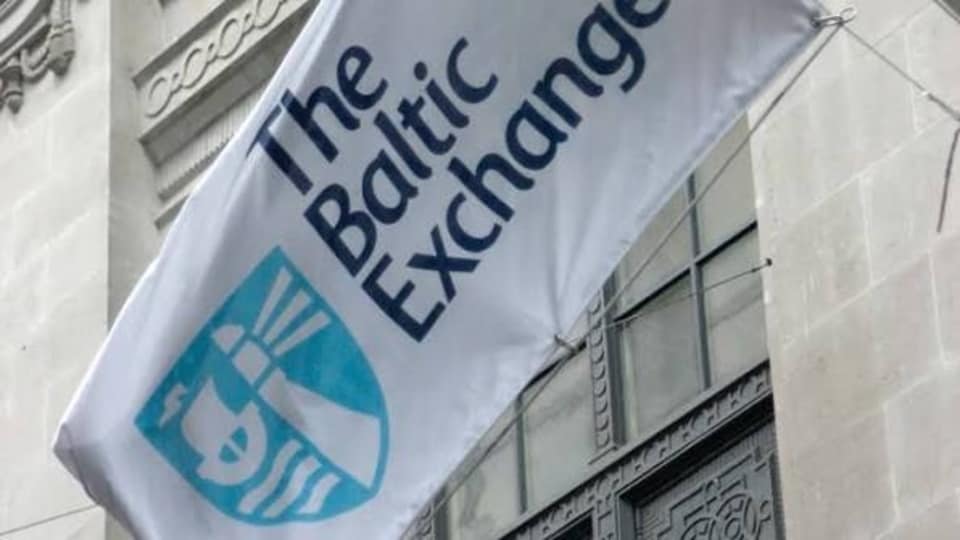
Shipping has always been very closed and secretive. Quick and timely information has always been an essential requirement. In those days, communications were primitive by today’s standards. Dial-up landlines and noisy telex machines were the workhorses, and these left much to be desired. Pagers and fax machines were just making an entry. This is where the personal element came in, and The Baltic provided the required platform. It was a very formal place, with everyone—without exception—in a dark suit and tie. The gentle murmur of the trading floor was quite formidable for a beginner like me.
Around noon every day, you could see shipowners, charterers, and brokers—all walking towards St Mary Axe, carrying a sheaf of papers. These were circulars giving open tonnage positions from shipowners, or cargo enquiries from charterers. Members exchanged these circulars with one another on the trading floor and took them back to their offices. Cargoes and tonnage were matched, and these details were sent via telex to a global network of associates and principals who were waiting, ready to take them up. Once a cargo was matched against suitable tonnage, negotiations would start. This is exactly where I started my career as a trainee—distributing those very circulars at The Baltic.
Meanwhile, back at the Baltic, continuous announcements were being made by the Caller from the rostrum, allowing members to meet individuals for a quick chat or to exchange documents. The Caller’s announcements were repetitive—almost monotonous—and only the old-timers could easily follow what he said. Initially, I could decipher only one frequent sentence: ‘David Smith – local line please.’ This would send David rushing to one of the landlines placed on a shelf nearby. Mobile phones, after all, were entirely unknown at the time.
For more detailed discussions, there was the bar, as well as the dining room downstairs. Both were incredibly crowded during trading hours. Long lunches were quite common, especially when overseas associates were visiting. Some old-time, diehard members were known to walk in around noon, have a few meetings, head down to the bar for a long lunch, and then go straight home. They were the lucky ones who held exclusive cargoes or tonnage that were in great demand; their deals could be fixed quickly, leaving them with plenty of free time,
Chartering of ships involves freights running into millions of dollars, and very often, vessels would be fixed entirely over the phone or the telex—both completely unsecured lines. The actual signed documentation would only follow weeks later. You could be dealing with a total stranger at the other end of the line, but what was committed was always honoured. It was a world fundamentally different from today’s landscape of algorithm-based trading, secured lines, and instant communication.
In April 1992, The Baltic Exchange building was tragically destroyed in a bomb blast. I was sitting in my office in Mumbai when I received the call from my London associate, and I was simply too shocked to say anything. It was devastating to see a magnificent building with all its rich history reduced to a pile of rubble in an instant. So many memories and so much history vanished in a single moment. While The Baltic continues to function from another location in St Mary Axe today, the Gherkin—now an iconic London landmark—has come up on the original plot of land. Old-timers are still filled with sadness every time they walk past the site. So much more can be written—the history and the memories of this great institution truly cannot be captured in just a few words.
Indeed, the sheer scale and gravity of this profession are rarely understood from the outside, particularly in India. Shipbroking is a little-known profession here; it is very often confused with shipbreaking, which is something totally different. At other times, it is mistaken for freight forwarding. Having been in dry bulk chartering for more than 40 years, I still have friends asking me to get them a ‘good rate’ for shipping two containers from Kandla to Dubai.
Chartering is made of sterner stuff. It requires a deep knowledge of a ship's main specifications, different vessel categories, global commodity trading patterns, ports and their fluctuating conditions, cargo characteristics, and complex maritime documentation. Then there is the vast lexicon of shipping terms and abbreviations used routinely in all negotiations. Equipped with this knowledge, a beginner is finally ready for their first solo flight. Every negotiation is one-to-one—often with someone much more senior and experienced on the other side. It can be quite intimidating; a true trial by fire.
Before the arrival of the internet, mobile phones, and online trading, once a young shipbroker achieved a certain level of proficiency, negotiating and fixing ships was based entirely on networking and mutual trust. Negotiations were initiated via telex and later fax, but the actual finalisation very often took place over the telephone, with written documentation following much later. Recaps, main terms, and fixture notes were exchanged, followed eventually by the formal charter party signed by both owners and charterers.
Yet, even before the ink dried on the final document, the verbal commitment was binding. This was the foundation on which all further action rested; all voyage instructions, notices, laytime, and demurrage calculations were driven by it.
During my years in chartering, there were many high-stakes situations handled entirely on trust. Once, after fully fixing a vessel on a Friday evening just as we were about to close down, our overseas associate called to inform us that the charterers had lost the cargo and were frantically arranging another one. The vessel would have to be diverted to a completely new loading port, and updated voyage instructions would follow. We informed the owners, who immediately agreed to divert the vessel based on our word, awaiting the written message. All of this was done over the telephone, and the written confirmation only arrived the next day—requiring us to come into the office on a Saturday just to receive it.
On another occasion, the owners came up with a last-minute substitution of the performing vessel after the deal was fully fixed. Again, mutual agreement prevailed—initially verbal, with the heavy documentation catching up later. All this was possible only because a broker's reputation was their currency.
Let me hasten to add that it was not effortless every time. I have seen intense, gruelling negotiations stall over a mere difference of 10 cents in the freight rate, or because a vessel missed the cancelling date by half a day—or even less.
In the 1980s, a shipbroker’s office was a sensory experience—tables piled high with papers, trailing telex rolls, and signed charter parties, not forgetting the unopened issues of Lloyd’s List and Fairplay. The smell of coffee, cigarette smoke, and sharp, light-hearted banter dominated the room. Today, the noise has vanished. Everyone sits quietly, glued to their screens, hardly having time to look up. Online trading and AI have taken over. It is efficient, but it feels cold and impersonal. This is how progress takes place, and we must accept it—but those of us who have lived the analog days will always remember when global trade ran on the strength of a voice and a handshake.
(The views expressed are personal)
This article is authored by Rajeev Misra, member, Baltic Expert Witness Association (BEWA) and maritime consultant.


